8 November 2026, 08:10
Loading...
Czech communities that could host a nuclear waste repository want law to require their consent

oEnergetice.cz, ČTK
20 September 2023, 15:51
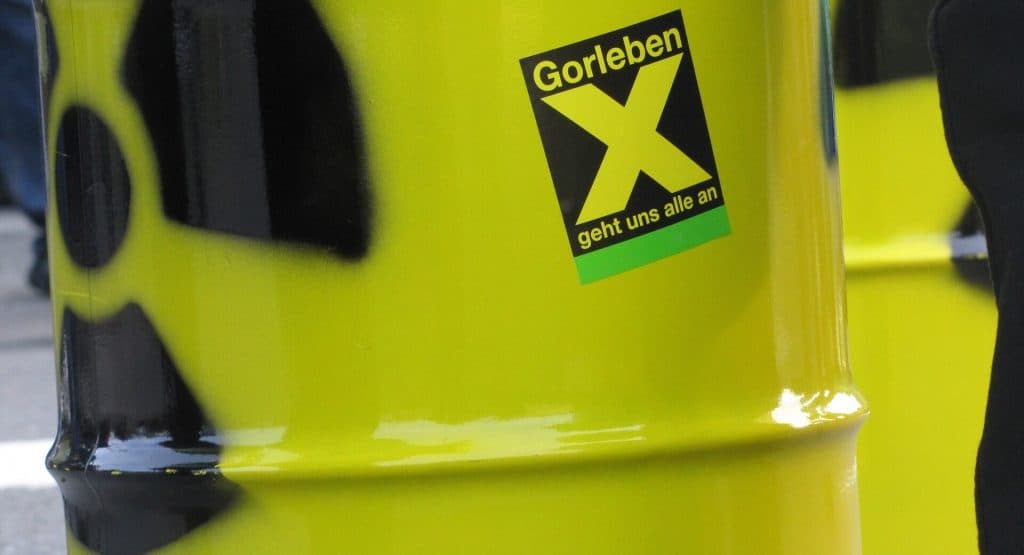
Communities in the Pošumaví region want the planned law on a deep geological repository for radioactive waste to make the consent of affected municipalities a necessary condition. They have asked the government and Parliament to do so in a letter. With the Ministry of Industry and Trade (MPO) preparing additional nuclear units, which will increase the volume of waste, mayors reportedly now feel pressure to speed up the selection of one of the four sites under consideration for the repository. Democratic principles should apply when dealing with such a serious issue, but they do not at all, former mayor of Chanovice in the Klatovy district Petr Klásek told ČTK. Ten municipalities in the Březový potok site have tasked him with negotiating on the repository. Neither the government’s proposal nor the amendments made by the Chamber of Deputies provide municipalities with veto rights. The MPO rejected a veto, saying that the interests of municipalities cannot outweigh the state’s interest in maintaining nuclear power as one of the pillars of Czech energy.
The bill on proceedings related to the repository, drafted by the MPO to speed up preparations for construction, has already been considered by committees of the Chamber of Deputies. Municipalities describe it as „just a hard-line directive“. Mayors are calling for the law to state: „The consent of the affected municipality is a necessary condition for deciding to locate a deep geological repository on its territory.“. They reject the MPO’s claim that giving municipalities veto rights would make it impossible to pursue the public interest. They cited Scandinavia as an example, where the state reached an agreement with municipalities.
The municipalities have opposed the repository for 20 years, as confirmed by resolutions adopted by their councils. „The current rush must not come at the expense of future safety. The MPO’s plan is to permanently store highly radioactive materials here for 100,000 years. The impacts include restrictions on or the disappearance of some settlements, effects on water sources, changes to the landscape, the dumping of waste rock in the surrounding area, increased traffic on roads, and more,“ the mayors said.
According to their letter, they recognize the reality of the war in Ukraine and its consequences for gas and oil supplies, and understand the need for nuclear energy. „But the heavy-handed approach and conduct of representatives of the MPO and the Radioactive Waste Repository Authority (SÚRAO) are crushing us. The views of local governments and residents have not been taken into account at all, and still are not,“ the letter says.
„The problem of municipalities versus the state, repeated endlessly, comes down to one thing – the suppression of municipalities’ rights and an inability to communicate with them in any way, not to mention compensation,“ said Chanovice mayor Petr Čotek (Association for the Future).
He said the municipalities do not dispute that a repository has to be built somewhere, but object to the fact that, they say, nobody talks to them or visits them.
Amendments proposed by members of the Chamber of Deputies to the bill on proceedings related to a deep geological repository for radioactive waste, currently being considered by the Chamber, would give municipalities 140 days to comment on a proposal to locate the repository. The law should also explicitly require the MPO to discuss the proposed location with the Ministry of the Environment and with residents of the affected municipalities in whose territory it would be located. The law would also allow the government to set compensation payments for affected municipalities above the amounts stipulated by law.
In June, SÚRAO presented planned geological work to residents in Horažďovice. In February, it asked the Ministry of the Environment for permission to conduct surveys. In June, the ministry suspended the proceedings and requested additional information for the application. Once permission is granted, geologists will drill up to ten boreholes at each site (Březový potok, Horka and Hrádek in Vysočina, and Janoch near Temelín), said geologist Marek Vencl of SÚRAO, which has been conducting geological mapping and biological screening since April.
SÚRAO publishes all technical studies on its website, along with the results of all surveys and research, the authority’s director Lukáš Vondrovic told ČTK. The location of the repository is due to be decided by 2028, and it is expected to begin operating in 2050. It is to be half a kilometre underground, with an underground complex covering up to three square kilometres and a surface area of 15 to 20 hectares.
Translation disclaimer
This article is a machine translation of the Czech original and has not yet been fully reviewed. In case of any doubt, please refer to the Czech version.
Sdílejte článek prostřednictvím:
You might also like

7 November 2026, 17:23

7 November 2026, 13:37