
23 October 2026, 14:38
Loading...
Czech government to discuss Dukovany construction study, which projects 10,000 new residents

oEnergetice.cz, ČTK
11 January 2025, 19:20
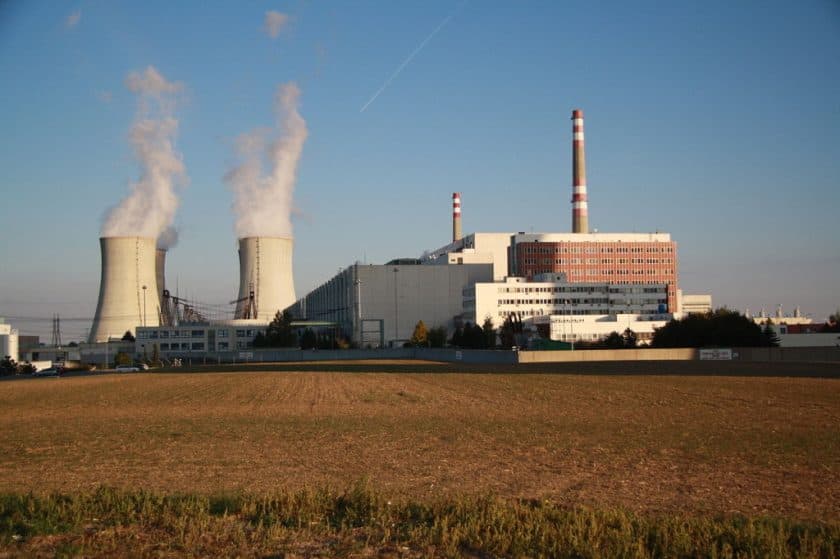
The government will discuss the results of a socioeconomic study on the planned construction of new nuclear units at Dukovany on Wednesday. According to the study, the region will need to prepare for almost 10.000 new residents, for whom up to 3000 homes may be lacking, as well as sufficient medical capacity. In the longer term, the project should increase municipal revenues and fill schools that are currently underused. This is according to the study’s findings.
ČEZ is preparing to build two new units at Dukovany. The South Korean company KHNP won the contract to build them. The first of the new reactors at Dukovany should be completed in 2036. At current prices, the cost of the currently preferred option of building two reactors is 400 billion crowns. The semi-state-owned energy company ČEZ is now negotiating a contract with the South Koreans, which the parties should sign by the end of March 2025.
Government representatives presented some of the study’s findings in Třebíč last November. „This is a key document that gives us a clearer picture of what completing the units at Dukovany will mean for the surrounding municipalities and entail for them. This study must be followed by an action plan specifying the individual steps that will need to be taken,“ said Minister for Regional Development Petr Kulhánek (nominated by STAN).
The study was prepared by KPMG. It examined a wider area from Jihlava to the Brno region, looking ahead to 2040, when both Dukovany units are expected to be built. The authors assessed, among other things, population trends, healthcare, housing, education and leisure facilities, transport, the emergency services system and the labour market. The research covered residents, including mayors, as well as companies and institutions. According to the authors, the project will bring both risks and opportunities for the area, although its positive effects are likely to be felt later.
For example, the study estimates that up to 250 billion crowns could flow into the local economy in the 15 years after construction is completed, and up to 1000 new companies could be established. Businesses in transport, construction, retail and services could benefit most. At the same time, however, there is a risk of a shortage of workers with technical qualifications and in administrative roles. Municipal tax revenues could eventually rise by up to 1.5 billion crowns as the number of permanent residents grows. However, municipalities could lose half a billion crowns because they will not receive funding from the tax revenue-sharing system for temporary residents.
Other expected impacts include increased traffic in municipalities and security risks in areas with higher concentrations of people. There will be around 7500 beds available for temporary accommodation across the wider area, but only 23 percent of them are near the power plant. By contrast, the study says that school capacity in the region is sufficient, as are cultural and sports facilities in the municipalities.
Translation disclaimer
This article is a machine translation of the Czech original and has not yet been fully reviewed. In case of any doubt, please refer to the Czech version.
Sdílejte článek prostřednictvím:
You might also like


23 October 2026, 11:01


23 October 2026, 06:34