23 October 2026, 14:38
Loading...
Czech industry will benefit from the fleet effect within the European Union, says EDF's Vakis Ramany
oEnergetice.cz
13 May 2024, 16:35
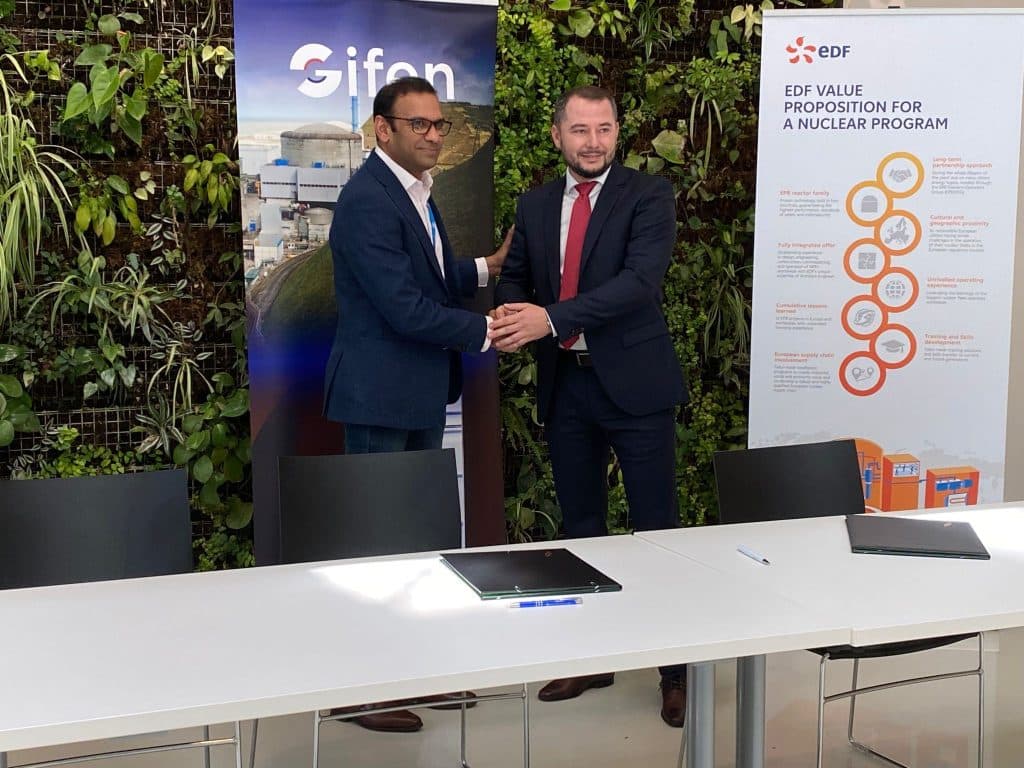
EDF and KHNP, both participating in the tender for the completion of up to two units at the Dukovany nuclear power plant site and a further two at the Temelín site, submitted binding bids to ČEZ on 30 April. ČEZ will assess the bids from economic, commercial and technical perspectives and submit an evaluation report to the Ministry of Industry and Trade.
On the occasion of the submission of the bids, Vakis Ramany, EDF vice-president, answered several questions from oEnergetice.cz. According to him, EDF's key advantages are the opportunity for Czech industry to benefit not only from construction in the Czech Republic, but also to participate in supplies for reactor construction on other projects in the European Union. According to Vakis Ramany, savings from building multiple units, recently reported in the media as reaching up to a quarter of costs when four units are built, are not exaggerated.
At EDF's request, the deadline for submitting a bid in the tender was extended by 14 days. Can you reveal which parts of the bid were being discussed until the last moment?
Our bid goes far beyond simply supplying reactors. Our aim is to create a fully-fledged alliance between France and the Czech Republic that will contribute to the European nuclear renaissance. We intend to remain here and support Czech industry even after the reactors have been built in the Czech Republic. If the Czech Republic, which is as pro-nuclear in its thinking as France, chooses our bid, we can build the European future of nuclear energy together.
Implementing such a plan requires not only EDF's contribution as a technology supplier and experienced operator, but also the alignment of the entire ecosystem of partners from academia, government and industry in France and Europe more broadly. Those additional two weeks were necessary for our team, with support from the highest political levels, to fully embrace this bid and understand everything that this promising partnership entails.
How much did the complexity of the bid reflect the possibility of having up to four units – including the new Temelín site, which had not been envisaged, as well as a second new unit at the Dukovany site? What are the main differences between the bids for Temelín and Dukovany, if any?
As designers, builders, owners and operators of 56 reactors in France and 9 in the United Kingdom, we are best placed to harness all the benefits of the so-called fleet effect, an approach in which multiple nuclear reactors are built and operated simultaneously. Throughout the tender process, we have consistently examined and highlighted the benefits that the fleet effect and the effect of building multiple units at one site (the "site effect") could bring to the Czech nuclear programme.
We outlined the foundations of this approach in our non-binding bids last year and the year before. Thanks to this preparation, we very much welcomed the expansion of the tender to four units and the subsequent submission and preparation of a complete, binding bid for up to four units. The Czech EPR1200 reactor programme can also benefit from EDF building a further 6 units (and potentially up to 14) in France and another 4 in the United Kingdom. Czech industry should also benefit greatly from this European fleet effect. Ultimately, it will also reduce the total cost of each unit and enable the Czech supply chain to export its know-how beyond the Czech programme.
Now that the bid has been submitted, can you say how much the price differs from the originally planned price of CZK 160 billion excluding financing costs? How much will this price change if the government decides on one, two or four units?
I can confirm that the various scenarios we submitted do indeed result in significant cost optimisation. The optimisations are clearly and precisely described in our bid. Estimates of substantial savings and industrial impacts from building multiple new units that we have seen in the media are not all that exaggerated.
The bid is binding and concerns up to four new units. What is the latest date by which the option to build new units must be exercised? Must a decision on all units be made immediately, or does the bid allow for some spacing? Could you at least generally indicate what affects the point at which a decision on one or four units must be made?
EDF's proposal fully takes into account the combination of benefits – procuring and building multiple reactors simultaneously within one country, making use of the fleet effect, and optimising the infrastructure, procedures and schedules for subsequent construction of units at the same site. These benefits are described in detail in our bid, which draws on more than fifty years of experience of EDF and its industrial partners in building nuclear reactors in France, the United Kingdom and internationally more broadly.
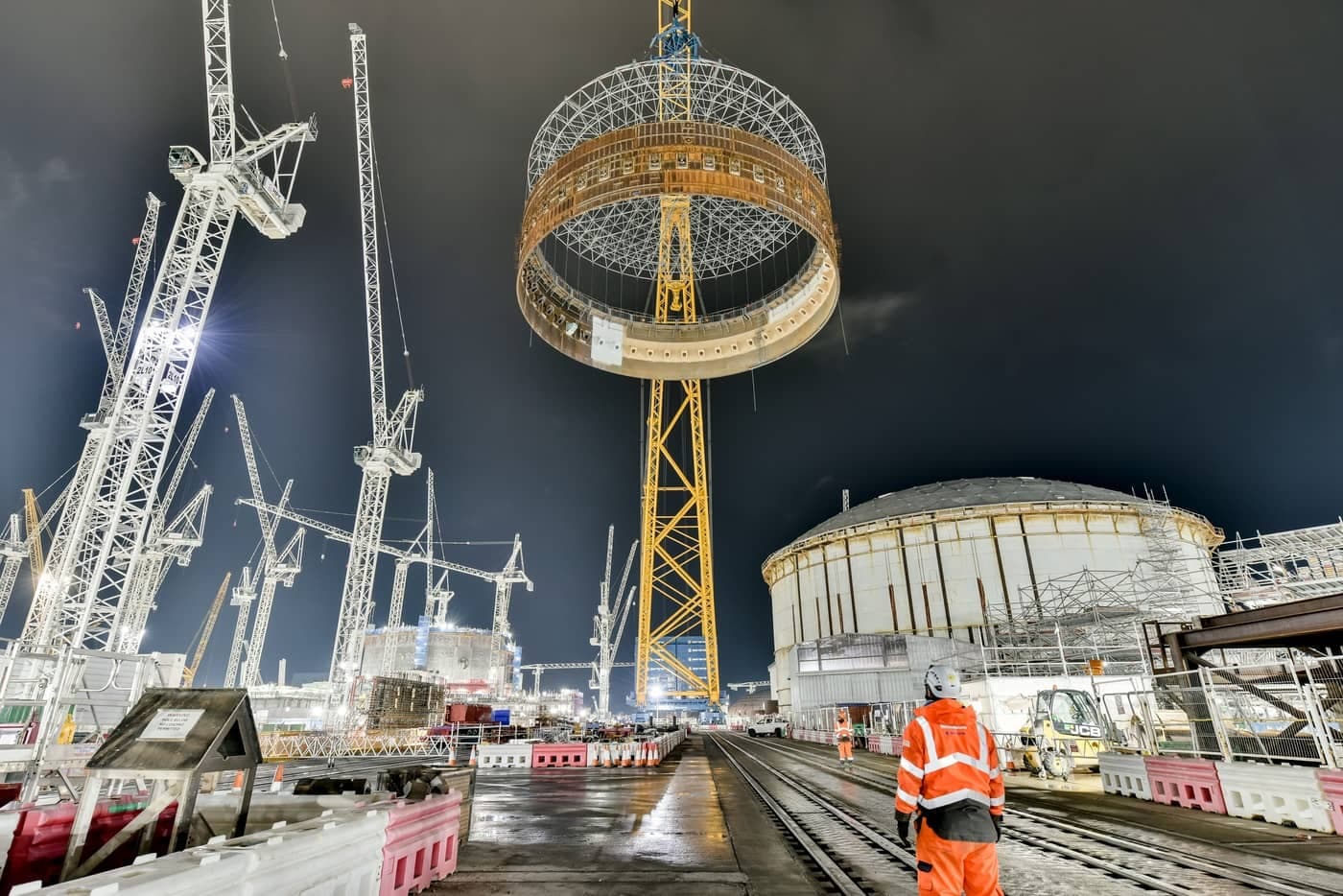
Construction of Hinkley Point C nuclear power plant. Source: EDF
Both the fleet effect and the benefits of building multiple units at one site deliver the greatest advantages if they are activated at an early stage of the process, rather than later. If you have to mobilise thousands of workers at a construction site for the duration of construction, you can better optimise site organisation, industries and suppliers when they are building two units rather than one. The same logic applies when building at two sites. The efficiency of the entire industry will be higher if the schedule between construction projects and the sharing of resources are planned to optimise the mobilisation and demobilisation of people and maximise the use of experience between projects.
In our UK EPR programme (at the Hinkley Point C and Sizewell C plants), we have a gap of 12–18 months between the two units at one site, allowing us to benefit from the simultaneous construction of multiple units at one site.
Our experience of the fleet effect across construction sites is that when moving from one project to another after a gap of more than five years, you gradually begin to lose experience.
There is intensive discussion in the Czech Republic about the full nationalisation of ČEZ. EDF Group recently went through this process. Did this change in EDF's ownership structure have any impact on preparations for the construction of new nuclear units?
Full ownership of EDF by the French state brought two main advantages. First, it simplified decision-making processes by limiting consultations to a smaller number of stakeholders, enabling the French team to adapt well to major programmes. Second, it ensures full alignment between EDF and the French state on the company's strategy – in our case, supporting France's and Europe's energy transition to a low-carbon economy, underpinned by an appropriate mix of investment and resource development in nuclear energy, renewables and demand-side services.
Translation disclaimer
This article is a machine translation of the Czech original and has not yet been fully reviewed. In case of any doubt, please refer to the Czech version.
Sdílejte článek prostřednictvím:
You might also like
23 October 2026, 11:01
23 October 2026, 06:34