
23 October 2026, 14:38
Loading...
Czech lower house approves faster permitting for new nuclear facilities

oEnergetice.cz, ČTK
20 December 2024, 16:31
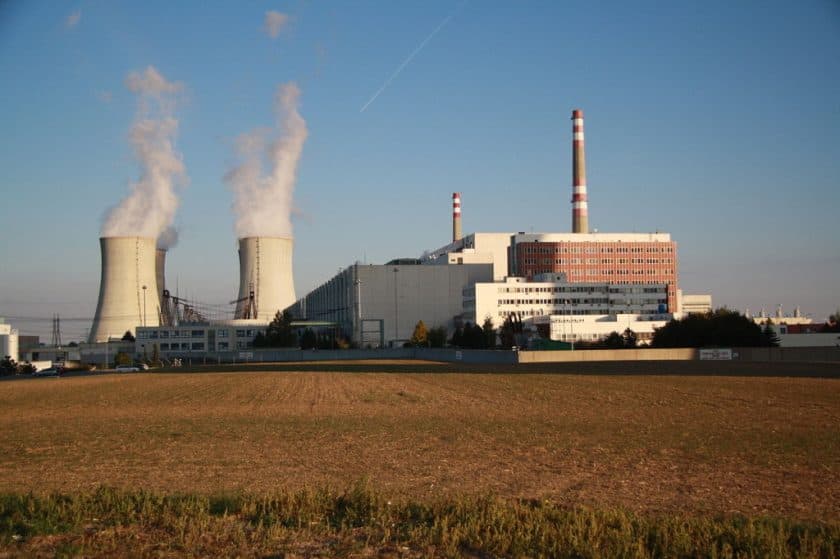
Permitting for the construction of new nuclear facilities, including small modular reactors in Czechia, should become simpler and faster. Nuclear legislation should also be prepared for the arrival of new nuclear technologies. This is the aim of a government amendment to the Atomic Act, which the Chamber of Deputies passed today. It will now be submitted to the Senate for consideration. Under the state's current plans, nuclear energy, together with renewables, is to be the main source in the Czech energy mix. The state is therefore preparing to build new reactors as well as small modular units.
The changes are primarily intended to reduce the regulatory burden involved in the state administration's review of construction projects. They are mainly technical amendments. According to the government, the current law did not, for example, account for small modular reactors. The amendment will also allow applicants to request preliminary information from the State Office for Nuclear Safety (SÚJB) on how applications are assessed. It will also allow exemptions from the law's requirements.
All 137 members of parliament present today, from every parliamentary group, voted in favour of the amendment. None voted against it.
At the proposal of ODS MPs Ivan Adamec and Jan Bauer, the Chamber lowered the upper limit on fees paid to the Radioactive Waste Repository Authority. They proposed that nuclear power plants should pay no more than 120 Kč/MWh, and research nuclear facilities or nuclear heating plants 80 Kč/MWh. The government proposed rates of 163 and 109 crowns. The MPs said their proposed reduction was justified because the proposed increase in the fee was unacceptable for operators of nuclear energy facilities. Transport Minister Martin Kupka (ODS) expressed the government's agreement with the proposal today.
One of the new provisions introduced by the amendment is the option to request preliminary information from the SÚJB. The purpose is to seek clarification or consultation on how the authority would decide. The government says this change is needed because the rapid emergence of new technologies brings a range of technical and technological uncertainties. It is therefore necessary to clarify, before the relevant proceedings begin, whether the information, supporting documents, technologies and equipment will meet the requirements. The authority will then state whether it will require, for example, additional conditions or what criteria it will use to assess the application.
Another new provision allows the SÚJB to approve an exemption from the law's requirements by decision. The law already allows certain exemptions, including changes to the category of a workplace or a source of ionising radiation. An application to the authority will have to state relevant grounds and demonstrate that the conditions set out in the law are met. The government says the exemption is needed because new technologies are developing very rapidly and their precise parameters are not yet known, as they are still under development. According to the government, the amendment draws on experience with the new Atomic Act. Some approaches could be made more effective, the cabinet believes.
The current Atomic Act has been in force since 1 January 2017. It regulates the peaceful use of nuclear energy and ionising radiation and, following the principle of „cradle to grave,“ covers all components of the life cycle of nuclear facilities.
Translation disclaimer
This article is a machine translation of the Czech original and has not yet been fully reviewed. In case of any doubt, please refer to the Czech version.
Sdílejte článek prostřednictvím:
You might also like


23 October 2026, 11:01


23 October 2026, 06:34