Czech minister Mládek sees promising partners in Rosatom and Korea's KEPCO
Domestic companies have a chance to participate in the construction of nuclear power plants abroad, but their prospects will be much greater if Czechia also builds additional nuclear units. “They are interconnected,” said Industry Minister Jan Mládek at a discussion meeting in Prague on current challenges for the energy sector.
Mládek specified that major global nuclear power plant suppliers are receiving a clear message: the Czechs would like to link the construction of new units – especially at Dukovany – with the involvement of Czech companies in projects in third countries.
Experts have long pointed out that the willingness of major global players to allow Czech companies to participate in their projects depends to a considerable extent on whether a major contract at Dukovany or Temelín is in prospect.
Different reactions abroad
According to Mládek, however, the responses of major global companies vary widely. Russia's Rosatom in particular, and to some extent South Korean company KEPCO, have expressed willingness to cooperate with the Czech nuclear industry in this way. Both are state-owned companies.
Czech companies can participate to a limited extent in power plant construction projects in Russia, for example, but they have a far greater chance in projects carried out by Rosatom or KEPCO in third countries. On their “home turf”, they logically rely primarily on subcontractors from their own group.
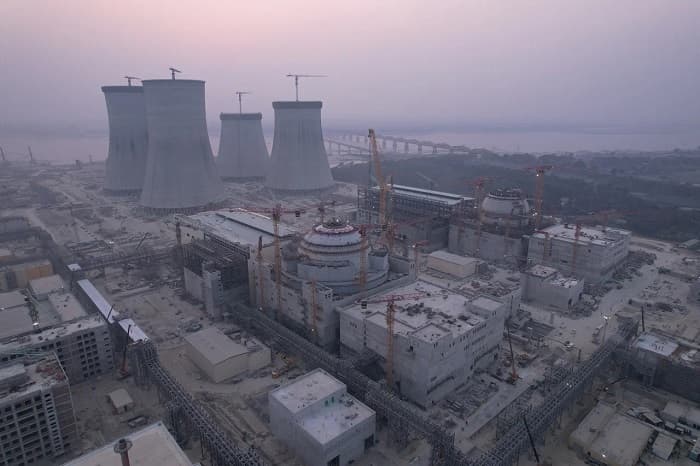
Potential Czech exporters consider planned Rosatom projects in Finland, Hungary, Turkey, Jordan and Egypt, as well as in India and Bangladesh, to be promising. KEPCO is building a nuclear power plant in the United Arab Emirates and is planning to expand its reactors into various parts of the world. This year, the Koreans have shown relatively strong interest in cooperation with Czech companies.
Neither the West nor China?
According to Mládek, communication with the French has so far been more complicated. Some nuclear energy activities are being taken over from Areva by another company, majority-controlled by the French state – Électricité de France (EDF). For the time being, this process is also complicating discussions on potential cooperation with Czech companies.
According to Mládek, US company Westinghouse, whose majority shareholder is Japan's Toshiba, has taken a cool stance towards cooperation. According to information from other sources, Westinghouse has doubts about the construction of additional nuclear units in Czechia after the tender for the expansion of the Temelín nuclear power plant was cancelled more than two years ago.
Mládek is also sceptical for now about the plans of three Chinese state-owned companies that have signalled strong interest in overseas expansion in the future. According to information received by the minister from Chinese sources, these companies assume that they will carry out all power plant construction themselves – including with their own engineers and workers. There would then be minimal room for Czech subcontractors. In this respect, Mládek sees a strong need for further communication with individual global companies.
The industry minister also pointed to major opportunities in Iran as the international community gradually lifts sanctions against this potential regional economic powerhouse. The Russians have so far built in Iran, but the Koreans, for example, are also very interested in the “Persian market”.
Concerns over loss of know-how
The Czech nuclear industry, which would like to build on a 60-year tradition, faces concerns over a lack of contracts and a gradual loss of know-how following the cancelled Temelín tender. This was also why the Alliance of Czech Energy was established last year under the leadership of Škoda Praha (a ČEZ subsidiary), seeking to help domestic companies succeed in foreign markets. The alliance also includes companies such as Škoda JS, Doosan Škoda Power, Vítkovice, Alta and many others.
Many Czech companies have meanwhile secured work on the completion of Slovakia's Mochovce power plant. The question is what comes next.
However, according to available sources, some experts fear that linking Czech contracts abroad to the incentive of building additional units at Dukovany or Temelín may not be wise. They doubt whether Czechia will actually decide to expand its existing power plants.
The author works as a consultant and energy project specialist for HATcom.
Translation disclaimer
This article is a machine translation of the Czech original and has not yet been fully reviewed. In case of any doubt, please refer to the Czech version.