
23 October 2026, 14:38
Loading...
Czech municipalities shortlisted for a deep geological repository want to challenge surveys in court

oEnergetice.cz, ČTK
24 June 2025, 11:57
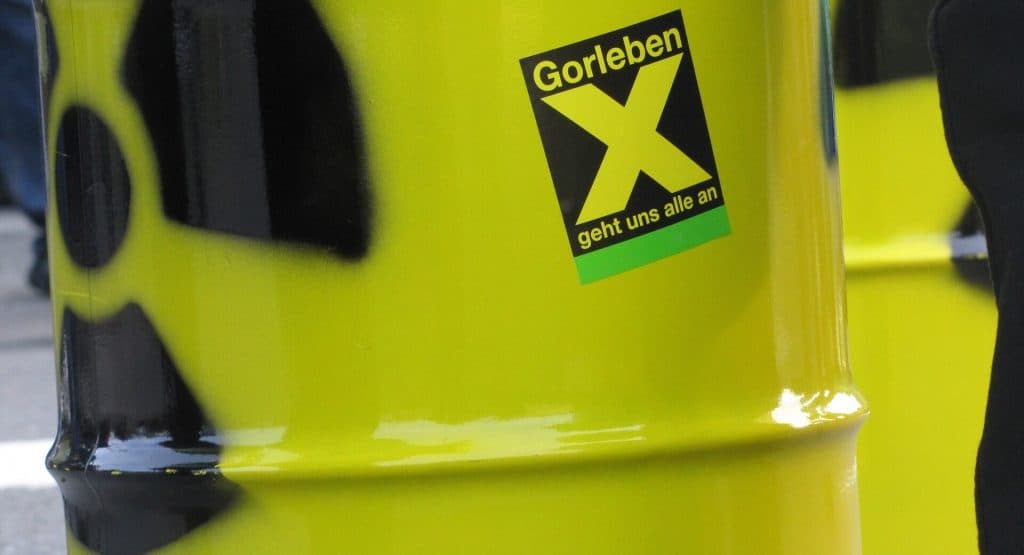
Municipalities shortlisted as sites for a deep geological repository for radioactive waste want to challenge geological surveys in court. Municipalities in the Březový potok site in the Pošumaví region and Janoch near Temelín filed lawsuits against the Ministry of the Environment with the Supreme Administrative Court in recent weeks. The next step for opponents of the repository is a planned complaint to the Aarhus Convention Compliance Committee. The Platform Against the Deep Geological Repository, which represents municipalities and associations, announced this today. Authorities said in response to the municipalities’ complaints that so far only surveys of the areas had been approved.
Thousands of tonnes of spent fuel from nuclear power plants are to be permanently stored in the repository half a kilometre underground. The Radioactive Waste Repository Authority (SÚRAO) is to assess four areas for the repository: Horka and Hrádek in the Vysočina region, Janoch near the South Bohemian Temelín nuclear power plant, and Březový potok in the Klatovy district. The Ministry of the Environment has already granted permits for geological surveys in some of them. The authority wants to select the most suitable site by 2030.
The municipalities have long opposed the repository and now plan to continue their efforts through the courts. “One of the steps taken by municipalities belonging to the Platform Against the Deep Geological Repository is to file lawsuits with the Supreme Administrative Court, although we have no excessive illusions about the outcome. We are, however, placing great hopes in a complaint over violations of the Aarhus Convention. We are convinced, and share this conviction with our lawyers, that the state has failed completely throughout the process of selecting a site for a deep geological repository for high-level radioactive waste and has systematically ignored the principles of the Aarhus Convention,” said Zdeněk Souček, spokesperson for the platform and mayor of Rudíkov in the Horka site. The Aarhus Convention is an international agreement on access to information, public participation in decision-making and access to justice in environmental matters.
At the beginning of June, SÚRAO launched a project involving so-called perception maps in all four potential sites for the planned deep geological repository for radioactive waste. Residents of the areas can use the maps to highlight the specific features and problems of individual locations. SÚRAO said today that it plans to use the results when deciding where to locate the surface facilities and infrastructure for the future repository. The platform, however, says the maps lack a defined procedure for taking comments into account.
SÚRAO also announced that in recent days it had paid more than 100 million crowns to municipalities in areas being considered for the repository, as statutory contributions linked to the designation of exploration areas. “Municipalities can use the funds as they see fit,” said SÚRAO director Lukáš Vondrovic. The authority pays the contributions to municipalities every year; they were increased by 43 percent last year.
The repository, expected to cost more than 100 billion crowns, was originally due to be completed by 2065. Calls to accelerate its construction have been prompted by the EU’s temporary classification of nuclear power as a green investment. The condition is that countries relying on nuclear energy must have deep geological repositories from 2050.
The government is to establish a working group to communicate with municipalities, which should make it easier for them to participate in preparing and operating the repository. However, municipalities do not have the right to veto the final site selection.
Translation disclaimer
This article is a machine translation of the Czech original and has not yet been fully reviewed. In case of any doubt, please refer to the Czech version.
Sdílejte článek prostřednictvím:
You might also like


23 October 2026, 11:01


23 October 2026, 06:34