4 November 2026, 14:17
Loading...
Czech nuclear waste repository to cost over 100 billion, four sites shortlisted

oEnergetice.cz, ČTK
15 November 2023, 13:13
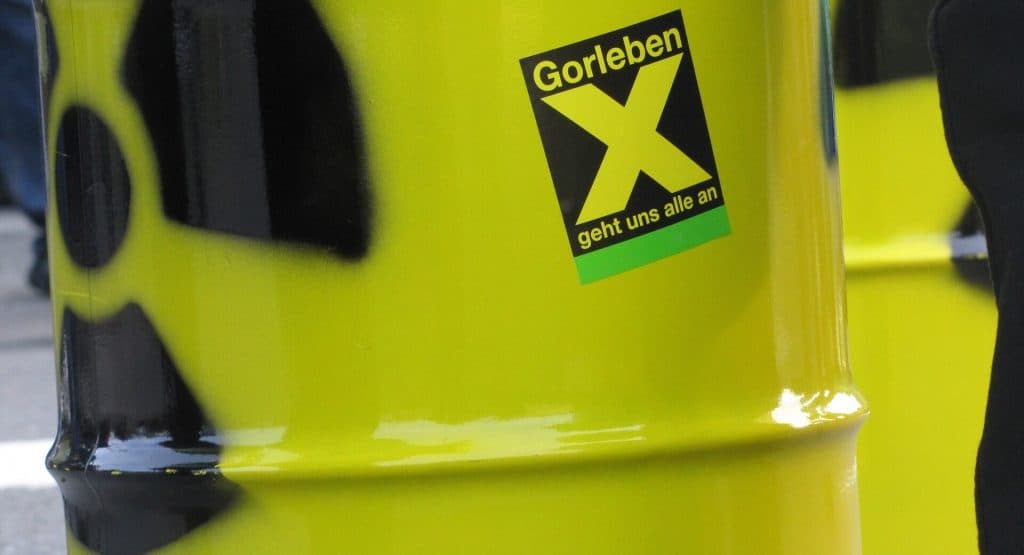
Facts about spent nuclear fuel repositories in the Czech Republic (the Chamber of Deputies today approved a law on the nuclear waste repository):
– A site for the permanent disposal of spent nuclear fuel from Czech nuclear power plants and other radioactive waste has been sought since the 1990s. Spent fuel assemblies are currently kept in an interim storage facility at the Dukovany power plant, while other radioactive material is stored in the former Richard limestone mine near Litoměřice and the exhausted Bratrství uranium mine near Jáchymov. The state-run Radioactive Waste Repository Authority (SÚRAO) is responsible for them.
– SÚRAO is also tasked with finding a site for a future deep geological repository, which would solve the problem of disposing of radioactive waste over the long term. The number of sites under consideration has changed over the years. In 2003, for example, SÚRAO had identified six areas; the number later rose to seven and then to nine. In June 2020, the SÚRAO Council approved narrowing the list to four sites, and the government made the decision in December of that year. The deep geological repository for nuclear waste is therefore to be built in one of four locations in the Czech Republic: Janoch near Temelín, Horka in the Třebíč region, Hrádek in the Jihlava region, or Březový potok in the Klatovy region.
– The proposed repository has many critics. Some have formed the Platform Against the Deep Geological Repository, which now brings together more than three dozen municipalities and towns and several associations. In the past, for example, it has organised a Day Against the Repository in the areas under consideration. The platform is also calling for other strategic options for managing spent nuclear fuel to be considered. According to the platform, alternatives to moving quickly towards building a deep geological repository do exist. It says long-term storage could be a medium-term alternative.
– The affected municipalities are also protesting against construction of the repository. Municipalities in the Hrádek site in the Jihlava region, for example, have long opposed it, citing the risk of damage to water resources. They have taken their case to court in the past. A year ago, however, the Supreme Administrative Court (NSS) rejected their cassation complaint against the resolution by which the government narrowed the selection of possible sites to four in December 2020. A group of municipalities then appealed to the Constitutional Court (ÚS) early this year, but was unsuccessful there too.
– At the end of February this year, the Radioactive Waste Repository Authority applied to designate exploration areas in all four selected municipalities. If the Ministry of the Environment approves the applications, the authority will begin geological surveys to assess the possible future locations of a deep geological repository for radioactive waste. Under current plans, the most suitable site for the repository should be selected by 2028. SÚRAO also wants to investigate the bedrock in the affected areas by drilling to depths of tens or even hundreds of metres.
– As part of preparations for building a deep geological repository, SÚRAO operates a laboratory at the site of the former Rožná uranium mine near Bukov in the Vysočina region. At a depth of around half a kilometre, researchers are studying the best methods for constructing a permanent radioactive waste disposal site. This includes suitable techniques for excavating the rock and how an actual container of spent fuel from a power plant behaves underground. Construction of the Bukov Underground Research Facility (PVP) began in 2013, and experiments have been carried out there since 2017.
– The final decision on building the repository rests with the government. „We are open to solutions other than a final deep geological repository in the Czech Republic,“ states the coalition agreement of the current government. The agreement also pledged to strengthen the rights of affected municipalities in any decision on the repository’s location. The government approved a draft law on proceedings for a deep geological repository for radioactive waste, which sets out the rights of affected municipalities and the time limits for each stage of the proceedings, in mid-January. The Cabinet also agreed that the final site selection would be a joint decision of the government and Parliament.
– The Chamber of Deputies approved the law today. Unlike the government’s original proposal, the legislation no longer makes the government’s decision to build the repository conditional on the approval of both parliamentary chambers. Nor does the law give municipalities the right to veto construction of a repository in their territory. Individual MPs from the Christian Democrats (KDU-ČSL), the Pirates and the Freedom and Direct Democracy party (SPD) proposed a veto right in response to the wishes of affected municipalities, but only 25 representatives of those parties voted for their proposal. Instead, the lower house merely extended the time municipalities will have to submit their views on construction of the repository under the government’s proposal.
– The cost of building the complex, whose main section is to be about half a kilometre beneath the surface of the Czech Massif, is estimated at 111 billion crowns, according to previous reports. In November 2020, the Supreme Audit Office (NKÚ) said SÚRAO had already spent more than 1.8 billion crowns on preparations for the deep geological repository. The Czech Republic is not the only country facing this challenge; other countries are also considering what to do with spent fuel and other materials. Finland is probably furthest ahead: construction of a repository is already under way there, and the country plans to open the first facility of its kind within two years. Sweden and France are also at an advanced stage.
– The repository was originally due to be built by 2065, but speeding up construction is now being discussed because nuclear power has been temporarily included among the EU’s green investments. The condition is that countries relying on nuclear energy must have deep geological repositories by 2050.
Translation disclaimer
This article is a machine translation of the Czech original and has not yet been fully reviewed. In case of any doubt, please refer to the Czech version.
Sdílejte článek prostřednictvím:
You might also like
4 November 2026, 12:34
4 November 2026, 09:09