
31 October 2026, 12:55
Loading...
Czech Senate committee backs nuclear waste repository bill without municipal veto

oEnergetice.cz, ČTK
13 December 2023, 16:22
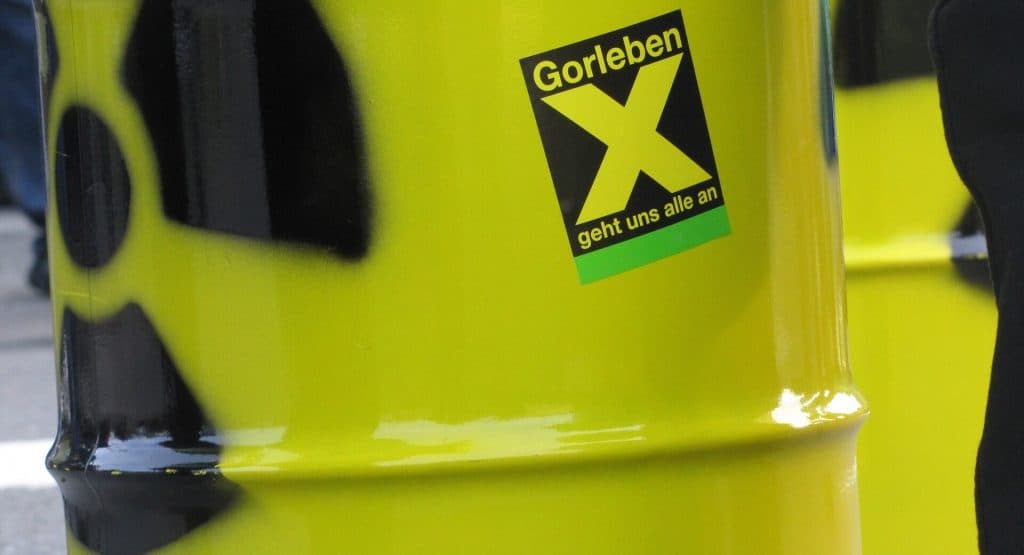
The Senate should approve without amendments a bill setting out rules for preparations to build a deep geological repository for radioactive waste, according to the Committee on Regional Development, Public Administration and the Environment. Today, like the government and the Chamber of Deputies, the Senate committee rejected affected municipalities’ demand for the right to veto construction of a repository on their territory. The upper house of Parliament will decide on the bill at a session starting this Thursday.
Unlike the government’s original proposal, the Chamber of Deputies’ version does not stipulate that a government decision to build the repository must be approved by both houses of Parliament. Individual deputies from the Christian Democrats (KDU-ČSL), the Pirates and the Freedom and Direct Democracy party (SPD) unsuccessfully pushed for a veto right in the Chamber of Deputies, as requested by the affected municipalities. Instead, the lower house simply extended the deadlines in the government’s proposal, giving municipalities more time to submit their views on construction of the repository.
According to the government, the bill will help develop nuclear energy in Czechia and is another step towards strengthening energy security. The aim of the bill is not to speed up construction of the repository, but to ensure the greatest possible respect for the interests of affected municipalities, which will have sufficient time to express their views, Industry and Trade Minister Jozef Síkela (STAN) said. According to the minister, giving them a veto right as well „has no precedent for projects of comparable importance in the public interest“.
The Platform Against the Deep Geological Repository, which brings together 52 municipalities and associations, called for the veto condition to be enshrined in law. It asked the government to substantially revise the bill. The legislation does not strengthen the municipalities’ position in the joint decision-making process, the platform said. It also pointed to the risk of shortening the time available for geological surveys and selecting a final repository site as early as 2028—a timetable proposed by the Radioactive Waste Repository Authority (SÚRAO), according to the platform.
The government originally proposed that its decision on selecting a repository site would require the approval of both houses of Parliament. However, the Chamber of Deputies’ Economic Affairs Committee secured a change under which the decision must only be sent to both houses for their information, and will take effect 180 days after it is delivered.
The Act on Proceedings Related to a Deep Geological Repository for Radioactive Waste should give municipalities 140 days to comment on a proposal to locate a repository. The government originally proposed a 90-day period. The law should also explicitly require the Ministry of Industry and Trade to discuss the proposed site with the Ministry of the Environment and with residents of affected municipalities in the area concerned. The law is also expected to give the government the option of setting compensation payments for affected municipalities above the amounts provided for under the Atomic Act. The legislation is to establish rules for oral hearings and primarily define the so-called participation rights of affected municipalities in proceedings to designate a protected area for a deep geological repository. The government will set up a working group to communicate with municipalities, which should make it easier for them to participate in preparations for and operation of the repository.
SÚRAO wants to assess four areas for the repository: Horka and Hrádek in the Vysočina Region, Janoch near the Temelín nuclear power plant in South Bohemia, and Březový potok in the Klatovy area. Preparations for geological surveys and research will begin this year. The site for storing spent fuel from nuclear power plants should be selected in 2030; the Platform Against the Deep Geological Repository says the law will bring that deadline forward by two years. Thousands of tonnes of spent fuel from nuclear power plants are to be stored permanently in the repository, half a kilometre underground. The repository was originally due to be built by 2065, but accelerating construction is now being discussed because the EU has temporarily classified nuclear power as a green investment. The condition is that countries relying on nuclear energy must have deep geological repositories from 2050.
Translation disclaimer
This article is a machine translation of the Czech original and has not yet been fully reviewed. In case of any doubt, please refer to the Czech version.
Sdílejte článek prostřednictvím:
You might also like
31 October 2026, 08:21
30 October 2026, 20:16
30 October 2026, 12:33