
23 October 2026, 14:38
Loading...
Fiala: Czech firms could win contracts worth up to CZK 240bn for Dukovany construction

oEnergetice.cz, ČTK
20 September 2024, 14:10
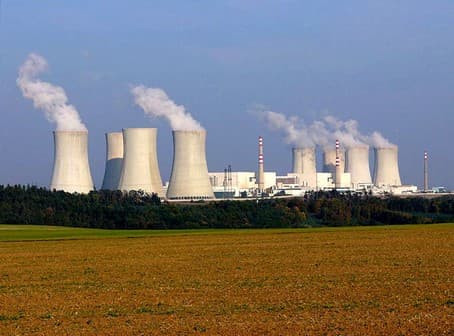
Czech firms could win contracts worth up to 240 billion crowns for the construction of two new nuclear reactors at Dukovany. Prime Minister Petr Fiala (ODS) said this today in Plzeň. He visited Doosan Škoda Power and Škoda JS with South Korean President Yoon Suk Yeol; the companies are expected to be major subcontractors to Korea Hydro & Nuclear Power (KHNP). Under the government’s decision in July, KHNP will build two new units at Dukovany. The contract is due to be signed by March 2025.
„The Korean side has stated that Czech companies will be involved in preparing and building the new nuclear units to the extent of up to 60 percent. I believe we can achieve this shared goal,“ Fiala said.
But Czech firms should not take this for granted, he said. „They must do their utmost to submit the best competitive bid. They must draw on their experience from previous contracts, whether for the Temelín power plant or projects in neighbouring countries,“ he said.
The Czech side views the 60 percent involvement of domestic firms as a mutual commitment. „That means a commitment not only on the Korean side, but on ours as well,“ Fiala added. The success of this agreement is very important, the prime minister said.
„If our cooperation proves successful, it could serve as a model for similar contracts in the future,“ Fiala said.
The details of the cooperation are being successfully refined and specified, he said, also thanks to memorandums signed by Czech and Korean organisations. Five more were signed today—with an alliance of supplier companies, manufacturers in Plzeň and universities. The prime minister and the Korean president signed a turbine featuring the largest blades, which are also planned for the equipment to be supplied to Dukovany.
Fiala said the government must ensure a sufficient supply of reliable energy for Czech households and industry, and that the Czech Republic must not depend on a single supplier in any sector. „Our strategy relies to a significant extent on developing nuclear energy,“ he said. One important step is the successful tender for new units at Dukovany, which the Czech Republic will need in the future. „KHNP’s bid, which we believe will lead to successfully concluded contracts, was the most advantageous and best met our requirements,“ the prime minister added.
According to South Korean President Yoon Suk Yeol, Plzeň is a major economic centre in the Czech Republic, and today’s event is a historic milestone for nuclear cooperation between the Czech Republic and South Korea. „South Korea is the best partner for the construction of Dukovany. We have a history similar to that of the Czech Republic,“ he said. South Korea began building nuclear power plants in 1971, when its economy was not yet developed. It later went on to build plants abroad, including in Dubai.
„Many companies based in the Czech Republic have technologies for building the Dukovany plant, and these companies signed a memorandum of understanding with the Korean team today. A further memorandum was signed on cooperation in nuclear energy research and development,“ Yoon Suk Yeol said.
The Czech Republic and South Korea have also agreed to cooperate on servicing the power plant throughout its operational life, he said.
„The Korean government will fully support the construction of the Dukovany plant,“ the president said.
South Korea wants to become a global leader in nuclear power plants, around 100 of which are expected to be built worldwide, he said. „Countries around the world certainly need to support their construction to ensure a sufficient supply of electricity,“ he added.
Doosan Škoda Power, based in Plzeň, is owned by the South Korean Doosan Group. ČEZ, the owner of Škoda JS, is now negotiating with the Koreans on the Dukovany contract, which is due to be signed by the end of March next year. The first of the two new reactors at Dukovany is expected to be completed in 2036. French company EDF and US-based Westinghouse, which were also interested in the contract, have challenged the tender with the Czech Office for the Protection of Competition.
Translation disclaimer
This article is a machine translation of the Czech original and has not yet been fully reviewed. In case of any doubt, please refer to the Czech version.
Sdílejte článek prostřednictvím:
You might also like


23 October 2026, 11:01


23 October 2026, 06:34