
23 October 2026, 14:38
Loading...
First container placed in ISF-2 dry storage facility at Chernobyl
Vladimír Wagner
21 November 2020, 08:23
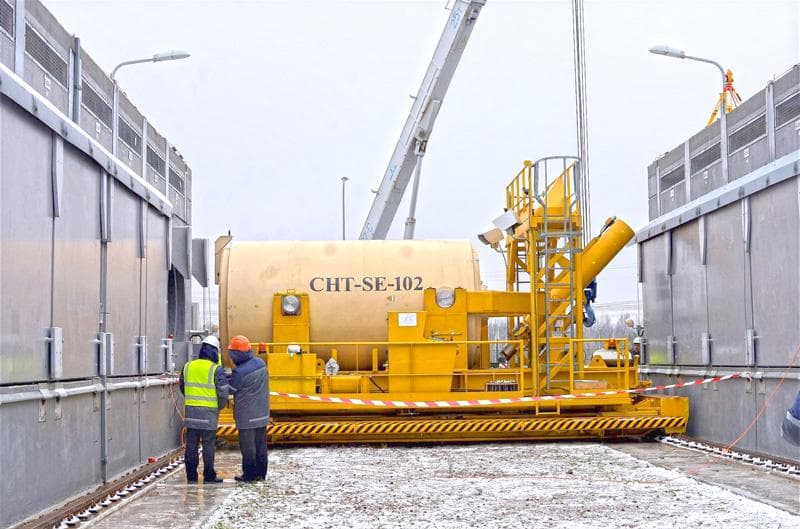
A highly significant event has taken place at Chernobyl. The first container containing fuel assemblies from the undamaged reactors of the Chernobyl nuclear power plant has been placed in the ISF-2 interim dry storage facility. This marks a key step towards bringing the facility into full operation.
In addition to the new sarcophagus over the destroyed reactor, which was recently completed and commissioned, the European Union, through the European Bank for Reconstruction and Development, also financed the ISF-2 interim storage facility for spent fuel assemblies. All fuel assemblies from the operation of the RBMK units at the Chernobyl nuclear power plant, which have accumulated in an interim pool-type storage facility, will gradually be transferred here.
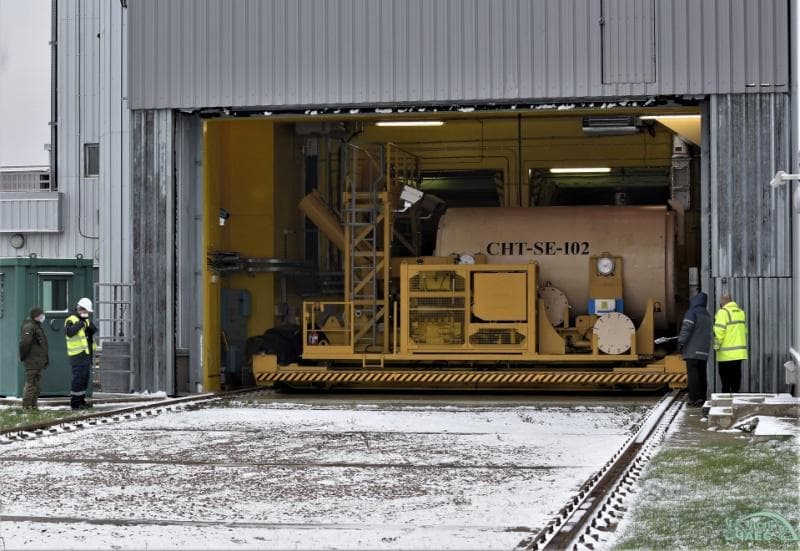
The total number of these assemblies, which were used between 1977 and 2000, is around 21 000. A special building with hot cells had to be constructed, where the lower and upper parts of the assembly that do not contain fuel are removed, and only the fuel-bearing sections are placed in a double-walled container. A total of 93 modified fuel assemblies can be placed in one container. The loaded container, whose hermetically sealed space between the double walls is filled with helium, is inserted into a concrete vault. The containers can be safely stored there under continuous monitoring for up to one hundred years, or in any case until they are reprocessed or placed in a permanent repository.
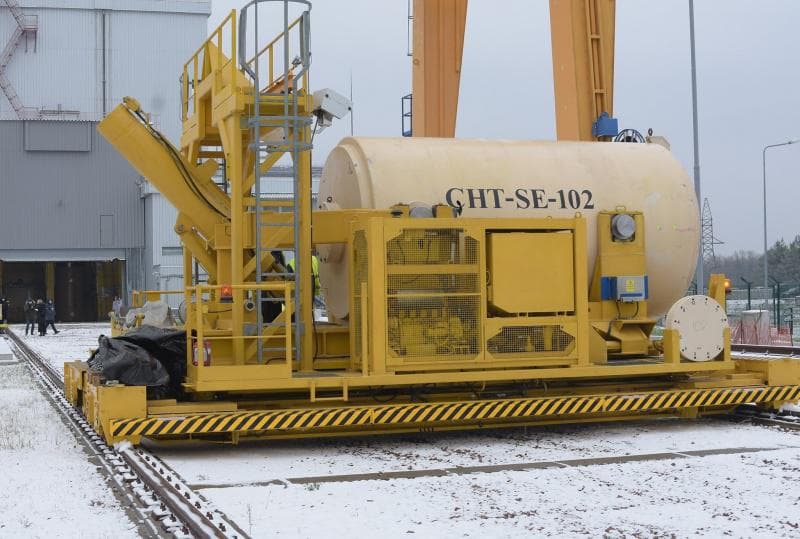
The facility was built with financial support from European states by Holtec, which took it over in an unfinished state from Areva. It completed the facility in December 2019, when it handed it over to the Chernobyl nuclear power plant. On 7 September 2020, permits were obtained for hot testing of the entire installation. The aforementioned 93 fuel assemblies were gradually processed in the hot cells and placed in the container. It was then hermetically sealed, filled with helium and welded shut. On 18 November, the first concrete vault at the storage facility was filled with the container. All work was carried out under the supervision of experts from the International Atomic Energy Agency and Holtec personnel.
During hot testing, a number of further tests still need to be carried out and the reliability and safety of all individual steps verified. The facility is expected to receive a licence for standard operation in April 2021. This is a very important milestone in the decommissioning of the Chernobyl nuclear power plant and in the operation of the entire protected complex.
I was able to visit the facility when the building for processing fuel assemblies and placing them in containers, as well as the concrete vaults for them, had been completed. At the time, the hot cells were empty and equipment was only beginning to be installed in them. We were among the last tour groups able to see them from the inside. This visit, including the photographs taken, is described in greater detail in this article.
Very positive experience with Holtec led the Ukrainian government to decide to build a second similar storage facility in part of the affected zone around the Chernobyl nuclear power plant, which is being turned into an industrial zone. It will be used to store spent fuel from three Ukrainian VVER nuclear power plants: Rivne, Khmelnytskyi and South Ukraine. The fourteen main buildings of the facility are now roughly 87 % complete, and trial operation is planned for December 2020. The facility could therefore receive an operating licence and accept its first containers of spent fuel in the first half of 2021.
The storage facility is expected to have capacity for 458 HIS-STORM containers, which can hold more than 16 500 fuel assemblies in total. For now, spent fuel from Ukrainian nuclear power plants is transported to and stored at interim facilities in Russia, for which Ukraine pays. The country's own storage facility should deliver substantial savings as well as efficient use of the industrial zone near the Chernobyl nuclear power plant.
A bottleneck that could delay the start of operations at the facility is the necessary reconstruction of an old 43 km railway line, which is intended to enable the transport of spent-fuel containers to the storage site. This reconstruction should begin in January next year and is supposed to be completed on time, though this is not yet certain.
The latest developments at Fukushima and Chernobyl are summarised in an article from the beginning of this year, while the difference between the actual course of the accident and its depiction in the Chernobyl series is discussed in an article on Osel and in greater detail in a lecture recorded at the Teplice Observatory.
Written for Osel and oEnergetice.
Lead photo: Container before insertion into a vault at the interim dry storage facility (source: Chernobyl nuclear power plant)
Translation disclaimer
This article is a machine translation of the Czech original and has not yet been fully reviewed. In case of any doubt, please refer to the Czech version.
Sdílejte článek prostřednictvím:
You might also like
23 October 2026, 11:01
23 October 2026, 06:34