4 November 2026, 14:17
Loading...
France selects innovative nuclear projects
Veronika Jurcová
6 December 2023, 14:04
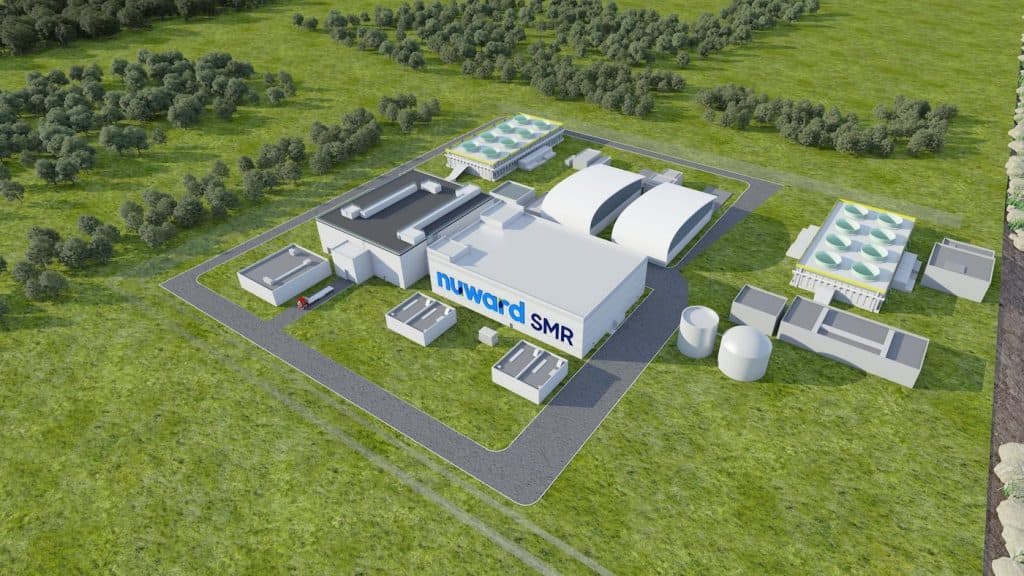
France plans to provide more than 100 million euros in funding for innovative nuclear reactor projects. The government call was launched last March with the aim of supporting new, fully developed concepts for innovative nuclear reactors in the fields of fission and fusion, and creating an ecosystem of startups in the nuclear sector, reports Argus Media.
The winners were announced on the eve of the fifth World Nuclear Exhibition (WNE) in Paris, which ran from November 28 to 30.
"Six innovative nuclear reactor projects will receive support under France 2030 investment plan," Energy Minister Agnes Pannier-Runacher announced.
The selected projects include a fusion reactor, fast neutron reactors, modular reactors and high-temperature reactors. In addition to state financial support, they will also receive technical support from the French Alternative Energies and Atomic Energy Commission (CEA), the minister's office said.
The overall winner was French company Renaissance Fusion, which won with its nuclear fusion project. The company plans to commission a 1 GW reactor based on the fusion of deuterium and tritium after 2030. Funding from the France 2030 investment programme will be allocated to the first phase of the project, which includes developing liquid metals and superconductors, and will account for 40% of the total funding. The remainder will come from the private sector, Renaissance Fusion project director Simon Belka told Argus in an interview during the WNE conference.
The technology range is broad
Other winners include Blue Capsule and Jimmy Energy, which have designed high-temperature reactors, and Calogena, which presented a 30 MW modular reactor project to decarbonise heating.
Startups Otrera Nuclear Energy and Hexana presented projects for sodium-cooled fast neutron reactors (FNRs). These are fourth-generation reactors that enable more efficient use of nuclear fuel.
"If we start having problems with uranium supplies in 2050, we need to start building FNRs now," Hexana technical director Paul Gauthé told Argus.
The company plans to commission two 400 MW units by 2035. The reactors will also feature a heat storage system.
France initially moved away from FNR technology, abandoning the Superphenix and Astrid FNR prototypes in 1997 and 2019. Government support for Hexana's technology points to renewed interest in FNRs, Gauthé said.
The selected projects join two other innovative reactors chosen in June this year. These are projects by Naarea SA, with molten salt reactors (MSRs), and Newcleo SA, with a lead-cooled fast reactor (LFR). Both received funding of 24.9 million euros.
France is counting on nuclear power in the future
France is counting on nuclear power in the future and has long advocated for its support at EU level. It plans to keep nuclear power's share of the energy mix above 50% by 2050. In the summer, France and a group of countries that support nuclear energy called on the European Commission to consider establishing an industrial alliance for small modular reactors.
Nuclear power, and nuclear fusion in particular, is also expected to receive support at the ongoing UN climate summit in Dubai. In his speech at the summit on December 2, Czech Prime Minister Petr Fiala highlighted the role of nuclear energy in the fight against climate change and identified the development of a new generation of modular reactors as one way to address it. Before departing for Dubai, he also said that the Czech Republic would support a declaration to triple global installed nuclear capacity by 2050. The initiative is backed by 21 countries, including France, the United States and the United Kingdom.
Translation disclaimer
This article is a machine translation of the Czech original and has not yet been fully reviewed. In case of any doubt, please refer to the Czech version.
Sdílejte článek prostřednictvím:
You might also like
4 November 2026, 12:34

4 November 2026, 09:09