
23 October 2026, 14:38
Loading...
Hungary seeks to relax Danube limits, with Paks nuclear plant key to security of supply

Eduard Majling
1 August 2024, 18:26
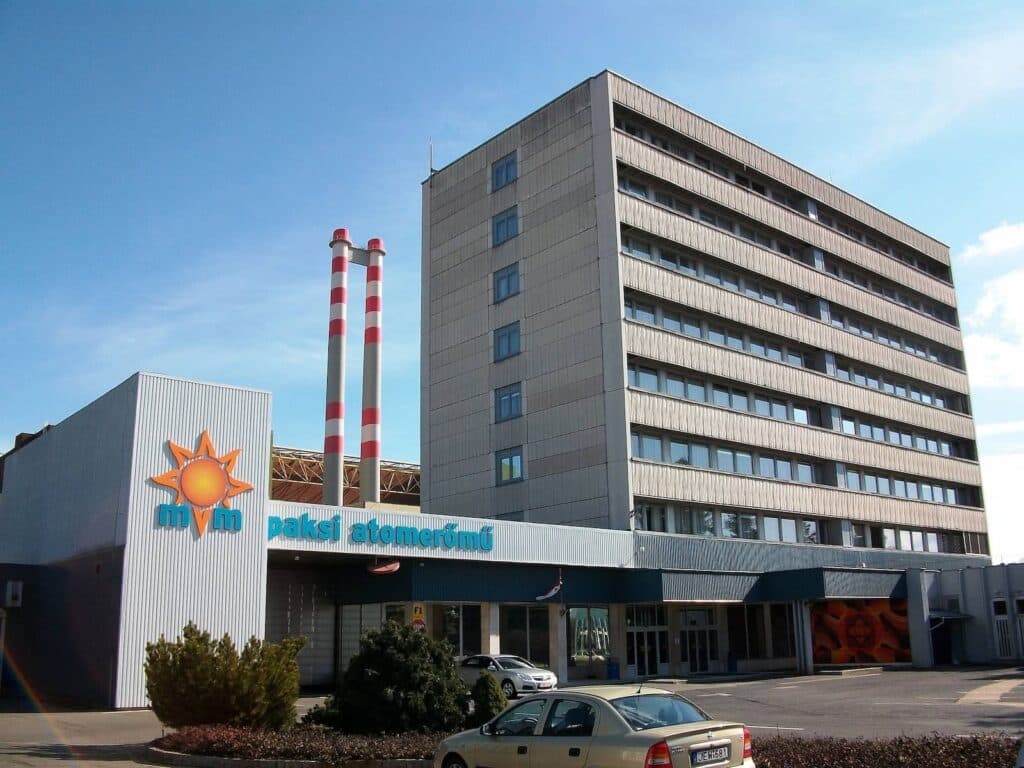
Hungary’s Ministry of Energy announced late last week that it plans to relax the regulations on temperature limits for the Danube. The Paks nuclear power plant uses water from the Danube for cooling, and during hot summer days it can heat the river excessively. However, the ministry says the plant is essential to ensuring security of electricity supply. Southern parts of Europe have faced significantly above-average temperatures in recent weeks, driving up electricity consumption.
Parts of Europe are facing severe heatwaves this summer, with consequences for the energy sector. On the one hand, demand for electricity rises due to cooling needs; on the other, thermal power plants may have to curtail operations. This is not unusual: in recent years, France, for example, has faced restrictions on the output of thermal power plants, mainly nuclear ones.
High temperatures can have a particularly negative impact on power plants with once-through cooling, which draw water from rivers or seas and then return it at a higher temperature. For example, high river temperatures generally do not restrict operations at Czech power plants, as cooling towers are commonly used in the country. In other countries, especially those with larger rivers, however, such situations can arise.
Hungary is one example: its only nuclear power plant, Paks (2000 MW), uses once-through cooling. In such cases, governments or public institutions set various environmental limits to prevent rivers or other bodies of water from overheating. This is intended to protect local ecosystems, which can be adversely affected by higher temperatures. According to Reuters, the current temperature limit for the Paks plant—and therefore the Danube—is 30 °C. In other words, if the Danube reaches this temperature, the plant should not discharge heated water into it and should reduce its output.
Exceptions only to ensure security of supply
According to the agency, Hungary’s Ministry of Energy is now proposing an adjustment to the regulations. The temperature limits would remain unchanged, but the plant operator would be allowed to exceed them in exceptional cases. This would apply when necessary to ensure security of supply, subject to approval by the Ministry of Energy.
“As a result of climate change, weather conditions may increasingly cause the limit to be reached in summer, particularly when water levels are low. Curtailing production at the Paks plant could directly threaten the uninterrupted supply of domestic consumers in a tight energy market,” the ministry said in a statement, according to Reuters.
The Paks nuclear power plant is currently Hungary’s only nuclear power facility. With four pressurised water reactors and a total capacity of 2000 MW, it is comparable, for example, to the Dukovany nuclear power plant.
Translation disclaimer
This article is a machine translation of the Czech original and has not yet been fully reviewed. In case of any doubt, please refer to the Czech version.
Sdílejte článek prostřednictvím:
You might also like


23 October 2026, 11:01


23 October 2026, 06:34