21 October 2026, 17:52
Loading...
KHNP still expects Czech suppliers to account for 60% of the Dukovany project in Czechia

oEnergetice.cz, ČTK
25 February 2025, 15:23
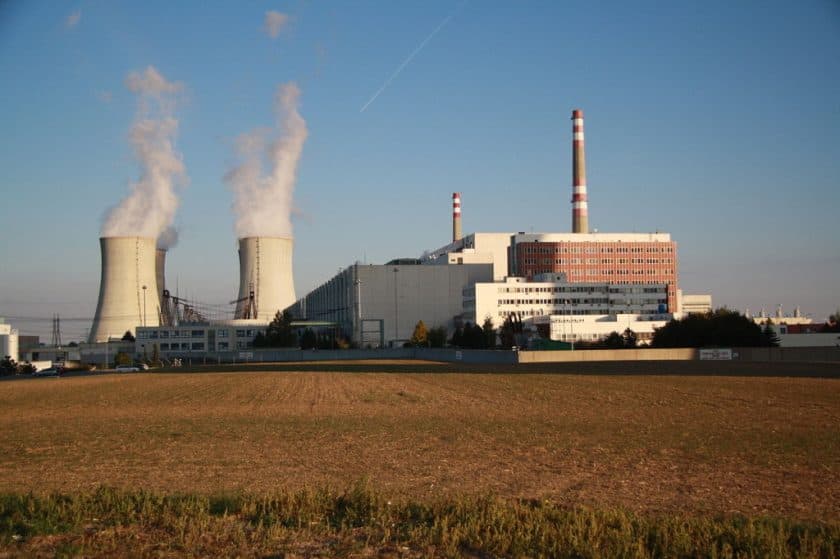
South Korean company KHNP still expects Czech suppliers to account for 60% of the construction of the new nuclear units at Dukovany. Czech companies should reach this share by 2039, when both planned reactors at Dukovany are due to be completed. Representatives of the Korean company said this at today’s Czech-Korean Nuclear Industry Conference. Representatives of Czech industry expressed concerns in recent weeks about achieving this target, as no binding cooperation agreements have been signed yet.
KHNP won last year’s Czech nuclear tender, with the government preferring its bid to those from EDF and Westinghouse. The first unit at Dukovany is due to be completed in 2036. ČEZ Group, which is overseeing the tender, is now negotiating the final project contract with KHNP, which is expected to be signed by the end of March.
„We believe that, by the time the entire project is completed in 2039, Czech suppliers will have reached a 60% share,“ said KHNP adviser Alois Míka.
He said KHNP would continuously assess subcontractors’ capabilities during both the preparation and subsequent construction phases. „We will provide them with feedback so they can gradually improve and expand their share of the project,“ Míka continued. He said that through the gradual optimisation of all project management processes, Czech companies would be able to reach the previously promised participation level.
KHNP also expects Czech companies to be involved, according to its president, Joo Ho-wang. „Since KHNP was selected, we have been working on proposals for localising suppliers in line with the requirements of the Czech government and regions,“ he said at the conference today. He said it had practically been decided that the turbine supplier for the Dukovany unit would be Plzeň-based Doosan Škoda Power. He also acknowledged the possibility that the company could supply the entire turbine hall. „We are now considering this very seriously,“ he added. According to Joo Ho-wang, KHNP is also considering setting up a fund to support small and medium-sized companies in Czechia so they can obtain the certifications needed to participate in the project.
Representatives of the Association of Building Entrepreneurs said last week that no binding agreements had yet been reached between Czech companies and the Koreans on participation in the project. The association warned that the previously announced 60% involvement of Czech industry in the construction could therefore be at risk, and that the actual level of participation by Czech companies would be limited.
French company EDF, which also bid to build the Dukovany project, also raised Czech companies’ concerns today. „EDF is fully aware that Czechia has a world-class nuclear industry that should play a significant role in the country’s nuclear programme. That is why EDF has consistently emphasised in its bid a strong commitment to seeking a share of more than 60% for supplies from Czech companies. EDF’s bid would secure high-value-added contracts for Czech industry—including orders to manufacture critical components—as well as long-term export opportunities on future EPR reactor projects across Europe,“ the company said today in a statement to the Czech News Agency (ČTK). The French company also confirmed that its bid from last year remains valid.
Minister of Industry and Trade Lukáš Vlček (STAN) discussed Czech companies’ involvement in reactor construction during a visit to South Korea. He said the Czech government would require KHNP to guarantee, before the final project contract is signed, that Czech companies will have at least a 30% share in the construction. „The overall requirement remains for Czech industry to be involved in 60% of the project,“ Vlček stressed.
Construction of new nuclear units in Czechia is expected to be the largest domestic contract in the country’s history. At current prices, the cost of the currently preferred plan to build two reactors at Dukovany is 400 billion crowns. However, over the next three to five years, ČEZ is also expected, under a government decision, to negotiate with the Koreans an option to build two more units at Temelín.
Translation disclaimer
This article is a machine translation of the Czech original and has not yet been fully reviewed. In case of any doubt, please refer to the Czech version.
Sdílejte článek prostřednictvím:
You might also like
21 October 2026, 14:08
21 October 2026, 14:00