KHNP withdraws from project to build nuclear power plant at Borssele in the Netherlands

South Korean company Korea Hydro & Nuclear Power (KHNP) has decided to withdraw from the process to select a supplier for two new reactors at the site of the Borssele nuclear power plant in the Netherlands. The move follows the company’s recent decision not to take part in similar tenders in Sweden and Slovenia.
In December 2021, the Dutch government put nuclear energy at the heart of its climate and energy policy. Under preliminary plans, the two new reactors are to be completed around 2035, each with an installed capacity of between 1000 and 1650 MWe. In 2035, the reactors are expected to provide approximately 9–13% of the Netherlands’ electricity generation. In December 2022, the Dutch government announced that the Borssele site was the most suitable location for their construction.
Feasibility study and cooperation with KHNP
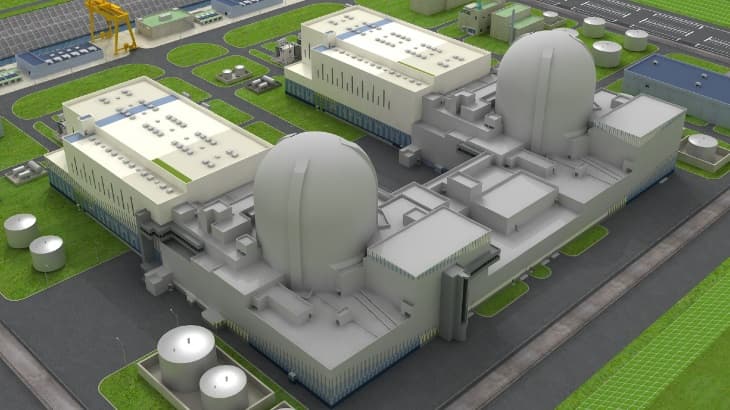
In December 2023, KHNP won a contract to prepare a feasibility study for the construction of two Korean reactors at Borssele. The agreement followed a Memorandum of Cooperation on nuclear energy between the South Korean and Dutch governments.
Similar agreements for feasibility studies were also signed with French company EDF and US company Westinghouse. The studies were intended to assess whether the reactor designs comply with Dutch legislation, whether they are suitable for the selected Borssele site, and to provide detailed estimates of costs and construction times. They also assessed potential environmental impacts. In November, US company Amentum was commissioned to review the studies and advise the Dutch government.
Reasons for KHNP’s withdrawal
“The studies have been completed, final discussions have taken place and the contracts have been concluded,” Dutch Minister for Climate and Green Growth Sophie Hermans said in a letter to the Lower House of the Dutch parliament dated 17 March.
“During these discussions, KHNP unfortunately announced that it cannot act as the technology supplier for the construction of new power plants in the Netherlands. KHNP said it made this decision based on its own strategic considerations, which are unrelated to the terms or nature of the Dutch project. This decision follows similar moves by KHNP in other European countries, such as Sweden and Slovenia,” Hermans added.
Impact on the project and next steps
The minister also stressed that KHNP’s decision would not affect preparations for the open tender and that preparations for the construction of the new nuclear units would continue without delay. Westinghouse and EDF said they were interested in continuing active discussions on integrating their technologies into the Dutch project, both technically and economically.
The government plans to inform the Lower House of parliament in early May about the results of the technical feasibility studies and their independent review. “In this letter, the government will also set out the next steps in preparing the project, including financing, project management and governance. It will also clarify how the technology selection process will proceed,” Minister Hermans said.
European projects and intellectual property disputes
Last year, Westinghouse, EDF and KHNP also took part in the Czech tender to complete the Dukovany nuclear power plant. KHNP won the tender, and the EPC contract is expected to be signed by the end of March. Appeals by EDF and Westinghouse against the decision should not affect the signing of the contract. Westinghouse also recently withdrew its comments on the Czech tender.
It was recently announced that Westinghouse, KHNP and Korea Electric Power Corporation had reached an agreement on intellectual property disputes that had been the subject of legal proceedings in the United States. Although the details of the agreement are confidential, the companies said that “the agreement also paves the way for future cooperation on new nuclear projects around the world.”
Translation disclaimer
This article is a machine translation of the Czech original and has not yet been fully reviewed. In case of any doubt, please refer to the Czech version.




