
23 October 2026, 14:38
Loading...
Korean nuclear plants upgrade cooling systems as seas warm

Jiří Puchnar
23 August 2025, 07:44
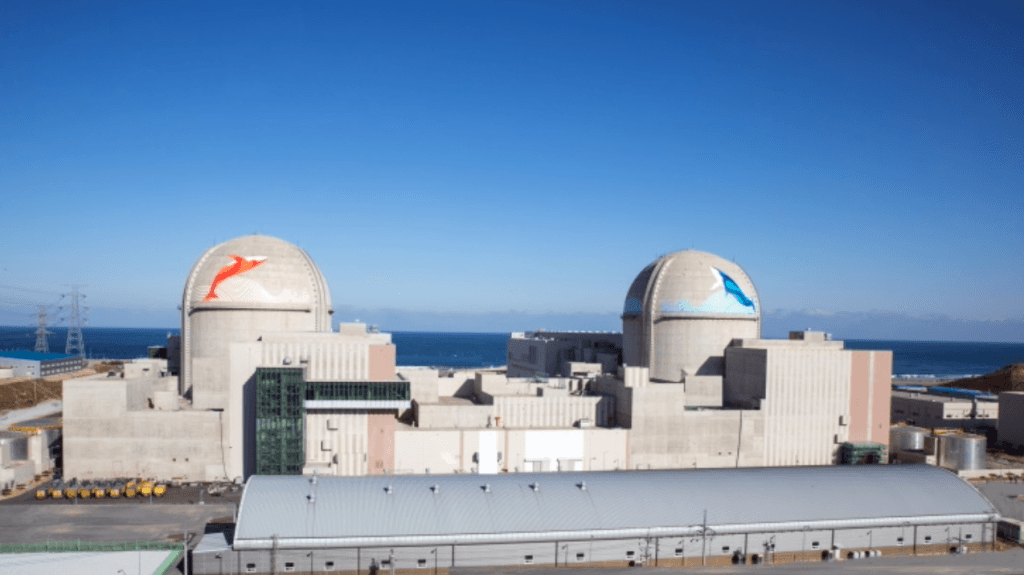
Korea Hydro & Nuclear Power (KHNP) has announced plans to improve the cooling efficiency of its nuclear power plants. The reason is rising seawater temperatures caused by climate change, which are nearing design limits, the Nuclear Safety and Security Commission of Korea (NSSC) said. The design seawater temperature is the maximum value at which reactors can safely operate at rated output.
KHNP has so far used operating margins and gradually raised the seawater temperature limits without changing the equipment itself. Looking ahead, however, it plans to upgrade cooling systems to ensure long-term reliability.
According to the company’s analyses, some units could approach their maximum design water temperatures as early as the beginning of the next decade: Shin Wolsong 1 and 2 in 2030, Hanbit 3 and 4 in 2031, and units Hanbit 1, 2, 5 and 6 in 2034.
Completed and planned upgrades
KHNP has already completed the replacement of heat exchangers at Shin Wolsong units 1 and 2 with larger plate heat exchangers, increasing their cooling capacity. The company is now preparing to raise the design seawater temperature limit for operating these units.

Wolsong Nuclear Power Plant, Korea. Source: Flickr
At the Hanbit plant, the operator plans to replace the existing shell-and-tube heat exchangers with more modern equipment by the first half of 2029. Upgrades at other plants are planned for the medium to long term, with specific measures to be based on regular assessments of cooling performance.
Regulator’s position
At a joint meeting, the NSSC called on KHNP to take faster and more proactive action. Commission Chair Choi Won-ho stressed that the facilities must be upgraded to address rising water temperatures systematically, while also ensuring they can respond immediately when temperatures are exceptionally high.
The commission will therefore conduct regular inspections to ensure that the measures are implemented without delay.
Warming seawater
KHNP said it will introduce a system to monitor seawater temperatures and their long-term trends at each plant every year. The system will draw on actual measurements as well as scientific studies on the rate of seawater warming.
According to the Korea Institute of Ocean Science and Technology, the average water temperature in the East Sea rose by 8.3 °C between 1980 and 2010. It then increased by a further 1 °C in the 2021–2023 period alone. This trend poses a major challenge for nuclear power plants that use seawater for cooling.
Translation disclaimer
This article is a machine translation of the Czech original and has not yet been fully reviewed. In case of any doubt, please refer to the Czech version.
Sdílejte článek prostřednictvím:
You might also like


23 October 2026, 11:01


23 October 2026, 06:34