23 October 2026, 14:38
Loading...
Macron unveils France 2030 plan: We will support hydrogen and small modular reactors

Martin Voříšek
15 October 2021, 06:09
French President Emmanuel Macron has unveiled the France 2030 plan, focused on energy. Under the plan, the French government will allocate EUR 30 billion to various areas of the energy sector. France's EDF will benefit from the plan in particular, investing part of the funding in a small modular reactor pilot project.
Six months before the French presidential election, incumbent President Emmanuel Macron unveiled another investment plan. Following an investment plan with a EUR 100 billion budget intended to restart the economy after the COVID-19 pandemic, energy has now also come into focus. France's energy sector can therefore expect support worth EUR 30 billion.
The plan indicates which technologies France is betting on over the next decade. These will primarily include small modular reactors, renewable energy sources and hydrogen production.
"Nuclear energy, hydrogen and renewable energy sources will be key for us in generating electricity from different sources and reducing our carbon footprint," Emmanuel Macron said in a speech presenting the France 2030 plan.
Of the total EUR 30 billion budget, EUR 1 billion has been earmarked for the development of small modular reactors. France's EDF has previously said that it is betting on this technology and sees potential in it. It also wants to export small modular reactors to countries that do not have suitable conditions for renewable energy generation. For these countries, nuclear reactors will be a means of meeting climate targets.
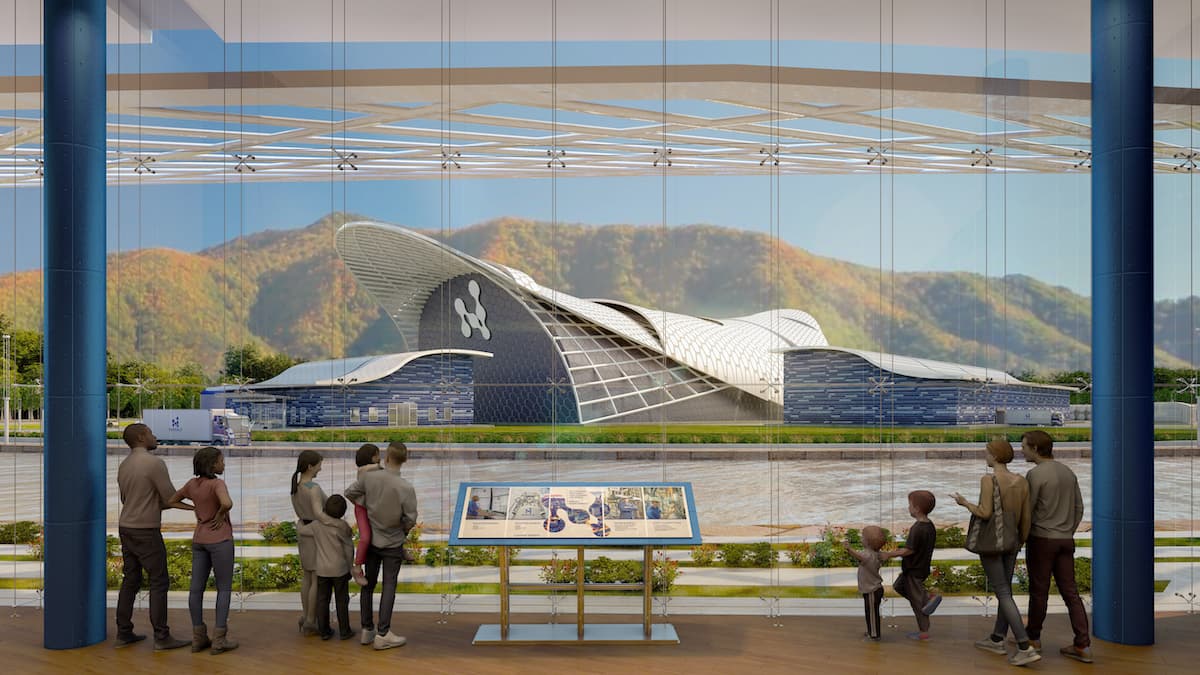
NuScale small modular reactors Source: Oregon State University, oregonstate.edu
EDF wants to join companies such as Rolls-Royce and NuScale, which are among the leaders in the development of small modular reactors. The aim is to complete the design of a 170 MW reactor by the end of next year. The pilot project is expected to be completed in France in 2030.
"We must also look at other groups of technologies," Emmanuel Macron said.
However, France is not abandoning plans to build EPR reactors either. Although it has struggled with their construction in Europe, it still plans to build six more in France. No decision has yet been made on their implementation, but reports suggest that a final decision could be taken before completion of this type of reactor at Flamanville.
The plan comes at a time when the rules for the EU Taxonomy are being formulated, under which individual energy technologies are designated as "sustainable". The greatest disagreement among member states concerns precisely the designation of nuclear and gas power plants as sustainable.
France also bets on hydrogen
In addition to small modular reactors, hydrogen technologies are also at the centre of the France 2030 plan.
Around 6.5 GW of electrolyser capacity should be installed in France by 2030. No other European country has yet presented such an ambitious plan.
Moreover, hydrogen will not be a matter of dispute within the European Union, as is the case with nuclear power plants. The European Union itself envisages the development of hydrogen technologies. In the middle of last year, the EU published its hydrogen strategy (EU Hydrogen strategy), which sets out basic hydrogen targets. Among other things, it envisages electrolyser production capacity reaching 40 GW by 2030.
Translation disclaimer
This article is a machine translation of the Czech original and has not yet been fully reviewed. In case of any doubt, please refer to the Czech version.
Sdílejte článek prostřednictvím:
You might also like
23 October 2026, 11:01
23 October 2026, 06:34