23 October 2026, 14:38
Loading...
Nuclear energy in Central Europe
Vladimír Wagner
17 February 2020, 14:19
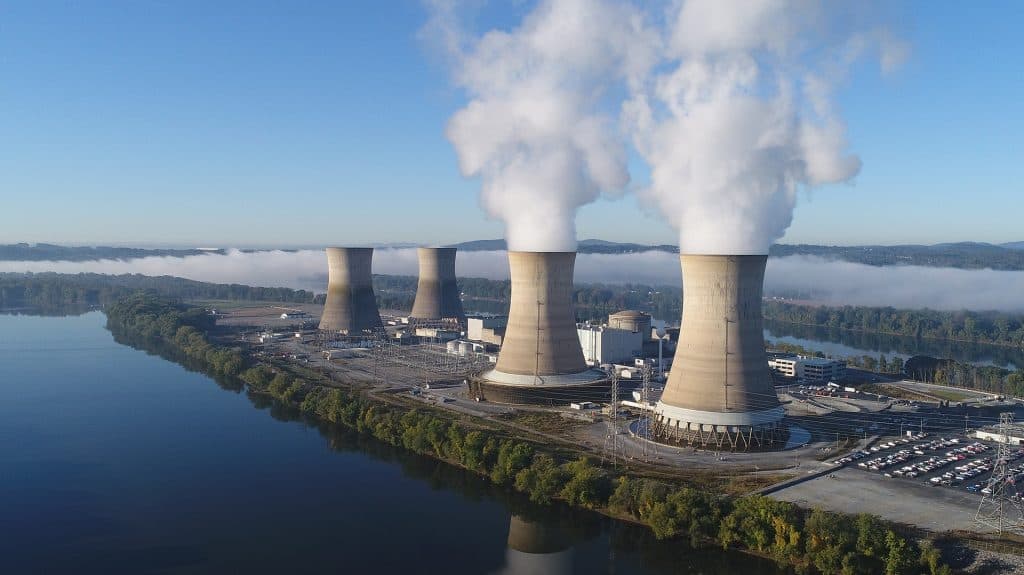
Given that several steps towards starting construction of a new unit at Dukovany were taken around the turn of 2019 and 2020, it is interesting to look at the current state and prospects of nuclear energy in Central Europe. The energy sectors of these countries have a number of common features as well as differences. However, there are many reasons why they should cooperate and proceed in a coordinated and joint manner, including on nuclear energy.
With the exception of Poland, all V4 countries operate VVER440 reactors. Czechia has four such units at the Dukovany plant; Slovakia has two operating units at the Jaslovské Bohunice plant, as well as two operating and two under construction at the Mochovce plant; and Hungary has four units at the Paks plant. With the exception of Mochovce, all the units were completed in the 1980s. At the same time, their replacements cannot be expected to be built quickly. It is therefore necessary to work hard to ensure their safe operation for as long as possible. Operators will face not only technical challenges, but also very intense political pressure from Germany and Austria to shut down these units. Cooperation and mutual support among these countries will be highly useful in both technical and political areas. Technically, and probably economically, operation for 50 or even 60 years is certainly possible, i.e. until the 2030s or even the 2040s. However, political opposition from Austria and Germany will be a critical problem.
The VVER440 units mentioned will need to be replaced by new sources within a quarter of a century at the latest. Moreover, construction times for new nuclear units in Europe are very long. Their replacement must therefore be addressed as soon as possible. At the same time, as part of Europe-wide emissions-reduction policy, Central European countries should replace their fossil-fuel sources with low-emission ones. Let us therefore take a closer look at Central European energy systems and their potential to contribute to emissions reductions.
Central European countries and low-emission energy
All the Central European countries mentioned certainly have some potential to use renewable energy. However, given their geographical conditions, this potential is limited. Hydropower makes a relatively high contribution and has significant potential in Slovakia, notably the Váh cascade. Yet even there, this potential has already been largely utilised. The scope for further construction is very limited and often problematic for environmental reasons. Examples include the Nagymaros balancing barrage, which Hungary ultimately did not build, and pumped-storage plants in the mountainous parts of Czechia.
Only Poland has a coastal area suitable for offshore wind; in the other countries, opportunities to use wind are considerably limited. Poland and Hungary in particular are intensive agricultural producers, but even so, energy production can rely on biomass only to a limited extent. It competes with food production and the environmental functions of the landscape. When moving away from coal, these countries therefore have only two options: either they will switch in future to a combination of gas and renewables, or to a combination of nuclear power and renewables. The disadvantage of gas is that all these countries import it. It is also a fossil fuel whose extraction, transport and combustion generate significant greenhouse-gas emissions. A transition to low-emission energy in these countries can therefore be secured only by a combination of nuclear units and renewable sources. The use of gas raises another problem, particularly for Czechia, Hungary and Slovakia. They are smaller, highly open economies dependent on industry and exports of its products. To maintain their competitiveness, they need secure supplies of cheap electricity. That will be difficult with imported gas.
The Czech Republic currently generates around 88 TWh of electricity and consumes 74 TWh, making it for now an electricity exporter. Coal accounts for around 43 % of generation, while nuclear power provides around 34 % of electricity. It has four VVER440 units at Dukovany and two VVER1000 units at Temelín. In the coming years, however, several coal-fired units that fail to meet new, stricter emissions limits will be shut down. Czechia will thus cease to be an electricity exporter and will gradually need to import electricity. If it wants to pursue a path towards low-emission power generation, it will have to build at least a replacement for Dukovany and complete two units at Temelín.
Slovakia is furthest along the path to low emissions. It is currently a modest electricity importer, generating roughly 27 TWh and consuming 31 TWh. Once the two new units at Mochovce are completed, however, it will become an exporting country. It will then be able to close its last two coal plants, which still supply roughly 10 % of electricity. Nuclear units at the Jaslovské Bohunice and Mochovce plants already provide around 55 % of electricity. Hydropower supplies around 15 % of electricity. Slovakia will therefore complete its transition to low-emission power generation over the next few years. It will then need to build replacements for the ageing units at Jaslovské Bohunice. Slovakia is the only country among the four discussed that already has shut-down nuclear units. It will thus demonstrate how ageing units can be safely decommissioned. This could also help the others gain experience. This is particularly important for unit A1, where a nuclear accident occurred.
Hungary generates 31 TWh of electricity and consumes 44 TWh. It is therefore a major electricity importer, importing around 30 % of its needs. Coal accounts for 15 % of generation and gas for 24 %. Four VVER440 units at the Paks plant provide 50 % of its electricity generation. This country has progressed furthest in preparing the construction of new nuclear units. A contract with Rosatom for the construction of two VVER1200 units has already been concluded and site preparation is under way. Work is also under way to obtain a construction permit. Subcontractors for individual components are also being selected. GE will supply the turbine, while Framatome and Siemens will supply the instrumentation and control system. This could also speed up the licensing process, as these companies have extensive experience in the European Union.
Poland is in the worst position for transitioning to low-emission energy. Its electricity generation and consumption are roughly equal, at around 165 TWh. It obtains around 80 % of its electricity from coal and 6 % from gas. Among renewable sources, wind is the most significant, supplying 7 %, while hydropower provides 1.5 %. Construction of its first nuclear units is still only in preparation.
Progress in the past year
Let us look at progress in nuclear energy in individual Central European countries over the past year. First, what has been achieved in Czechia. An important task is to use existing units as efficiently as possible. One option is to supply heat from them. This service is currently provided here only to a limited extent.
In mid-March 2019, ČEZ began building a district-heating pipeline from Temelín to České Budějovice. It will be 26 km long and the company plans to complete it within two years. Two pipes with a diameter of 80 cm will be at least 1.3 m underground. The pipeline will mostly run alongside the road between Týn nad Vltavou and České Budějovice. Up to 80 people are expected to work on the construction. Heat losses should be below 3 %. It should provide roughly 30 % of the heat needed in České Budějovice.
Preparations continue for the contracts needed to begin construction of the first new reactor. This will be a unit at Dukovany. The investors in new nuclear sources in Czechia are to be subsidiaries of energy company ČEZ: EDU II for the Dukovany nuclear power plant and ETE II for the Temelín nuclear power plant. A contract between the state and ČEZ on construction of the new Dukovany unit is currently being finalised. It should be signed and published around the turn of February and March. The agreement is to set out the rights and obligations of both parties. The supplier tender should be launched in December. Construction could begin in 2029, with completion expected around 2036. Five companies currently expect to take part in the tender: Russia's Rosatom, France's EDF, South Korea's KHNP, China's CGNP and US company Westinghouse.
If the current Dukovany units were operated for 60 years, there would be an overlap in operation of roughly ten years. If the new unit has capacity of around 1200 MWe, there will be sufficient cooling water for such operation, with a reserve. In addition, work is under way at the plant to reduce cooling-water consumption by the existing units.
If everything proceeds successfully and the shift towards low-emission energy continues, the completion of two units at the Temelín nuclear power plant should also be prepared within the next five years.
Slovakia is completing two VVER440 units. Although construction began in 1985, it was halted in 1992. It resumed in 2008. However, the project has been accompanied by numerous delays. In 2019, the start-up of at least one of them drew closer.
The third unit at the Mochovce plant is already complete and is being prepared for commissioning. A number of very important tests took place during 2019. The key ones are various pressure tests and hydrotests. Some shortcomings emerged during the first hot hydrotests, so repeat tests were carried out from mid-December 2019. During them, the reactor and primary-circuit systems were heated to 260˚C and pressurised to 16.8 MPa. Thermal simulators of fuel assemblies were loaded into the reactor, faithfully simulating the hydrodynamic conditions during operation.
All planned tests were carried out. The primary-circuit strength pressure test, pressure tests of all steam generators and tests of the backup diesel generators were successfully completed. The Slovak Nuclear Regulatory Authority described these tests as successful and they were provisionally assessed as satisfactory. Two shortcomings were observed. During the new test, the authority identified problems with a component used to maintain constant pressure in the unit's primary circuit. Air quality was also reduced in the hermetic zone housing the core technological equipment. The reason was probably fumes from the coatings used.
It will now be important to see whether these problems can also be resolved. The timing of fuel loading depends on this. It is not yet possible to say exactly when this will happen. However, it should be this year.
Once the third unit starts up, attention can turn to completing the fourth unit. However, considerable work still needs to be done there. It is therefore more likely to start up two years rather than one year after the third unit enters operation.
Preparations for construction of the Paks nuclear power plant are getting under way. At the end of June 2019, construction ceremonially began on service buildings required for building the new nuclear units. There should be 80 in total, including administrative buildings, assembly halls, warehouses and others.
Poland came under even greater pressure in 2019 to reduce its coal-fired electricity generation. Large-scale replacement of its coal plants cannot be achieved without nuclear sources. Pressure to move away from coal in the European Union can be expected to continue increasing. Poland therefore plans to start construction of its first nuclear power plant in the coming years. It would like to commission it as early as 2033. By 2043, it wants to have six reactors in operation with total capacity of 6 to 9 GWe. However, actual developments remain highly uncertain.
Southeast Europe
Southeast Europe, which also uses nuclear energy and plans to continue operating it in the future, is closely interconnected with the Central European energy region. Bulgaria has renewed efforts to complete the partly built Belene nuclear power plant project. Preparations for a tender for an investor and supplier continued throughout 2019. Bulgaria is also seeking to involve neighbouring countries, such as Montenegro and Macedonia. This would make it possible to improve the utilisation of the plant's output.
According to final information from 31 January 2020, five parties entered the competition: Russia's Rosatom, Korea's KHNP and China's CNNC want to be strategic investors, while France's Framatome and US company GE are seeking roles as suppliers. Rosatom is a strong candidate because the unfinished plant, including components already delivered, is of its design.
Romania is still considering expanding the Cernavodă plant and completing further long-unfinished units. It has long been negotiating with Chinese company CNG as a potential investor. However, the question of when and who will ultimately complete the Cernavodă units remains open.
Summary of the situation in the Central European region
As can be seen from the above overview, all V4 countries need to build new units. The need is particularly great in Poland. It is clear that approaches to construction financing and supplier selection differ in particular. This stage has already been completed in Hungary, and the other countries will closely monitor how successfully the project is implemented there. It is a question whether cooperation will be possible already in this area. Combining orders, in the case of a requirement for a larger number of units from one supplier, could lead to a better price offer.
The nuclear industry is most developed in the Czech Republic. There is therefore potential for extensive involvement in possible construction in Czechia and neighbouring countries. Joining forces would also be beneficial in training the necessary specialists and developing nuclear regulatory structures, which are crucial to the safety of nuclear facility operation. Development in this area is most important for Poland, which is only now joining the group of countries using nuclear energy.
Czech industry is heavily involved in the maintenance of nuclear units in Eastern Europe as well. In Ukraine, nuclear power provides around half of electricity generation. VVER1000 and VVER440 units are operated there, and Czech companies know them well. This is also why Czech company Škoda JS is being considered for completion of units 3 and 4 at the Khmelnytskyi nuclear power plant. Construction is planned to begin in 2021. However, whether and when completion will actually take place remains highly uncertain. If it does, it would be a major challenge and a source of experience for the Czech nuclear industry. Given that work is under way to connect Ukraine's electricity system to the European ENTSO-E system via the area associated with the Khmelnytskyi nuclear power plant, the plant could help at a time when central and eastern EU countries begin to face a shortage of stable sources.
Finally, it can be noted that all four countries are in principle considering the possibility of using small modular reactors in the future for electricity generation and district heat supply. Cooperation in this area will also be very useful. Czechia has been most involved in the development of small modular reactors. A well-known concept for such a facility is the Energy Well, being developed by research organisation ÚJV a.s. in Řež. Last year, it obtained a patent for this small modular nuclear reactor. We will take a closer look at these facilities shortly. At the same time, ČEZ is discussing potential cooperation on deployment of NuScale Power's NuScale small modular reactors and GE Hitachi's BWRX-300.
Translation disclaimer
This article is a machine translation of the Czech original and has not yet been fully reviewed. In case of any doubt, please refer to the Czech version.
Sdílejte článek prostřednictvím:
Topics:jaderná energetika
You might also like
23 October 2026, 11:01
23 October 2026, 06:34