
28 October 2026, 15:10
Loading...
Nuclear waste in Italy: Another temporary storage facility ahead of the national repository

Libor Láník
11 June 2024, 09:28
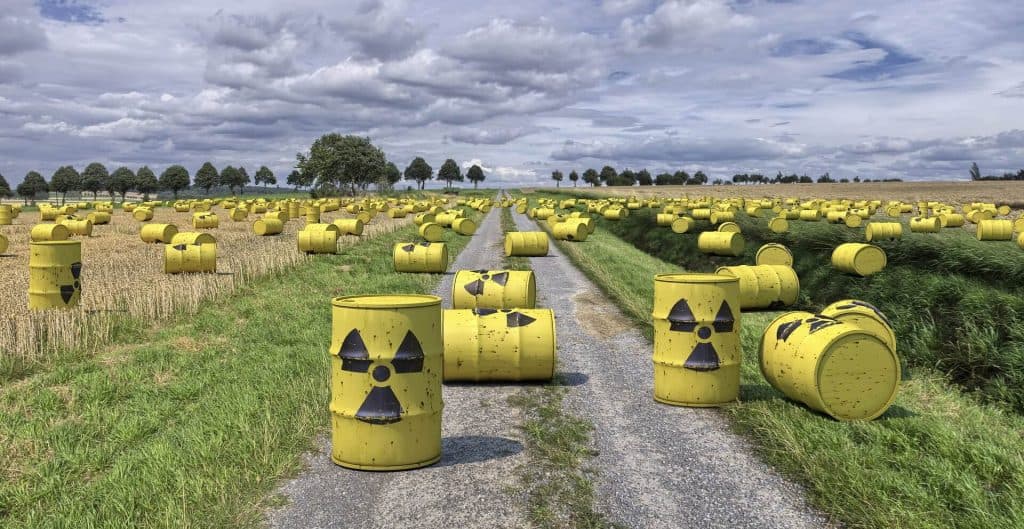
Italy has reported progress in the final clean-up of the legacy of the Garigliano nuclear power plant, which ceased operation in the 1980s. Work has begun on another temporary nuclear waste storage facility at the site of the former plant, for waste generated by the plant’s decommissioning. The project, known as DT2, is one of many interim steps towards the creation of a permanent repository, which is still not available.
The Garigliano plant was closed for economic reasons in 1982 after almost two decades of operation. The country’s three other nuclear power plants later met a similar fate, with the Chernobyl disaster accelerating their phase-out. In 1990, Italy definitively ended nuclear power generation, immediately raising the question of how to dismantle the contaminated facilities. The response was to establish SOGIN (Società Gestione Impianti Nucleari) in 1999. The state-owned company was tasked with their decommissioning.
Between 2014 and 2021, the so-called “trench remediation” was carried out at the Garigliano site. The material involved was radioactive operational waste, such as personal protective equipment routinely used by plant workers. It had been buried too close to the surface and therefore had to be moved. This led to the creation of the temporary DT1 repository. Around the same time, workers also dismantled the central chimney and the adjacent water tower.
The foundations have now been laid for a new storage facility measuring 70 metres long, 18 metres wide and 13 metres high. It is expected to hold up to 1800 cubic metres of low- and intermediate-level radioactive waste, including components and systems removed from inside the reactor vessel. Work is expected to take about a year, and the facility is not expected to enter service before 2026.
“This is a significant achievement in advancing the decommissioning programme and ensuring the safe management of radioactive waste at the site. It will enable the dismantling of systems and components in the plant’s reactor building to be completed,” SOGIN said about the project.
The National Repository
Italy has several similar short-term storage facilities, including one at the site of the former Caorso plant. However, the goal of Italy’s energy sector and SOGIN is to consolidate these facilities into one large national repository. Its construction has been under discussion for several years, and Legislative Decree No. 31 of 2010 sets out the procedure for selecting a suitable site. In 2021, World Nuclear News reported that suitable sites had been identified in seven regions: Piedmont, Tuscany, Lazio, Apulia, Basilicata, Sardinia and Sicily.
The project proposals envisage creating a surface-level environmental infrastructure with capacity for around 95 000 cubic metres, of which approximately 17 000 would be designated for intermediate- and high-level radioactive waste. The proposal also states that the so-called National Repository will store the contaminated waste from decommissioning alongside radioactive waste from non-energy applications, including scientific research, industry and healthcare. More recently, however, Italian energy sector representatives have spoken in favour of a possible return to nuclear power, meaning the proposal would also have to account for any waste that might be generated as a result.
Translation disclaimer
This article is a machine translation of the Czech original and has not yet been fully reviewed. In case of any doubt, please refer to the Czech version.
Sdílejte článek prostřednictvím:
You might also like

28 October 2026, 13:08

28 October 2026, 11:10

28 October 2026, 09:08
