23 October 2026, 14:38
Loading...
Olkiluoto 3: Loss of experience and ambitious plans behind more than a decade of delays

Martin Voříšek
5 March 2020, 10:51
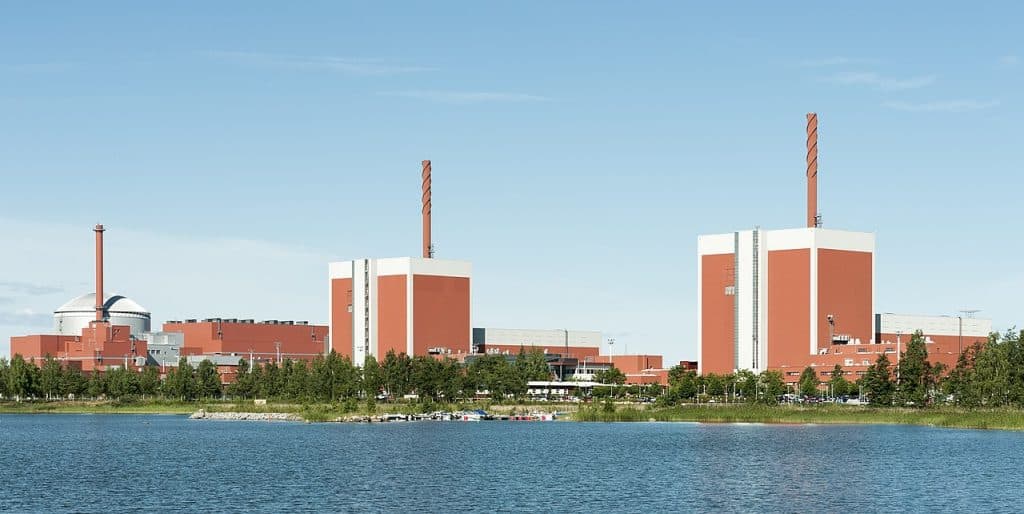
The Olkiluoto 3 nuclear unit became the first EPR reactor under construction in 2005, but it is still awaiting commissioning. Construction of Olkiluoto 3 began in August 2005, and under the original schedule the unit was due to enter commercial operation in 2009.
As of today, commissioning is delayed by more than 11 years, as commercial operation is expected to begin in March 2021. The only EPR units to have entered operation so far are at China's Taishan plant, although their construction began later than that at Olkiluoto and Flamanville.
Construction of the Olkiluoto nuclear power plant was initiated by its operator, TVO (Teollisuuden Voima Oyj), which submitted an application for approval of the project as early as the end of 2000. The government approved the general proposal to build the nuclear power plant at the start of 2002 and approved construction itself three years later.
Construction began on 12 August 2005. Nearly fifteen years later, Olkiluoto 3 had still not been connected to the grid or started commercial operation.
Originally, a fourth unit at the same site was also planned – plans to complete this unit were suspended in mid-2015, precisely because of delays in constructing the third unit. However, the operator did not rule out a future revival of the Olkiluoto 4 project.
Olkiluoto 3 problems began before construction started
A consortium of Areva (now Framatome) and Siemens was selected as the main contractor for Olkiluoto 3, with the contract awarded on a turnkey basis. The consortium won primarily thanks to its low price, which was the main criterion in the tender, beating a consortium of General Electric and ABB. The final bidder, Russia's Atomstroyexport, was not assessed because it was unable to submit a proposal meeting the tender requirements.
Although this was not apparent when the main contractor was selected, the groundwork for problems had already been laid at this stage. After years without a major project, Areva was determined to win the tender at any cost. It therefore offered not only a highly ambitious schedule but also a relatively low price, fixed at EUR 3.2 billion. All this despite offering a reactor type that was not yet under construction anywhere in the world.
The first problems emerged even before construction itself began. In March 2004, media reports stated that preparation of the project design and documentation was delayed. At the same time, Areva was behind schedule in the licensing process before the local nuclear regulator.
From the outset, problems were evident with coordinating work on site, often due to language barriers, as well as with communication and Areva's lack of familiarity with the local environment. This was not helped by the fact that Areva did not use local subcontractors, as it had reportedly agreed with TVO, although the contract made no mention of this. Instead, workers from various European countries were present at the site, which also affected the course of construction. While a large proportion of the workers came from Poland, managers were generally French, German or Finnish.
One specific problem in the early stages of construction arose when Forssan Betoni supplied poor-quality material for concreting the foundations, and part of the concrete work had to be demolished and redone.
Partly as a result of this failure, Finland's nuclear regulator began monitoring construction at an early stage. Although it found no nuclear safety issues, it pointed out that the construction problems were mainly caused by poor project management, Areva's inability to manage the project and the suppliers' lack of experience in nuclear power plant construction.
According to the regulator, the Areva-Siemens consortium selected subcontractors with no previous experience in nuclear power plant construction, and these subcontractors lacked sufficient instructions and oversight to progress smoothly with their work.
As work progressed, further difficulties emerged, as could be expected in the construction of the first reactor of this type. Further construction delays occurred both during testing of control and instrumentation systems and during hot functional tests, which took longer than planned.
Disputes over delays
Repeated construction problems gradually affected relations between Areva and TVO. These became fully public in 2007, including disagreements over the application of contractual penalties. The parties themselves said they would refer the dispute to their lawyers. As expected, the exchange over responsibility for the delays ended up in court.
From the outset, TVO held a substantially stronger position: as the client, it was entitled to have the plant built within the specified timeframe, including stipulated delay penalties. Areva itself, however, admitted that it was not prepared to pay for all the delays. Indeed, the problems with construction of the Olkiluoto nuclear power plant contributed significantly to Areva's downfall, ending in a forced takeover by French state-owned EDF. Only part of Areva was acquired, excluding the Olkiluoto project, which was spun off separately.
The dispute between the two companies was ultimately resolved by agreement: Areva committed to pay TVO EUR 450 million, while Areva was entitled to EUR 150 million if construction was completed by May 2019. The settlement also included a provision for an additional penalty if the plant had not started by the end of 2019. This did not happen, and Areva must therefore pay TVO a further EUR 400 million.
Supplier model for Olkiluoto 3
The winning Areva-Siemens consortium offered to build the unit for EUR 3.2 billion (link), as a fixed price. This also helped Areva win the tender, although it later became clear how severely costs had been underestimated. Areva relied primarily on the simplicity of constructing the new reactor design, and on the resulting simplification and acceleration of construction, but this ultimately did not materialise.
TVO preferred a turnkey contracting model. This model is characterised by minimal involvement by the investor, TVO, and relative freedom for the main contractor, which is responsible for overall project management and on-site activities, supply, design and construction.
Many of the problems that affected construction of the Olkiluoto nuclear power plant can be attributed to the contracting model and the resulting project management, as the local nuclear regulator also discussed extensively. Due to TVO's minimal involvement, Areva had relatively broad freedom in selecting subcontractors. Areva used this to award subcontracts to companies with minimal experience that offered the lowest prices, for which it was criticised.
In January 2009, Siemens withdrew from the supplier consortium. It had been responsible for supplying the conventional island, as this part of construction had proceeded without major difficulties. Delays in delivering the conventional island were estimated at around one year.
Plant start-up expected in March 2021
According to the latest publicly available information, Olkiluoto 3 was due to start up in March 2021. It was likely to become the first EPR nuclear unit to enter operation in Europe. Given the project's history, however, this might not have been the final date.
The main factors behind delays to the project, from which Areva had expected a new beginning for the nuclear industry in the period after the Chernobyl accident, were Areva's own loss of experience, a shortage of qualified employees and its determination to win a new contract at any cost. According to an audit commissioned by the French government, Areva had to provide false information about the planned construction period in order to win the contract at all.
Moreover, despite its relatively limited experience in recent years, Areva took over management of the entire completion project. It also lacked sufficient experience in managing the entire construction effort, as the usual practice was for French EDF to act as the main contractor, while Areva was only the supplier of the nuclear island.
Given that this was a major contract after many years, the lack of experience was evident. Combined with the EPC contract, this meant project management was in the hands of a company that lacked sufficient experience and the necessary knowledge of the Finnish environment. The structure of the contract between TVO and Areva also led to relatively passive behaviour by the investor, allowing the main contractor to rely on cheap subcontractors with minimal experience, which is critical in construction.
On the other hand, it must be added that the main problem at the start of construction was the incomplete plant design. Subsequent projects in China, where it was already complete, did not suffer such delays. However, this was also due to the local environment and the involvement of local construction and installation companies, which organised the construction more effectively.
Translation disclaimer
This article is a machine translation of the Czech original and has not yet been fully reviewed. In case of any doubt, please refer to the Czech version.
Sdílejte článek prostřednictvím:
You might also like
23 October 2026, 11:01
23 October 2026, 06:34