5 November 2026, 12:44
Loading...
Preparations for a new unit at Czechia's Dukovany plant began in spring 2021

oEnergetice.cz, ČTK
19 September 2023, 14:44
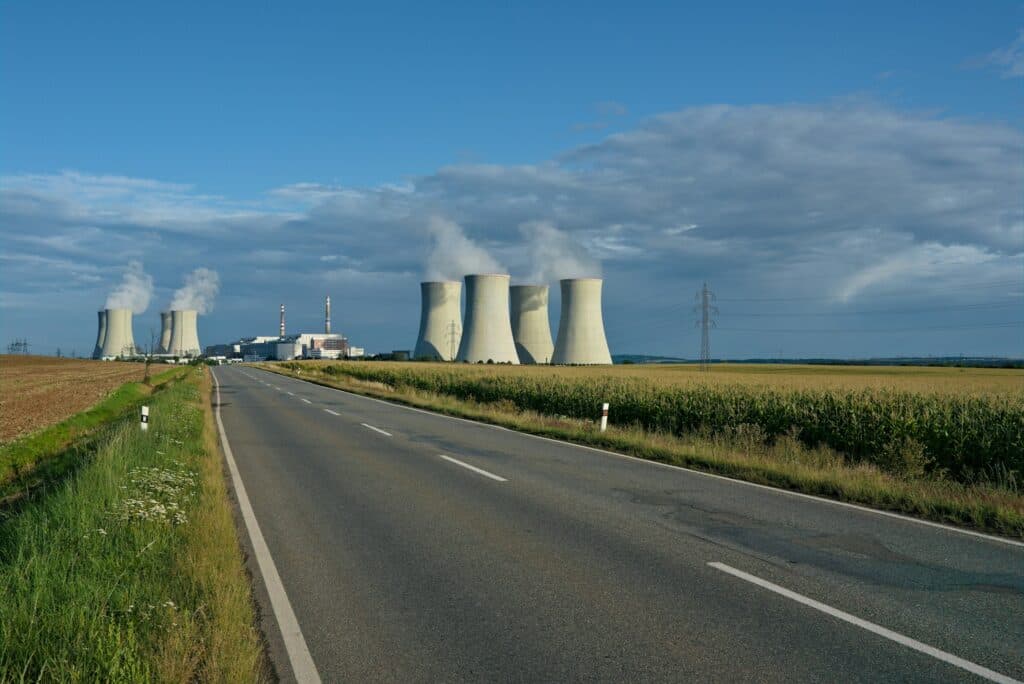
Selected events surrounding the planned construction of a new unit at the Dukovany Nuclear Power Plant (ČEZ to extend the deadline for submitting final bids to build a new nuclear unit at Dukovany by one month, to 31 October):
8 March 2021 – Elektrárna Dukovany II, part of the ČEZ Group, received a permit from the State Office for Nuclear Safety (SÚJB) to site a new nuclear facility at Dukovany.
25 March 2021 – Karel Havlíček (ANO), then deputy prime minister and minister of industry and transport, said the final decision on the tender to build a new unit would be left to the next government. The Ministry of Industry and Trade (MPO) also said that the Czech Republic would not invite Chinese bidder CGN to the tender. Four bidders remained – France's EDF, South Korea's KHNP, the Canadian-American company Westinghouse and Russia's Rosatom. The opposition criticized Russia's participation.
– The Chinese Embassy in Prague said CGN's exclusion from the tender deviated from the principles of fair competition and international trade rules.
29 March 2021 – The State Security Council (BRS) met. The governing Czech Social Democratic Party (ČSSD) later announced that intelligence services would prepare and assess a security review of the four bidders for the new Dukovany unit. A working group overseen by the Ministry of the Interior was tasked with preparing a security questionnaire for bidders; it was to include Jaroslav Míl, the government's nuclear energy envoy. The government, however, dismissed him from the post, saying he did not have security clearance. Some opposition politicians linked the move to Míl's criticism of Rosatom's inclusion in the process.
– Havlíček said Míl's lack of security clearance made it difficult to prepare any documents concerning construction of the new Dukovany unit. The minister also pointed to what he described as poor communication between the group led by the government envoy and another group at the Ministry of Industry.
– Jan Hamáček (ČSSD), then minister of the interior, said it would take several weeks to revise the questionnaire. The plan remained for the next government to launch the tender for the new unit. According to Hamáček, the approach had the backing of the Security Information Service, the Office for Foreign Relations and Information and Military Intelligence.
31 March 2021 – In a resolution, the Senate declared China and Russia to be security threats and said the government should not approach bidders from those countries or invite them to tender for the construction of new nuclear units.
11 April 2021 – President Miloš Zeman rejected warnings from Czech security services against including Chinese and Russian companies in the tender to build the Dukovany unit.
17 April 2021 – At an evening press conference, then Prime Minister Andrej Babiš (ANO) said Czech security forces had reasonable grounds to suspect that members of Russia's GRU military intelligence service were involved in the 2014 explosion at the ammunition depot in Vrbětice in the Zlín Region. In an initial response, 18 Russian Embassy staff identified as members of Russian intelligence services were expelled from the Czech Republic.
18 April 2021 – Hamáček said Russian companies should not be involved in the construction of the Dukovany unit on security grounds, including as members of a consortium. Havlíček, who had until then advocated Russia's participation, took a similar position. Babiš also said Rosatom should no longer be in the running for the Dukovany expansion.
19 April 2021 – The government excluded Rosatom from the Dukovany tender. Havlíček said a security questionnaire would be sent to the French, South Korean and US companies.
1 June 2021 – Elektrárna Dukovany II, a ČEZ subsidiary, applied for a zoning permit for a new nuclear unit at Dukovany.
15 June 2021 – Opposition parties in the Pirate Party and Mayors and Independents (STAN) coalition and the Spolu coalition (ODS, KDU-ČSL, TOP 09) announced they would stop blocking in the Chamber of Deputies a bill on measures for the Czech Republic's transition to low-carbon energy, known as the lex Dukovany. Under an agreement with the government, the Senate would add an amendment barring Russian and Chinese companies from participating in the tender to build the new unit.
16 June 2021 – The Chamber of Deputies excluded companies from Russia and China from the planned tender for a new Dukovany unit. Only technology from suppliers in countries that had joined the international Agreement on Government Procurement could be used for construction. Russia and China are not parties to the agreement. The Senate recommended strengthening security guarantees in supplier selection, and in September the Chamber of Deputies approved the bill with the Senate's amendments. President Zeman signed it into law on 27 September.
21 June 2021 – Elektrárna Dukovany II sent a letter and began a security assessment of three bidders for construction of a new unit at the Dukovany power plant. The companies approached were France's EDF, US-based Westinghouse and South Korea's KHNP.
13 August 2021 – All three bidders approached about building the new Dukovany unit agreed to take part in the security assessment. EDF, Westinghouse and KHNP confirmed their participation by signing an acknowledgement letter.
27 November 2021 – Minister Havlíček announced that the state had received all three security questionnaires from bidders for construction of the new Dukovany unit.
1 January 2022 – The law known as „lex Dukovany“, which bars Russian and Chinese companies from the nuclear power plant's expansion, came into force.
2 March 2022 – The government formed after the October 2021 elections agreed that Minister of Industry and Trade Jozef Síkela (STAN) should take the necessary steps to launch the tender for construction of a new Dukovany unit, Prime Minister Petr Fiala (ODS) said.
17 March 2022 – ČEZ launched the tender to build a new nuclear unit at Dukovany after receiving approval from the Ministry of Industry.
30 June 2022 – The European Commission (EC) announced that it had opened an investigation into the planned state aid for the Dukovany expansion. The reason was doubts over whether the aid complied with European Union rules. The planned support includes, among other things, a low-interest state loan intended to cover all construction costs, estimated at around 7.5 billion euros (almost 186 billion crowns).
30 November 2022 – ČEZ received three bids to build a new nuclear unit at Dukovany. As expected, interest came from France's EDF, South Korea's KHNP and North American company Westinghouse.
End of February 2023 – Energy company ČEZ began talks with bidders for construction of a new nuclear unit at Dukovany. Under the original plan, clarification talks were not due to start until April at the earliest, but the company brought forward its review of the initial bids.
10 May 2023 – ČEZ invited all three bidders for construction of a new nuclear unit at Dukovany to submit final bids. It did so after completing three rounds of talks with the bidders on their initial offers the previous week. The original deadline for bids was set for mid-September; the energy company later moved it to 2 October.
19 September 2023 – Energy company ČEZ said it would again extend the deadline for submitting final bids to build a unit at Dukovany. Bidders will have until 31 October. ČEZ granted a request from one of the three bidders.
Translation disclaimer
This article is a machine translation of the Czech original and has not yet been fully reviewed. In case of any doubt, please refer to the Czech version.
Sdílejte článek prostřednictvím:
You might also like
5 November 2026, 06:36
4 November 2026, 14:17
4 November 2026, 12:34