Russia to extend operating life of Smolensk 2 RBMK-1000 reactor

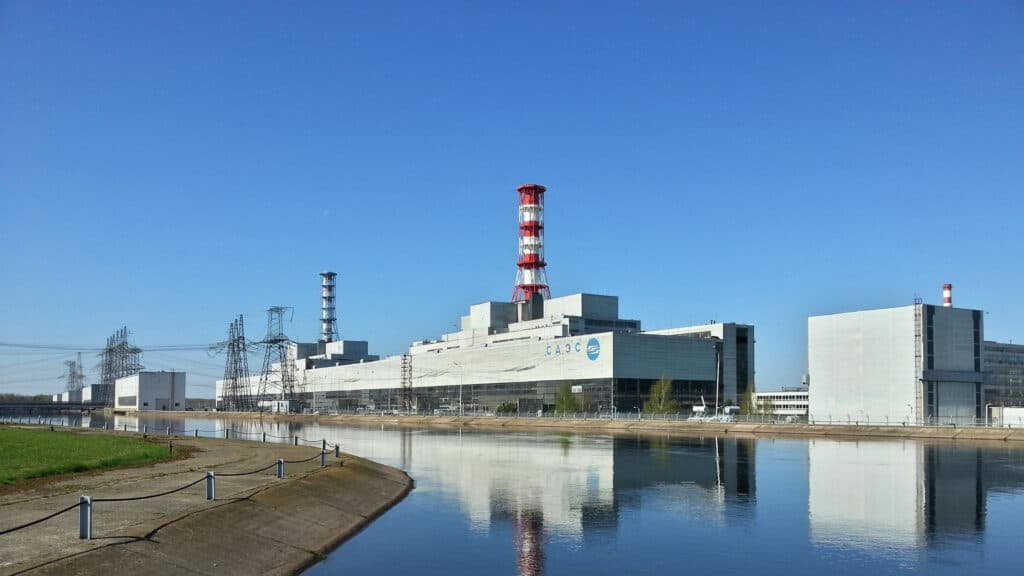
The second unit at Russia’s Smolensk nuclear power plant has been granted a licence for another 5 years of operation. The RBMK-1000 unit, commissioned in 1985 with a planned operating life of 30 years, will thus reach 45 years of operation. The country does not plan any further lifetime extensions and is building VVER reactors to replace its ageing Soviet-era reactors.
Russia’s Federal Service for Environmental, Technological and Nuclear Supervision (Rostechnadzor) extended the operating licence for the second unit at the Smolensk nuclear power plant by another 5 years. The RBMK-1000 unit, with an installed net capacity of 925MWe, will thus exceed its originally planned 30-year operating life by 15 years.
“We have now been granted the right to operate the nuclear facility for another five years. We have demonstrated the operability of its irreplaceable components, which means it can supply consumers with approximately 35 TWh of electricity,” said Pavel Lubensky, director of the Smolensk nuclear power plant.
The Smolensk nuclear power plant has three operating units; construction of a fourth was never completed following the Chernobyl accident. The units entered commercial operation in 1983 (unit 1), 1985 (unit 2) and 1990 (unit 3). Their owner, Rosenergoatom, plans to generate electricity at all three for 45 years.
Replacing ageing RBMK-1000 units
The second-generation RBMK-1000 reactor (OPB-82) is especially notorious for the nuclear accident at the Chernobyl plant. The first two units at the Smolensk plant have the same reactors. The third-generation RBMK-1000 is in operation only at Smolensk 3, as all the other projects were cancelled at various stages of construction.
In view of the approaching end of the operating lives of Soviet-era reactors, Russia is working to replace this generating capacity. In 2020, it began preparations for four VVER reactors (VVER-1200 and VVER-TOI) at the Leningrad II and Smolensk II plants.
Construction of one of the units at the Leningrad plant officially began last year (unit II-3), with another scheduled to follow this year. At the Smolensk II plant, Russia plans to officially begin construction in 2027 and 2028.
“We are also meeting our commitments to supply isotope products for industry and nuclear medicine, and continuing systematic work on building replacement units at the Smolensk II nuclear power plant, which will have two Generation III+ VVER-1200 units,” Lubensky added.
Translation disclaimer
This article is a machine translation of the Czech original and has not yet been fully reviewed. In case of any doubt, please refer to the Czech version.




