Site for new four-unit Indian nuclear power plant gets green light

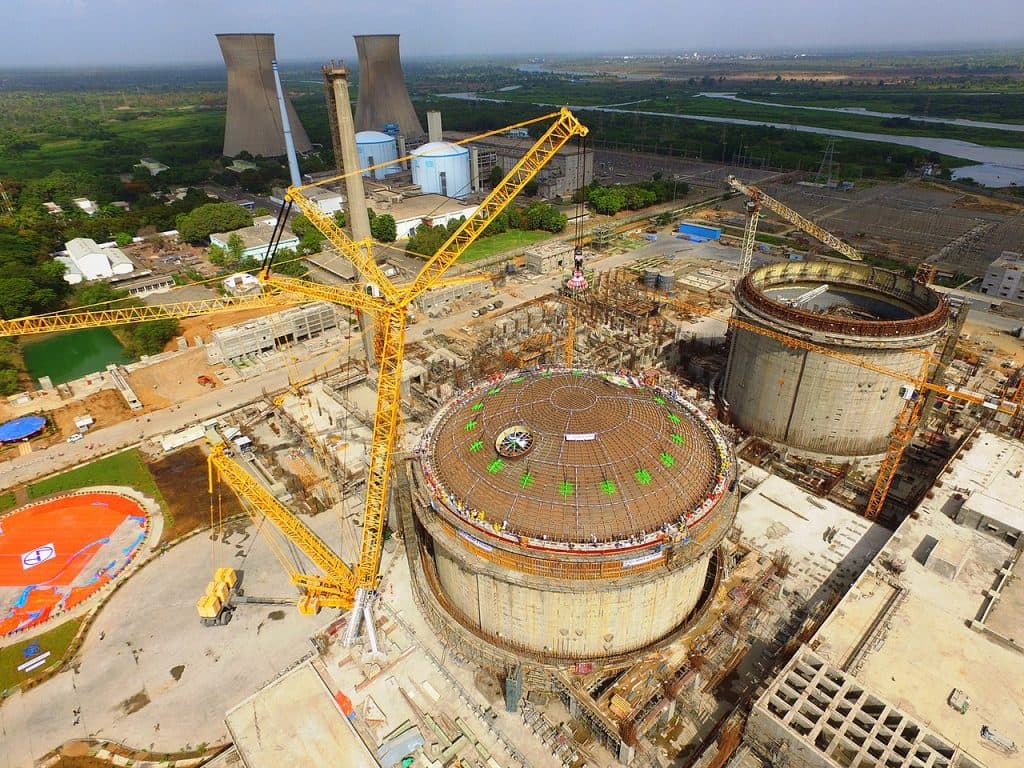
The new Mahi Banswara nuclear power plant in the Indian state of Rajasthan has received its first green light from the nuclear regulator. The country plans to build four units at the site, each with a capacity of 700 MW. India plans to bring all the units into commercial operation during the 2030s. The project is part of a group of ten newly planned reactors in the early stages of construction; three identical reactors are already generating electricity, and another three are at an advanced stage of construction.
India's nuclear regulator, the Atomic Energy Regulatory Board (AERB), has issued a favourable opinion on the siting of the new Mahi Banswara nuclear power plant in Rajasthan, India's largest state. The plant operator plans to build four Indian-designed IPHWR-700 pressurised heavy-water reactors. Once completed, the plant will have an installed capacity of 2.8 GW.
"Based on the satisfactory assessment described above, approval is hereby granted for the siting of units 1–4 of the Mahi Banswara plant, subject to compliance with the provisions and conditions set out. The approval will be subject to a review of the conditions. The approval is not transferable without the prior consent of the competentauthority," the AERB said in its opinion.
The siting approval was preceded by a series of studies analysing the impact of the new plant on its surroundings. According to the nuclear regulator, the new site meets all requirements. Before construction can officially begin, favourable opinions must be issued by the construction authority and the environmental protection authority. The regulator published a total of 15 conditions that the operator must meet for the permit to remain valid.
The Mahi Banswara plant project is jointly owned by India's Nuclear Power Corporation of India Ltd (NPCIL), with a 51% stake, and National Thermal Power Corporation (NTPC), with 49%.
Ten new Indian units
India plans to build a total of ten new IPHWR units. Other planned units include units 5 and 6 at the Kaiga plant, units 3 and 4 at the Gorakhpur plant, and units 1 and 2 at the Chutka plant.
Two IPHWR units are already in commercial operation at the Kakrapar plant. Another pair at the Rajasthan plant is nearing completion and commercial operation. Technicians connected the plant's seventh unit to the grid in March this year.
The country has ambitious nuclear plans and wants to increase its nuclear fleet more than tenfold to 100 GW over the next 20–25 years. It is therefore also considering easing supplier liability in the event of accidents, which would help attract foreign technologies.
Translation disclaimer
This article is a machine translation of the Czech original and has not yet been fully reviewed. In case of any doubt, please refer to the Czech version.




