
28 October 2026, 15:10
Loading...
Sizewell C nuclear power plant receives regulatory approval

Jiří Puchnar
9 May 2024, 11:22

The Office for Nuclear Regulation has granted a licence for the new Sizewell C nuclear power plant in eastern England, where a plant similar to Hinkley Point C, with two EPR reactors, is planned. The licence application was originally submitted in 2020 and, although it met almost all regulatory requirements, two issues prevented the licence from being granted in 2022.
The complications concerned the shareholders’ agreement and ownership of the land beneath the planned plant site. The regulator said at the time that it would carry out a “proportionate reassessment” once these two issues had been “resolved to its satisfaction”. It has now done so and recommended that a licence be issued for Sizewell C.
Significance of the licence
The granting of the licence is a significant step in the long-term process of delivering the Sizewell C project, but it does not yet allow construction work on the plant to begin. The licence formalises the regulator’s oversight responsibilities and enables Sizewell C Ltd to apply for permission to carry out construction work.
It is the first site licence issued by the regulator since 2012, when a similar licence was granted for Hinkley Point C. The regulator requires the licence holder to comply with 36 conditions covering the design, construction, operation and decommissioning of the plant.
History of the Sizewell C project
The Sizewell C project comprises two EPR reactors with a total capacity of 3.2 GW, equivalent to the consumption of around six million households, which the plant will supply for at least 60 years. The plant will be very similar to Hinkley Point C, which EDF is building in Somerset, UK. The project owners (50% EDF Energy and 50% the UK government) aim to build Sizewell C faster and at lower cost by drawing on experience from the construction of Hinkley Point C, the first new nuclear power plant in the UK in three decades.
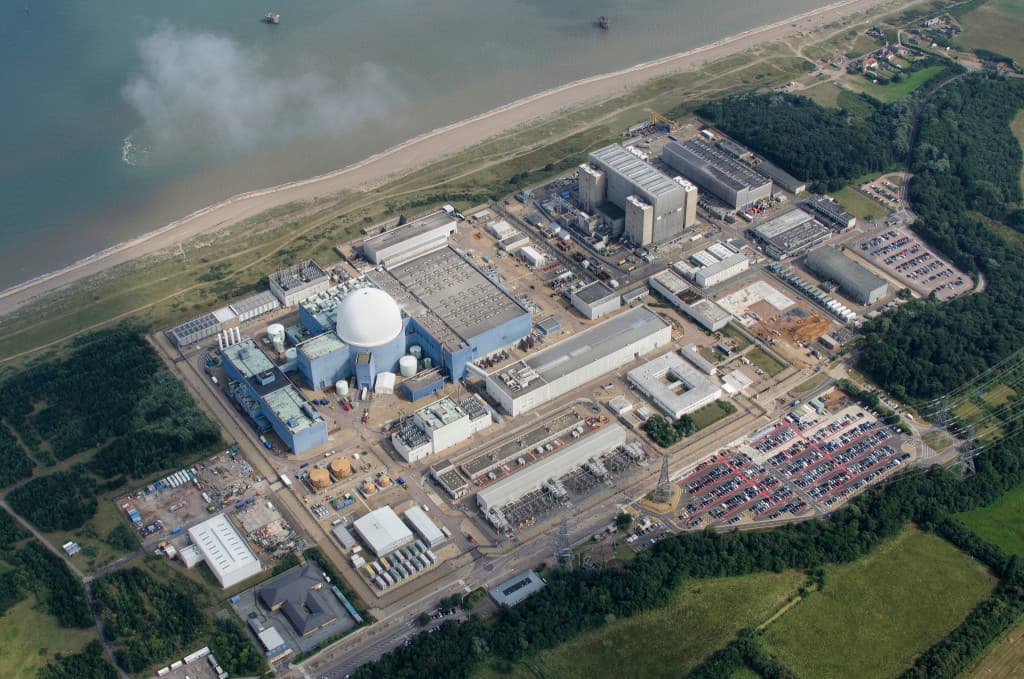
The existing Sizewell nuclear power plant, UK. Author: John Fielding
EDF reached an agreement with China General Nuclear (CGN) in October 2016 to develop the Sizewell C project to the point where a final investment decision could be made. EDF then held an 80% stake and CGN a 20% stake. However, the so-called “golden era” of UK-China relations came to an end after the UK government blocked Chinese investment in UK infrastructure over security concerns.
Seeking investors and approaching final investment decision
In November 2022, the UK said it would invest 679 million GBP and become EDF’s 50% partner in the Sizewell C project. A further 511 million GBP was provided to the project in summer 2023, with government funding designed to take the project through to a final investment decision. EDF said in November 2022 that it planned to retain only a minority stake at the time of the final investment decision—no more than 20%.
In January, a further 1.3 billion GBP in government funding was approved, enabling necessary infrastructure work, such as roads and railways, to continue until a final investment decision is made. In March, Sizewell C Ltd, a separate company majority-owned by the UK government, reached an agreement with EDF Energy to acquire the freehold of the land where the new plant will be built.
According to EDF, the search for new investors is progressing well, and UK Minister for Nuclear Energy and Renewables Andrew Bowie said that “the granting of a nuclear site licence for Sizewell C is a significant achievement that should boost investor confidence and bring us one step closer to reaching a final investment decision later this year”.
Sizewell C Ltd said that earthworks are now underway at the site and that a final investment decision will be made in the coming months.
A final investment decision (FID) is a key moment in the life cycle of a major project such as the construction of a nuclear power plant. It is made by investors and involves final approval and a commitment to fund the project after a thorough assessment of its economic viability, risks and potential benefits.
Translation disclaimer
This article is a machine translation of the Czech original and has not yet been fully reviewed. In case of any doubt, please refer to the Czech version.
Sdílejte článek prostřednictvím:
You might also like

28 October 2026, 13:08

28 October 2026, 11:10

28 October 2026, 09:08
