South Korea's KHNP to build at Czechia's Dukovany plant, contract signed after court ruling

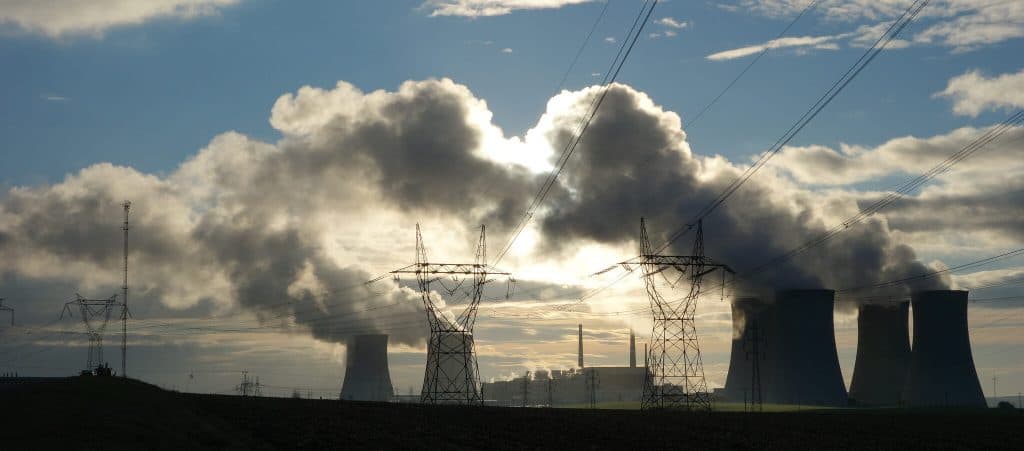
South Korean company KHNP, which won the tender, will build two nuclear units at the Dukovany power plant. Elektrárna Dukovany II (EDU II), the company responsible for the tender, signed the contract with KHNP today following a ruling by the Supreme Administrative Court (NSS). The court overturned an injunction banning the contract’s signature after appeals were filed by EDU II and KHNP. EDU II has begun preparing the next steps with KHNP, including a planned geological survey. Industry and Trade Minister Lukáš Vlček (STAN) believes that a 60% share for Czech companies in the project is achievable.
KHNP will build its first reactors in Europe in Czechia, and the project is expected to be the country’s largest-ever contract. At current prices, the cost of the currently preferred option of building two reactors at Dukovany is 407 billion crowns. The first Dukovany unit is expected to be completed in 2036. Vlček will discuss the construction in South Korea in July. Contracts signed so far secure Czech companies around a 30% share of the project. “I’m not worried that the 60% target won’t be achieved. I believe the Dukovany expansion project will bring a renaissance for the Czech nuclear industry,” the minister said today.
The NSS announced this morning that it had overturned the injunction banning the signing of the contract to build the Dukovany units. The Regional Court in Brno issued the injunction less than a month ago in response to a lawsuit by French company EDF, which competed against KHNP in the tender. The ruling derailed the planned signing of the final contracts, for which a government delegation had flown in from South Korea. The regional court must now reconsider the case, taking into account the higher court’s legal opinion.
The NSS noted, among other things, that before issuing an injunction, a court must assess how likely the lawsuit is to succeed—in other words, whether it is justified. “The Supreme Administrative Court’s 10th chamber concluded that the lawsuit appears, provisionally, to be unfounded,” the NSS said. It also disagreed with the regional court’s view that the public interest in signing the contract on time was comparable to the interest in preventing harm to EDF.
The Regional Court in Brno will hear EDF’s lawsuit against a decision by the Office for the Protection of Competition (ÚOHS), which found the nuclear tender to be in order, on 25 June. The regional court said today that if EDF were to win its case against the ÚOHS after the contract with KHNP had been signed, it could seek damages from the contracting authority.
EDU II and KHNP signed the final contracts for the construction of two units at Dukovany remotely and electronically this afternoon. A geological survey of the site is planned for the summer, and work will also begin on the permitting and licensing documentation, EDU II board chairman Petr Závodský told reporters. He said the final contracts also include an agreement for nuclear fuel supplies from South Korean company KEPCO, which are expected to cost around 15 to 20 billion crowns for nearly ten years of operation. The contracts also include an option to build two more nuclear units at the Temelín power plant.
Prime Minister Petr Fiala (ODS) said at a press conference that the government had prepared the steps needed to sign the final contracts with KHNP so that they could be signed as soon as possible. He noted that the new units are expected to generate electricity at a price below 90 euros (around 2200 Kč) per megawatt-hour (MWh), which he said was favourable even by European standards.
The prime minister also dismissed the possibility of complications from the European Commission. “The EC is not conducting any formal proceedings with us, but is engaged in an informal dialogue,” he said. A new notification from the EC, which the project requires because of the change in the investor model and the construction of two units instead of the one previously planned, will not be a problem, Závodský said.
The government took advantage of the opportunity created by the NSS ruling and wanted to avoid an international embarrassment by signing the contract quickly, opposition ANO deputy chairman Karel Havlíček told reporters in the Chamber of Deputies. Radim Fiala, deputy chairman of the opposition SPD movement, welcomed the swift signing, saying the Czech Republic’s energy outlook was not rosy.
It is unwise to pin hopes on new nuclear power to solve Czechia’s energy problems, representatives of environmental organisations contacted by the Czech News Agency (ČTK) said. Nuclear projects could become more expensive or be delayed, they said, while spending on reactor construction would limit investment in other areas. The Czech government should also focus on renewable energy sources and insulating homes, the environmentalists said. Nuclear power plants account for around 40% of total electricity production in Czechia.
Translation disclaimer
This article is a machine translation of the Czech original and has not yet been fully reviewed. In case of any doubt, please refer to the Czech version.




