23 October 2026, 14:38
Loading...
Supplier model could significantly affect Dukovany plant construction: three options available

Martin Voříšek
2 March 2020, 13:56
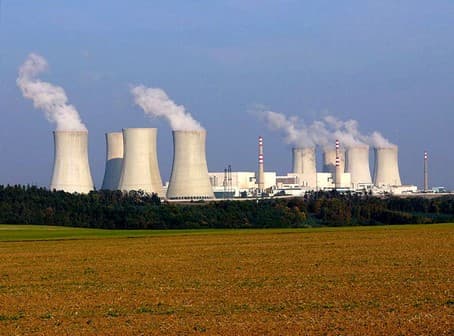
Approximately 50 nuclear reactors are currently under construction worldwide, with 4 units currently being built in the European Union in Finland, France and Slovakia. Another 4 reactors are under construction in European countries outside the EU (Belarus and the United Kingdom). Each project uses a different supplier model.
One of the main initial milestones in planning the construction of a nuclear power plant is selecting a suitable supplier model. A different supplier model may be appropriate for each country, specific project and reactor type – depending primarily on the specific reactor design, but also on the investor's preferences. What does the term supplier model mean?
A supplier model determines the project's specific technological interfaces, in terms of who will provide them within the power plant construction project (the investor or supplier). It defines whether and how the power plant will be divided in terms of responsibility for design, manufacturing, supply, installation and commissioning. From the investor's perspective, it defines the point or points in the overall supply chain at which the investor assumes responsibility for incorporating the supply into the overall investment.
In the case of the completion of a nuclear power plant in Czechia, a decision on the supplier model was to be made by the end of March this year, as ČEZ CEO Daniel Beneš announced at a press conference following a meeting of the Standing Committee for Nuclear New Build. Daniel Beneš also specified that three supplier models were then under consideration:
“One option is a turnkey delivery, the second is delivery by one main supplier, which would supply us with the nuclear island and coordinate everything else within the plant fence, and the third theoretical option is that there would be several contracts, coordinated by the investor. The final decision on which supplier model we choose will be made by the end of March next year, based on consultations with all bidders,” said Daniel Beneš, CEO of ČEZ.
An IAEA report distinguishes three basic possible supplier-model alternatives for the construction of nuclear power plants. These are:
Turnkey delivery (turnkey or EPC contract): Under a turnkey delivery arrangement, one supplier (or a consortium of suppliers) is selected and is responsible for the design, procurement, construction and, where applicable, commissioning (engineering, procurement, construction, commissioning) (e.g. Olkiluoto 3).
Split package model: A delivery approach in which supplies are divided among a limited number of suppliers (approximately up to ten, for example for the supply of the nuclear island, the conventional part of the power plant, etc.) (Shin Wolsong I in South Korea).
Multiple package model: A delivery approach in which individual activities are allocated to multiple contractors (50–150) (e.g. Mochovce 3, Flamanville 3)
These alternatives may to some extent correspond to ČEZ's current plans, which CEO Daniel Beneš discussed at the press conference. However, it should be added that the above models are only basic models and may overlap in some respects in real-world application.
The IAEA considers the supplier model to be one of the fundamental decisions in the construction of new units, affecting the success of construction. The decision must therefore be based on a detailed analysis, taking into account in particular:
- the experience and capabilities of potential supplier bidders,
- the investor's financial capacity and options for foreign financing,
- the type of nuclear reactor and whether it is an established reactor type or one of the first reactors of its kind,
- requirements for guarantees and the investor's ability to assume responsibility for construction,
- the investor's own experience in delivering large projects, and
- the availability of human resources (especially in project management).
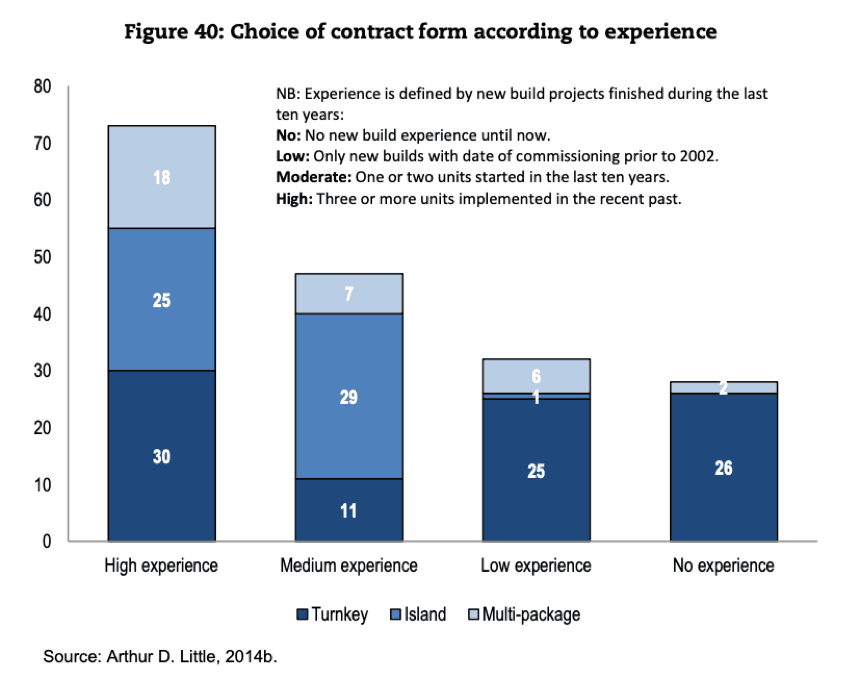
A 2014 study by consulting firm Arthur D. Little, cited by an OECD report, examined how frequently individual supplier models have been used historically. According to the study, 61 reactors were under construction in 2010, of which 19 used an EPC contract, 5 used the split package model and 22 the multiple package model. Less experienced investors typically chose an EPC contract, while moderately experienced investors chose the split package model. The following chart shows the choice of supplier model according to investor experience.
EPC: Turnkey supplier model
The EPC model is a highly popular model for delivering large capital projects. The client (in this case, an energy company – the future plant operator) is responsible for the conceptual phase of the project, which includes only broad outlines. The output is project documentation defining the owner's basic requirements for the capital delivery and providing the basis for subsequent stages of project implementation.
Under a typical EPC contract, the supplier is responsible for the design, procurement and construction of the unit (note: in some cases, the EPC supplier model and turnkey construction model are distinguished – the difference is that under turnkey construction, the supplier is also responsible for commissioning the unit). This also means that the supplier is responsible for managing the process directly at the construction site and coordinating individual subcontractors.
The client limits its role to activities related to monitoring performance against the schedule and individual milestones, obtaining the licences required for operation, and fuel supplies.
There are many EPC models, which differ mainly in the investor's participation in the project (for example, regarding fuel supply and radioactive waste). Their obligations and liability for risks and potential additional costs or damages arising from project delays may also differ, for instance when documentation changes are made at the investor's or state authorities' request, or due to other aspects that may unexpectedly arise during construction. The EPC model can also provide for the investor's participation in joint decision-making, for example in selecting subcontractors or setting their terms and conditions.
Split package model
Compared with the turnkey supplier model, the split package model is characterised by greater investor involvement and the division of the entire project into several parts, typically up to around 10 different packages. Depending on the specific circumstances of the agreement, the investor may also carry out certain construction activities itself (or delegate them among subcontractors). In this model, the investor is responsible for the construction site, including the organisation of individual activities there.
In this model, the project investor is primarily responsible for coordinating the suppliers of individual packages. According to the IAEA, it should therefore establish in particular a detailed reporting system and ensure access to the individual schedules of each supplier in order to ensure that requirements for subsequent activities are met.
A typical split package model may divide work into construction of the nuclear island, the conventional island, control and instrumentation systems, administrative buildings, etc.
Multiple package model
The multiple package supplier model consists of dividing the entire project into a large number of individual contracts, approximately 100-150. The investor's role consists of overall project coordination and contracting individual activities. An indisputable advantage of this model is greater control over construction and site activities, as well as over the quality of supplies, construction and adherence to the schedule. The investor can optimise costs through better supply coordination and can also award contracts to local companies more frequently, provided of course that this is advantageous for construction (involving local suppliers is, among other things, one of the objectives of ČEZ's main shareholder).
The multiple package model, as might be expected, places substantially greater demands on construction project management. Given the interdependencies among individual activities, it cannot be ruled out that a delay by one supplier in its activities will affect the entire construction period. Any disputes over responsibility for delays and resulting additional costs may then permanently damage relations between suppliers and the investor.
The models described above are only a basic categorisation of how a nuclear power plant construction project can be managed through suppliers. Specific projects are complex, and supplier models that combine the models above may therefore be encountered. As stated above, selecting a supplier model is one of the key decisions in the preparatory phase of nuclear power plant construction. This should be taken into account during its selection, potentially also so that some of its aspects can be changed over time.
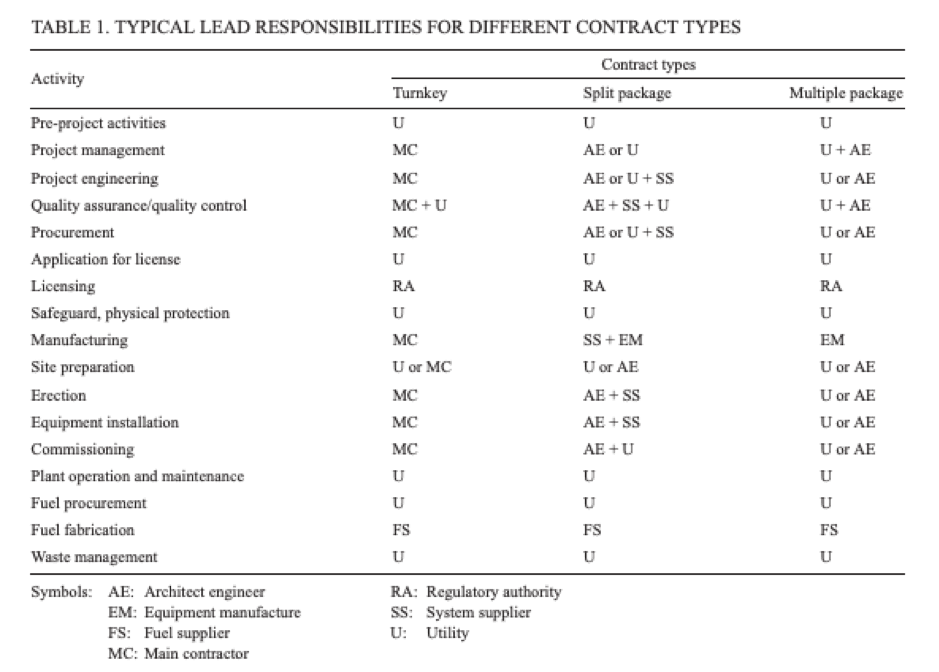
Source: IAEA: Project Management in Nuclear Power Plant Construction: Guidelines and Experience (link)
Translation disclaimer
This article is a machine translation of the Czech original and has not yet been fully reviewed. In case of any doubt, please refer to the Czech version.
Sdílejte článek prostřednictvím:
You might also like
23 October 2026, 11:01

23 October 2026, 06:34