
23 October 2026, 14:38
Loading...
SÚRAO begins geological mapping of sites being considered for a Czech nuclear waste repository

oEnergetice.cz, ČTK
16 September 2025, 13:58
The Administration of Radioactive Waste Repositories (SÚRAO) is beginning geological and hydrogeological mapping with the Czech Geological Survey at sites being considered for the construction of a deep geological repository for nuclear waste. The first phase covers two of the four areas: Březový potok in the Pošumaví region near Horažďovice and Janoch near Temelín. Approval of the geological work plans by the regional authority is still pending for the Horka and Hrádek sites in the Vysočina region, and should come within a few months, SÚRAO Director Lukáš Vondrovic told ČTK at Nuclear Days in Plzeň. The agency will begin deep boreholes in the second half of next year, he said; it is currently seeking contractors through a tender.
The geological mapping now getting under way, carried out for SÚRAO by the Czech Geological Survey, involves field surveys in which geologists document all observable features in great detail, covering both the rock environment and surface and groundwater conditions, Vondrovic said. “This initial phase will last about two years. Meanwhile, work involving access to land will also get under way,” he said. The state of the geological environment was already investigated in recent months by GeoTec, with which SÚRAO signed a contract last year.
SÚRAO, which has had its exploration area formally established by the Ministry of the Environment, is now selecting contractors through a tender for exploration work, including deep boreholes and geophysics. “Once the tender is awarded, the technical work will begin,” the director said. He hopes a contractor will be selected as soon as possible. “We should receive bids by autumn at the latest, and then it will depend on whether we are successful in the tender,” he said. He did not estimate when drilling would begin, as SÚRAO still needs to arrange access to land and obtain other approvals. “I would expect it in the second half of next year,” he said. The director declined to comment, due to the tender, on reports that only a small number of companies can drill boreholes as deep as 1,200 metres. The tender is being conducted under EU public procurement rules, so all European companies may bid.
Under the updated radioactive waste management policy, the site for the repository is to be selected by 2030. “But what matters most to us is that the work is carried out carefully and to the required standard. So we see that deadline as more of an indicative target. The key is to obtain the data, and when we responsibly know everything about the sites and can make a choice, we will say which one is best,” Vondrovic said. If everything goes according to SÚRAO’s plans, meeting the 2030 deadline is feasible. The EU taxonomy requires the Czech Republic to have a repository in place by 2050.

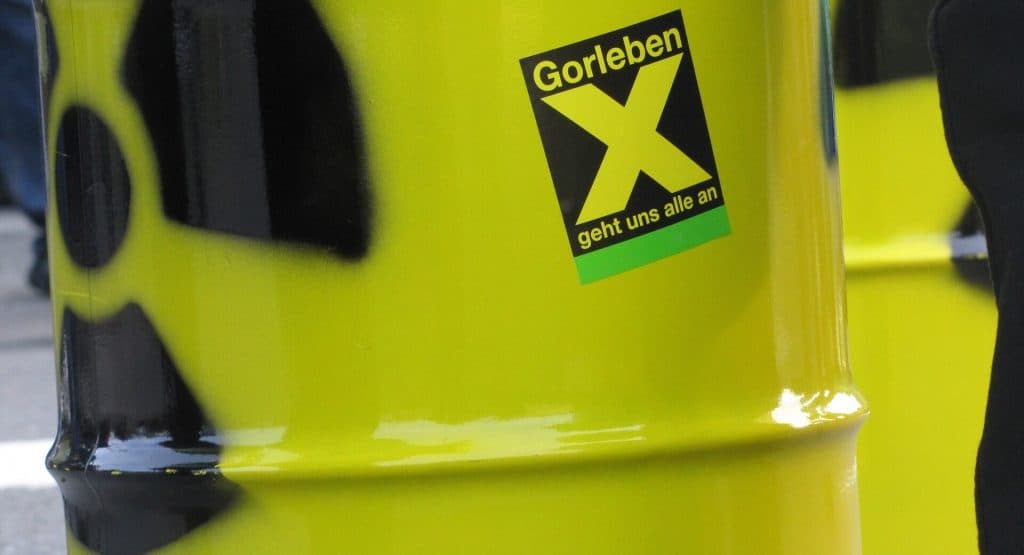
Nuclear waste, radioactive waste
Source: pixabay.com
Permission to access land is a prerequisite for geological work, he said, and some monitoring activities also require work to be carried out on the land. But, for example, municipalities in the Březový potok area, whose cadastral territories could host the repository, have all said they will not allow geologists onto their land. “There are multiple landowners at each site. Some will not allow it, others will. We can manage,” the director said.
Municipalities in the Pošumaví region, which have opposed the repository for 22 years and filed a lawsuit against the Ministry of the Environment in May this year over its approval of geological surveys, would like to push the deadline for selecting the final site as far back as possible, so that, for example, other potential uses for waste from nuclear power plants can be explored. “No technology is waste-free. Even after reprocessing, radioactive waste is always produced and has to be placed in a deep geological repository, although there will be less of it. But the idea that a technology could be found that produces no radioactive waste at all is unrealistic. We have been hearing this for the last 50 years. And people say we will develop that technology over the next 50 years, so we will see,” Vondrovic said.
Reprocessing is technically possible, but according to the agency’s director, the decision rests with the producer of the spent fuel, which in the Czech Republic is ČEZ Group. “And once ČEZ decides to reprocess it, we will of course adapt. But we have not received this information from ČEZ yet,” he added. According to Vondrovic, reprocessing is being phased out; for example, it is prohibited by law in Switzerland. And even a country such as Japan, which wants reprocessing and has it, has been developing the process for 30 years. “So this is definitely not a technology that is simple, easy to manage and risk-free. What’s more, current reactor units cannot burn reprocessed fuel,” he added. France, Russia and the UK are able to reprocess fuel, he said.
Translation disclaimer
This article is a machine translation of the Czech original and has not yet been fully reviewed. In case of any doubt, please refer to the Czech version.
Sdílejte článek prostřednictvím:
You might also like


23 October 2026, 11:01


23 October 2026, 06:34