Sweden to assess extending nuclear plant lifetimes to 80 years

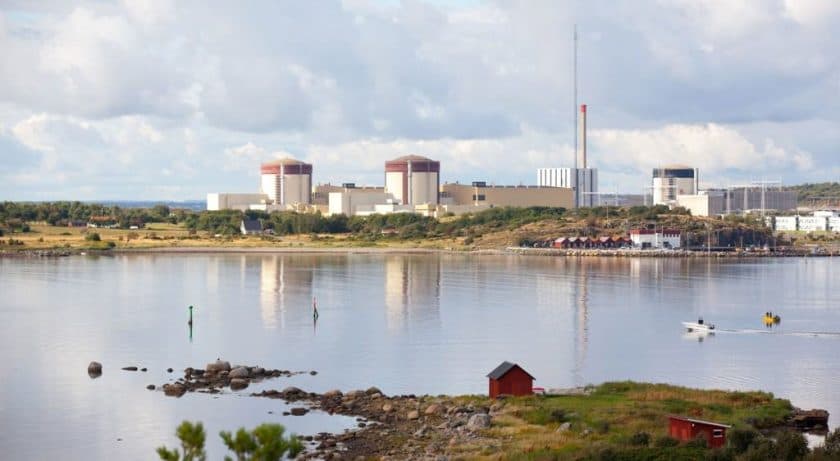
The owners of Sweden’s Forsmark and Ringhals nuclear power plants are preparing to assess the possibility of extending reactor operation from the current 60 years to 80 years. The plants would thus supply electricity until the 2060s.
A study on extending the lifetimes of five units by 20 years will include detailed cost calculations and a risk analysis covering the retention of expertise and suppliers. A final investment decision may be made following this analysis. Most of the required investments are planned for the next decade, Vattenfall said.
Björn Linde, CEO of Forsmark Kraftgrupp AB and Ringhals AB, said that according to a preliminary study, extending the units’ operation would make effective use of existing investments, contribute to low-carbon electricity generation and avoid the need for complex licensing processes. The nuclear waste produced would be placed in existing and planned nuclear repositories.

Extending the lifetimes of the Forsmark and Ringhals reactors is estimated to require investments of 40-50 billion SEK (approx. 89-111 billion CZK) to replace or refurbish systems and components. Technical investments will cover maintenance, refurbishment or replacement of components such as turbines, condensers and generators, as well as upgrades to control and instrumentation systems. Investments are also needed in substations and power lines, plant buildings and other infrastructure.
The importance of nuclear energy
"Extending the operation of five reactors at the Forsmark and Ringhals plants by 20 years could provide more than 800 TWh of carbon-free electricity. At today’s consumption levels, Sweden would use this amount of electricity in approximately 6 years," Vattenfall said.
"Nuclear power will play an important role in Sweden’s carbon-free electricity generation for many decades, which is why it is absolutely essential to invest not only in new nuclear power plants, but also in our existing reactors," said Torbjörn Wahlborg, Vattenfall’s Executive Vice President for Generation in the Nordic region. "Following the extensive upgrades carried out in the past, we see good prospects for extending their lifetimes by up to 20 years."
Uniper, a minority owner of the reactor units, supports reviewing the possibility of extending the lifetimes of the Ringhals and Forsmark reactors. "It is probably the most effective way to secure carbon-free energy in the long term," the company said.
Forsmark and Ringhals nuclear power plants
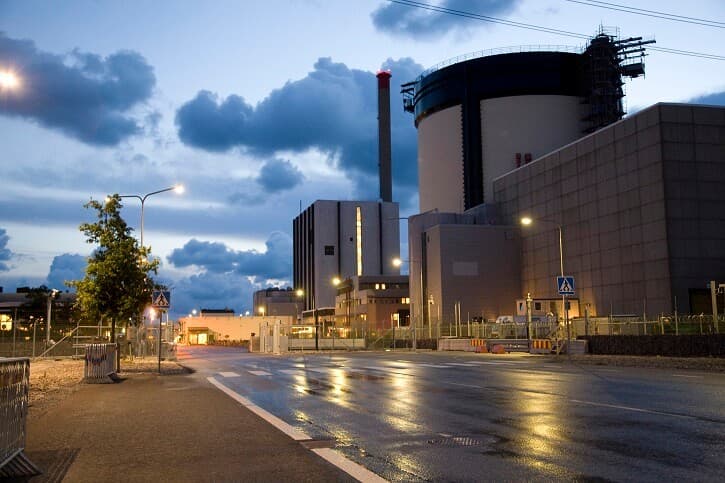
Forsmark has three boiling water reactors (ABB Atom BWR) with a total installed capacity of 3320 MW, which were commissioned between 1980 and 1985. Together, the units supply approximately 25 TWh of electricity to the grid each year. Vattenfall owns a 66% stake in Forsmarks Kraftgrupp, while Mellansvensk Kraftgrupp holds 25.5%. The plant’s smallest shareholder is Uniper (Sydkraft Nuclear Power), which owns 8.5%. The radiation monitoring instruments at Forsmark NPP were the first to detect elevated radiation in the atmosphere in April 1986, caused by the accident at Chernobyl NPP.
The Ringhals nuclear power plant has two decommissioned boiling water reactors and two operating pressurized water reactors. The pressurized water reactors (Westinghouse 3-loop PWR) were connected to the grid in 1980 and 1982. Together, they supply 17 TWh of electricity to the grid each year. Vattenfall owns 70.44% of Ringhals AB, while Uniper (Sydkraft Nuclear Power) holds a 29.56% stake.
Translation disclaimer
This article is a machine translation of the Czech original and has not yet been fully reviewed. In case of any doubt, please refer to the Czech version.