
23 October 2026, 14:38
Loading...
Temelín in Czechia tests drones for inspections without human operators or navigation

oEnergetice.cz, ČTK
3 July 2025, 13:07
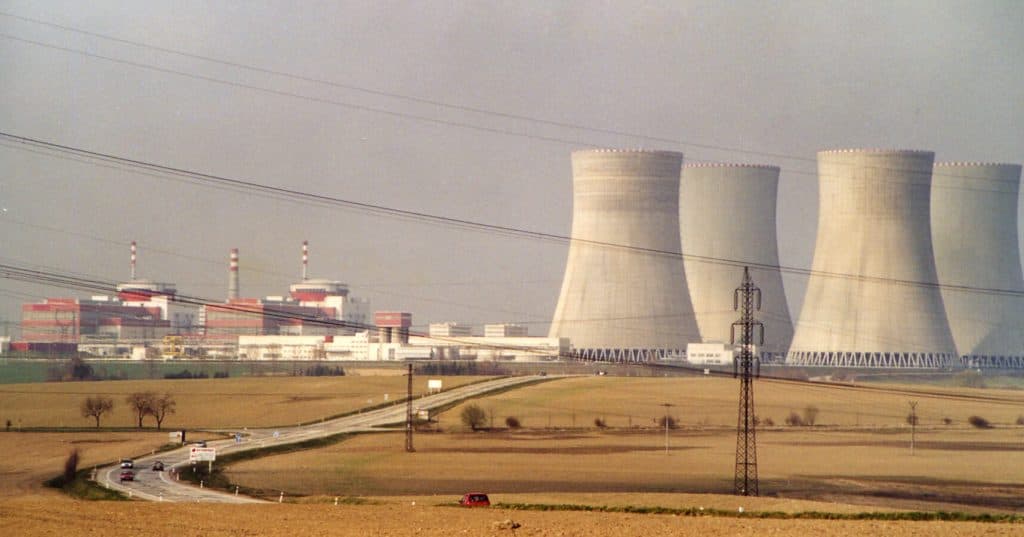
The Temelín nuclear power plant is testing autonomous drones. This means they operate without human control or satellite navigation, as its signal does not reach some of the plant’s protected areas. The energy company plans to use them to inspect hard-to-reach places: the drone can fly there on its own, carry out an inspection, assess the condition and return, Temelín spokesperson Marek Sviták said today.
The drone operator only enters the location to be inspected. “Using special software and advanced sensors, the drone can not only navigate complex terrain without a satellite signal, but also decide on the optimal trajectory, repeatedly approach the inspection site with millimetre accuracy and return safely to its starting point. With the help of artificial intelligence, it can assess locations that may then require some kind of maintenance or repair,” said Filip Schmidt, head of the Technology Lifecycle Department at the Research and Testing Institute (VZÚ) in Plzeň. The project is being carried out with support from the Technology Agency of the Czech Republic.
Experts from VZÚ Plzeň and Fly4Future tested the drone at the Cooling Water Treatment Plant, one of the auxiliary facilities. “So far, the question has been whether the drone can move independently through complex terrain and collect the necessary data. In this respect, it has achieved its purpose,” Schmidt added.

Temelín nuclear power plant. Source: Flickr / centralniak / CC BY 2.0
ČEZ employees, working with suppliers, already use various drones and robots to inspect large or hard-to-reach areas. At Temelín, for example, they inspect cooling towers; at Dukovany, experts have previously checked the condition of the condenser’s internal components. However, these machines were operated by people.
“The use of drones and artificial intelligence is becoming a reality in the nuclear sector too. This is not at odds with our priority of ensuring safety; on the contrary, it strengthens our capabilities. Before putting any technology into operation, we test it very carefully in a protected environment. We want to remain at the forefront of technological development so that we can maintain the conditions for efficient operation for at least sixty years,” said Bohdan Zronek, a member of the ČEZ Board of Directors and director of its Nuclear Energy Division. For several years, the energy company has also been using artificial intelligence, for example to reduce its own electricity consumption and analyse data collected by drones during inspections.
The Temelín power plant, one of two nuclear power sources in Czechia, covers around a fifth of domestic electricity consumption. Since the beginning of this year, it has generated 8.7 terawatt-hours of electricity; last year, it generated 14.3 terawatt-hours.
Translation disclaimer
This article is a machine translation of the Czech original and has not yet been fully reviewed. In case of any doubt, please refer to the Czech version.
Sdílejte článek prostřednictvím:
You might also like


23 October 2026, 11:01


23 October 2026, 06:34