23 October 2026, 14:38
Loading...
Used nuclear fuel that is not waste: Hundreds of tonnes await in Czech power plant storage facilities
Ekonews.cz
2 December 2022, 14:34
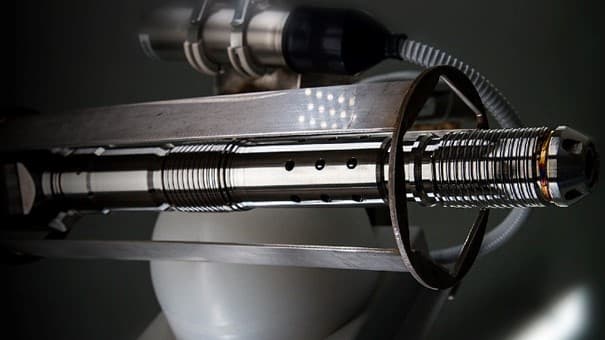
Nearly 3,500 tonnes of highly radioactive fuel from nuclear reactors is “resting” in special containers at storage facilities on the sites of two nuclear power plants in Czechia. It will remain there for around another three decades, until a deep geological repository is built. Unless the state and ČEZ find another solution.
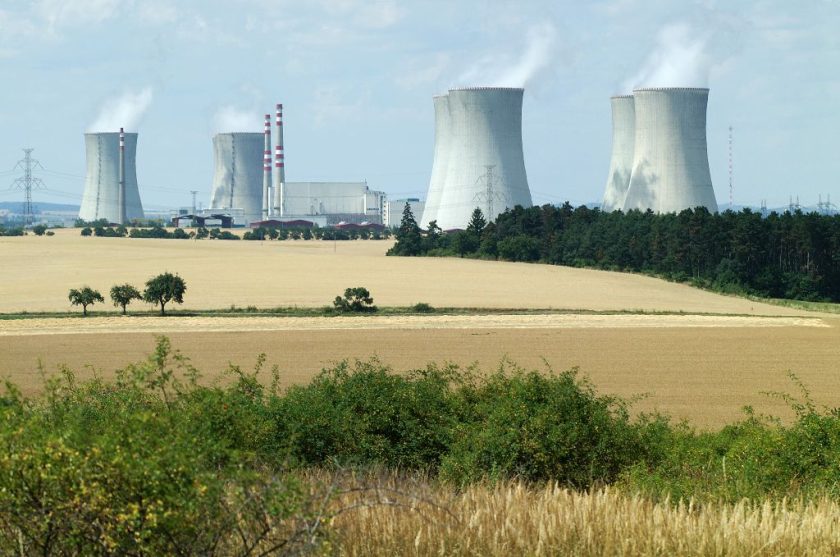
The South Bohemian Temelín nuclear power plant has been operating since 2000. Used fuel has been accumulating in its on-site storage facility since 2010. Sixty containers have been filled so far, holding 1,200 tonnes of spent nuclear fuel.
The Dukovany nuclear power plant, in the Třebíč region, has been operating since 1985, with its second unit beginning electricity generation two years later. “There are currently 113 containers in the Dukovany storage facilities, containing 9,492 used fuel assemblies,” says ČEZ spokesperson Alice Horáková. A total of 2,260 tonnes.
Spent nuclear fuel is ultimately expected to end up in a deep geological repository, but Czechia has yet to find a site for one. Nine locations were originally selected, which the government narrowed down to the current four in December 2020. These are Březový potok in the Klatovy region, Horka between Třebíč and Velké Meziříčí, Hrádek near Jihlava, and Janoch near Temelín. However, the deep geological repository currently exists only on paper, and not even in the form of a detailed project. A suitable site is being selected from the four shortlisted locations (we will cover this topic further in subsequent articles in the series on nuclear waste).
The fuel takes up surprisingly little space. “It is necessary to take into account that uranium has a very high density and is essentially one of the heaviest elements. It is around 70 percent heavier than lead. So, if you imagine a sugar cube and a uranium cube of the same size, the uranium would be several times heavier,” Horáková explains. This also answers the question of why nuclear power plants are reluctant to answer questions about the amount of fuel they store.
Reactor, pools, storage facility and what next
The fuel follows a similar path at both Czech nuclear power plants. Temelín has two units, each with a maximum capacity of approximately 1,000 megawatts. Dukovany has four smaller units with a capacity of 510 megawatts.
Around one-quarter of the fuel in a reactor is replaced each year. At Temelín, as Sviták describes it, each of the two reactors has 163 fuel assemblies, and approximately 40 of them are replaced with new ones each year. One fuel assembly consists of a bundle of 312 rods, each 4.5 metres long.
“Fuel replacement takes place underwater. There is a pool next to the reactor, where the fuel is removed from the reactor – three-quarters is returned, while the rest is replaced with new fuel,” Sviták explains.
Used fuel can be stored in the pool for up to ten years, where it is cooled and its radioactivity decreases. All of this takes place under the supervision of the International Atomic Energy Agency. After ten years, the used fuel can be transferred to the aforementioned containers, again underwater, and the containers are transported to the storage facility.
Interim storage will last for years; another can be added if necessary
Temelín currently stores 60 full containers, while the facility has capacity for 152. “It can accommodate fuel from 30 years of operation. If we needed another one, the existing receiving section of the building would be used and the same storage section would be added on the other side,” Sviták explains.
The ČEZ spokesperson also acknowledges the possibility that, in theory, fuel from today’s containers, which are licensed for 60 years, could eventually be repackaged into new containers, securing its storage for several more decades. However, this is more of a theoretical consideration, as the European Union is pushing countries to build deep geological repositories by 2050.
Nevertheless, used fuel is not waste. ČEZ treats it as a “raw material” until it is declared waste by its originator or, where applicable, by the State Office for Nuclear Safety. That has not happened yet.
Fuel reprocessing does not pay off yet
Another way to handle reactor fuel is reprocessing, or reusing fuel that is still radioactive to generate energy. But this remains very expensive and therefore economically disadvantageous. “Used fuel assemblies look the same whether new or used; they differ significantly only in radioactivity. Once a fission reaction has taken place, used fuel is highly radioactive and must be isolated from the environment. This places greater demands on reprocessing, which is also why it is more expensive,” explains Marek Sviták.
“The Czech strategy for managing spent nuclear fuel considers reprocessing as an alternative, but it was not developed further because it proved economically inefficient. Moreover, reprocessing does not eliminate waste; it merely reduces its volume, so it does not significantly reduce repository costs,” says Radek Trtílek, head of the Radioactive Waste & Decommissioning division at the Řež Nuclear Research Institute.
According to him, it would make sense for Czechia to reprocess spent fuel only if it had more nuclear capacity, meaning the number of current units was expanded. Moreover, current reactors are technologically unable to use already used fuel. According to Trtílek, this is also why the proposed deep geological repository in Czechia does not envisage retrieving the fuel at some point in the future. It will remain there forever.
“For our six nuclear units, it is more economically attractive to have fresh fuel produced. That is why it is better to store it and wait for the right moment,” adds Sviták from Temelín.
Czech nuclear power plants generate roughly one-third of all electricity produced. Last year, Dukovany and Temelín supplied 30.7 terawatt-hours of electricity to the grid. And there will be more. A tender for the supplier of a fifth nuclear unit at Dukovany is already under way, while the Ministry of Industry and Trade is preparing documents for a decision on the planned construction of further units.
The article is part of the Where to put nuclear waste series, supported by the Independent Journalism Endowment Fund.Republished from EkoNews.cz, a website covering business and sustainability.
Translation disclaimer
This article is a machine translation of the Czech original and has not yet been fully reviewed. In case of any doubt, please refer to the Czech version.
Sdílejte článek prostřednictvím:
You might also like
23 October 2026, 11:01
23 October 2026, 06:34