25 September 2026, 09:51
Loading...
Analysts: fuels in Czechia to get cheaper within days, but return to normal will take time

oEnergetice.cz, ČTK
15 June 2026, 12:54
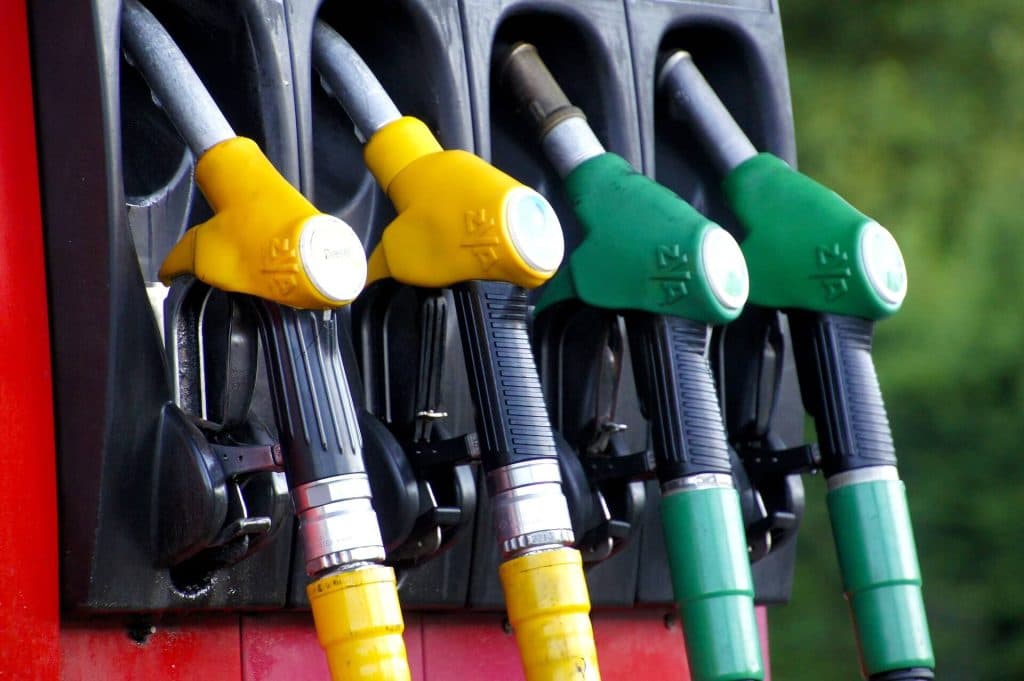
According to analysts, the positive effects of the US-Iran agreement to end the war should become apparent at filling stations in the Czech Republic within a few days, with fuel prices potentially falling by up to two korunas per litre. However, a return to pre-war prices cannot yet be expected, and the path back to normal could take many months. This follows from analysts’ comments to the Czech News Agency (ČTK). In their view, this will depend chiefly on further developments in the Middle East and the condition of infrastructure there.
According to XTB analyst Jiří Tyleček, the impact of the US-Iran agreement on the fuel market will be substantial and very swift. “Drivers should feel the first price-list adjustments of around 1.50 to two korunas per litre within just a few days. A weaker US dollar will also contribute to lower prices, while government fuel-price regulation will ensure a rapid reduction,” Tyleček said.
According to Tyleček, the market will not return to price levels seen at the start of the year anytime soon. “The main obstacle to lower prices will be the need to replenish depleted stocks, which will create strong demand and a firm price floor. It is therefore not possible to expect the oil price to fall towards USD 60 per barrel in the foreseeable future. Once the initial euphoria subsides, the market will stabilise at higher levels,” he added.
Petr Lajsek, an analyst at Purple Trading, likewise does not expect an immediate return to pre-war conditions. He pointed to the still-fragile situation and, above all, the condition that shipping must genuinely return to the Strait of Hormuz. Production figures from individual countries in the region will also be important, as their infrastructure suffered during the attacks.
“For this reason, it cannot be expected that oil will immediately head back to levels of around USD 60 per barrel. A return to these prices may take many months, and it cannot be ruled out that the market will not see it until next year. Restoring production, resuming exports and stabilising logistics chains are processes that tend to be significantly slower than the conclusion of a political agreement itself,” Lajsek said.
According to him, the current price decline is therefore more a removal of the immediate war premium than a definitive resolution of all problems in the oil market.
However, according to Lajsek, the agreement creates room for further price reductions at domestic filling stations. “Given the mechanism for calculating the price cap, lower wholesale prices can be expected to be passed on to retail relatively quickly. The average diesel price could thus fall well below 37 korunas per litre as early as this week. Petrol should also become cheaper, albeit somewhat more slowly, with a return below the psychological threshold of 40 korunas per litre beginning to take shape,” Lajsek added.
Petr Kymlička of advisory group Moore Czech Republic also does not expect fuel prices to fall rapidly to their previous levels. “Markets will remain cautious,” he stressed. In addition to concerns over possible further escalation, Kymlička also noted the seasonal influence on fuel prices. “Summer is traditionally a period when increased demand pushes up the price of both diesel and petrol. And there is another factor. If oil prices do indeed stabilise and begin to fall, the state may proceed to withdraw temporary tax measures,” Kymlička noted.
Tomáš Krejčí, chief analyst at Greenbuddies, also urges caution. “We found ourselves in a very similar situation this spring, when the April ceasefire collapsed within a short time. The current agreement, too, remains incomplete in many respects,” he said. He therefore does not expect a rapid fall in prices at filling stations now. “The transmission of global prices typically takes several weeks, and prices will also remain under pressure from the need to replenish oil stocks depleted during the conflict,” Krejčí added.
Translation disclaimer
This article is a machine translation of the Czech original and has not yet been fully reviewed. In case of any doubt, please refer to the Czech version.
Sdílejte článek prostřednictvím:
You might also like
24 September 2026, 11:23

24 September 2026, 10:30
24 September 2026, 06:56