
23 October 2026, 14:38
Loading...
Bloomberg: Renewables in the EU are cushioning the impact of the war against Iran on energy prices

oEnergetice.cz, ČTK
17 March 2026, 18:35
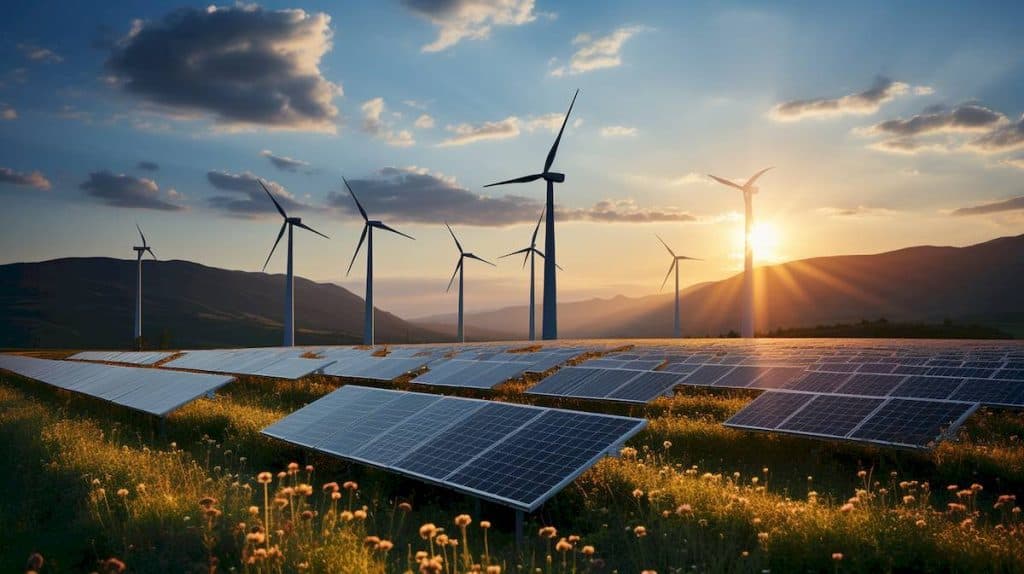
Thanks to diversified energy sources and the rapid development of renewables, European countries are coping with the current rise in oil and gas prices caused by the war in the Middle East better than they did during the 2022 energy crisis following Russia’s invasion of Ukraine. Bloomberg said this in its analysis. Wholesale electricity prices in Germany and France have remained relatively stable and have even fallen in recent days, despite a sharp rise in oil prices. This points to greater resilience in Europe’s energy system.
According to the analysis, the growing share of renewables, particularly solar and wind power, is playing a key role in cushioning price shocks in electricity markets. "The power market is much more diversified than the oil market, and therefore better able to withstand restrictions on oil or gas supplies," said Morgane Trieu Cuot, chief commercial officer at Swiss energy company Alpiq Holding.
Without renewables and the seasonal decline in demand, European electricity prices would already be about a third higher, Rabobank said in a report. Citing turbulence in fossil fuel markets, RWE chief executive Markus Krebber said renewable energy helps ensure stability because it is not tied to imported fuels.
Investments in solar panels and wind farms in recent years have led these sources to cover a larger share of consumption and reduce dependence on fossil fuels. "What we are seeing now is the energy transition in practice," said Jorge Martinez of Nadara, a company focused on renewable energy. The growing capacity of renewables is helping cushion the impact of geopolitical tensions on energy prices, he said.
The analysis nevertheless warns that European markets are not entirely immune to fluctuations. In the evening, when solar generation declines, electricity prices rise sharply in some countries and can reach as much as three times their usual levels.
Higher nuclear generation and a gradual recovery in wind power output after a weaker period are also helping stabilize the market. France’s nuclear sector, which was weakened during the 2022 crisis, is now in significantly better shape and supplying more power to the grid, Bloomberg said. At the same time, the arrival of spring is boosting solar generation and reducing demand for heating, further easing pressure on prices.
According to Bloomberg, German solar output is expected to rise by approximately 25 percent in April compared with the previous year. Wind power generation is expected to jump by 70 percent year on year, following one of its weakest periods in recent years.
"Since mid-February, we have often seen low or even negative prices during peak sunshine hours in Germany—something we would normally expect only from April," said Nathalie Gerlova, an analyst at London Stock Exchange Group.
This dynamic means that gas-fired power plants are operating mainly during evening peaks. France and Spain have also recorded negative hourly prices since the start of the war against Iran.
The United States and Israel launched an attack on Iran on February 28. Iran has responded with retaliatory drone and missile attacks on Israel and Arab countries hosting US military bases. Shipping through the Strait of Hormuz has fallen by 90 percent as a result of the war. Under normal conditions, about a fifth of global oil and natural gas supplies pass through the strait. According to International Energy Agency (IEA) chief Fatih Birol, the volume of disrupted supplies has already exceeded that of the 1973 oil crisis.
Oil prices have risen sharply as a result of the current conflict and related logistical problems. Brent crude has been trading at around 100 dollars a barrel in recent days. QatarEnergy halted LNG production shortly after the war began, after Iranian drones struck the Ras Laffan and Mesaieed gas processing facilities, which account for roughly 20 percent of global LNG production.
Translation disclaimer
This article is a machine translation of the Czech original and has not yet been fully reviewed. In case of any doubt, please refer to the Czech version.
Sdílejte článek prostřednictvím:
You might also like


23 October 2026, 11:01


23 October 2026, 06:34