Donald Trump, the “shale president”, is coming
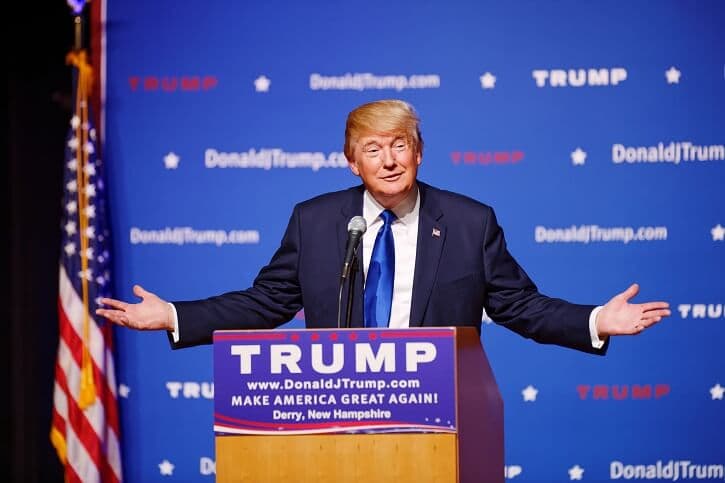
US oil and gas producers can rejoice – the risk that new President Hillary Clinton would shackle the extraction of strategic resources with stricter rules has disappeared. And it cannot be ruled out that, four years from now, President Donald Trump will be boasting precisely of successful oil and gas production. His opponent may instead point to Trump’s poor record on environmental protection…
The fate of world leaders has often been determined by commodity prices – especially in countries whose economies depended on mineral wealth and its sale. The advanced US economy is, of course, not such a case. Nevertheless, the development of shale extraction has shown that the potential for producing both oil and gas in America is far greater than anyone could have expected. And if Americans can extract resources themselves, they reduce imports and may even profit from exports in the future.
President Barack Obama may go down in history as the “green president”, under whom America significantly supported the development of new energy-saving technologies and renewable sources, but the shale boom in fact helped him greatly during a difficult economic period. Obama, moreover, used this skilfully in his campaign when seeking re-election in 2012. Thanks to growing gas supply and its relatively low prices, the United States was able to revive industrial sectors – primarily petrochemicals and related industries. And because relatively cleaner gas was displacing coal, greenhouse gas emissions were also reduced.
National interests
According to his campaign statements, the new president Trump now intends to place a major bet on domestic resource extraction. A large share of his voters was undoubtedly attracted by Trump’s rhetoric about the need to defend national interests – including strengthening domestic energy and reducing resource imports from abroad. Whatever we may think of this, everything indicates that many Americans ultimately found this argument more persuasive than Hillary Clinton’s criticism of fossil fuel use.
If Donald Trump is lucky, he may see the shale boom continue in the coming years. In recent years it has reached its limits due to a sharp fall in oil prices, leading to many bankruptcies among US shale producers whose once lucrative business ceased to pay off. While America has maintained lower gas prices than other world regions in recent years, benefiting its industry, oil is a far more sensitive matter. It is a truly globally traded commodity, and it is well known how the Saudis bet that by pushing prices down they would drive US shale producers out of the market.
The key is the oil price
However, two significant factors favour a shale revival in the coming years – perhaps fortunately for Trump. The first is the expected development of oil prices. They are very difficult to forecast, and in the short term various fluctuations may occur after Trump’s election because of overall uncertainty.
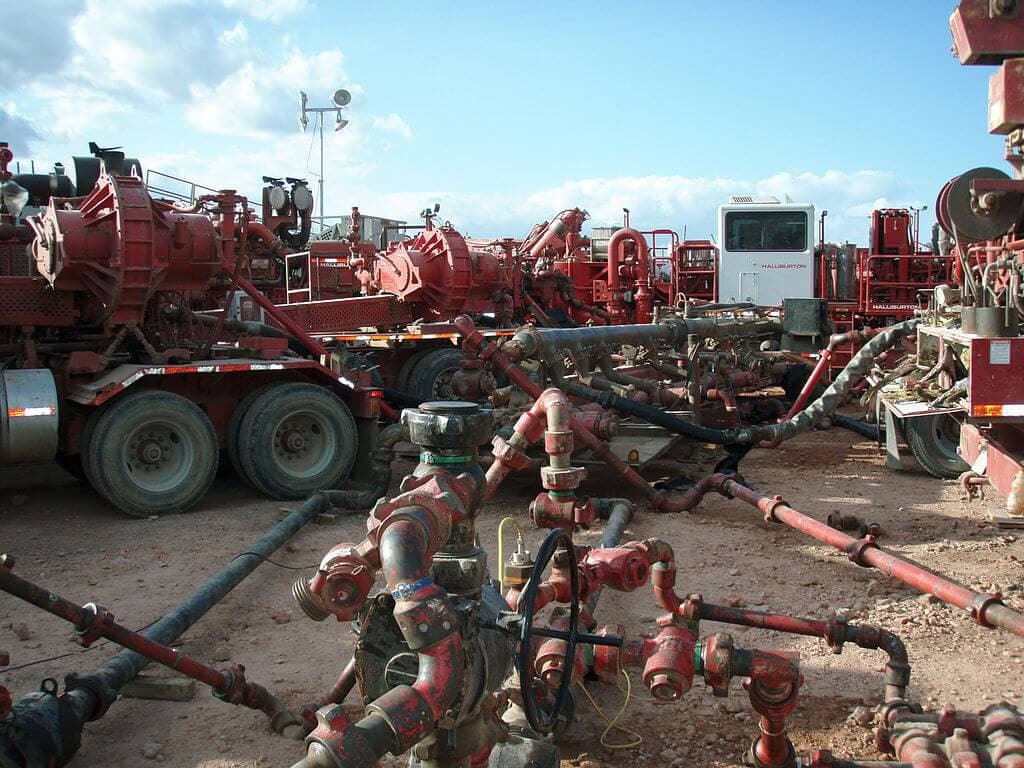
Following a modest rise in oil prices in recent months, many observers expect this trend to continue over the longer term – although it need not involve any dramatic upward leaps. The Organization of Petroleum Exporting Countries, OPEC, for example, lowered its price estimate from $80 to $60 per barrel in 2020, but this is still above current prices, which are below $50.
Shale resilience
The second factor may be even more important – although individual shale producers went bankrupt, the sector as a whole demonstrated resilience that surprised many. US companies – even with new owners – managed to cut costs, improve technologies and find more suitable drilling locations. Service providers also had to lower their prices.
The specialist website Petroleum Economist states that while shale producers previously needed an oil price of $80 per barrel to stay afloat, thanks to the factors mentioned above they now need somewhere between $45 and $50 per barrel. And it could be even lower.
What is important is the flexibility enabled by shale extraction based on numerous smaller wells – producers can respond relatively quickly to changing conditions, expanding or reducing production as needed. Petroleum Economist also notes that production has already taken place at around 5,000 sites, but only part of the resource has been extracted there so far.
Gas dominance
Current plans for the construction of new power plants in the US also say much about the potential for further shale extraction. All indications are that gas, which last year overtook the previous “leader” – coal – will strengthen its dominance in the energy mix, in terms of electricity generation. Shale extraction (or extraction from other less accessible rock formations) accounts for roughly 50 percent of total gas production.
The US government’s Energy Information Administration, EIA, points out that a further 66 gigawatts of natural gas-fired power plants are already under construction or planned for construction by 2021. This represents two-thirds of all planned capacity.
The election campaign showed that Donald Trump and Hillary Clinton differ greatly in their willingness to meet international climate targets and support renewable sources. Yet even strong support for green energy under a Hillary Clinton scenario would probably not have greatly diminished gas’s importance.
Washington and Beijing are key
Although America did indeed visibly move in a greener direction under Barack Obama, the current role of renewables in the United States is overstated. Excluding conventional hydropower, renewables such as wind and solar accounted for eight percent of total US electricity generation last year and three percent of total energy production. And even if Trump fails to halt the rise of renewables, no dramatic increase can be expected in the coming years.
There is no doubt that renewables have a major future globally and in America; the question now is rather how rapid this overall energy transformation can be. Just days before Trump’s election, the head of the International Energy Agency, Fatih Birol, stated (probably not coincidentally) that the support of the governments of the United States and China remains crucial for the further development of renewables.
Concerns about Clinton
Nevertheless, when it comes to extracting oil and gas from shale through hydraulic fracturing, or fracking, the fact is that Hillary Clinton could have raised considerable concerns among producers. This may be surprising to some, because as Obama’s secretary of state, Clinton promoted America’s successful shale boom around the world and encouraged other countries to follow it.
This year, however, Clinton came under pressure during the primaries from her Democratic opponent Bernie Sanders, who criticised the allegedly negative environmental impacts of extraction – especially groundwater pollution.
Clinton apparently calculated that it would be better to adapt to calls from environmentally minded voters. She declared that fracking was possible only if three conditions were met.
First, the former secretary of state opposed it where there was opposition to shale extraction at the local or state level. She was also against fracking if it was associated with methane leaks or water contamination. Her third condition was that anyone opting for hydraulic fracturing must disclose the exact composition of the chemicals used. (These are pumped underground together with water and sand.)
But we will never learn what Clinton would actually have done as president. Americans did not elect her.
Trump’s unfortunate coal
For producers, then, Clinton’s defeat may be good news. Donald Trump may help them by contributing to the removal of restrictive rules or by limiting support for other sources – especially renewables. And from the perspective of the future assessment of President Trump, it may be important that the expected development of the sector is in line with his declared intentions. In short, it cannot be ruled out that he will be lucky in this respect.
However, Trump will face a much more difficult struggle with another of his declared goals – reviving coal mining. There is no doubt that the new president found many voters in declining coal regions. But returning to coal mining where it has already ceased makes no economic sense. Will the new administration resort to subsidies that would – generally speaking – run counter to Trump’s “pro-market” economic agenda?
Trump may bet on “clean coal” technologies, including CCS (Carbon Capture and Storage) – capturing carbon and storing it underground – becoming viable on a commercial scale. But in doing so, he would resemble those advocates of renewables whom he criticises for failing to support realistic, proven solutions.
In any case, coal has all the prerequisites to become one of Trump’s weaknesses. But here too it is possible to see things from an entirely different angle – if Clinton had been given the chance to restrict gas production, paradoxically she would have helped coal. These fuels are currently the biggest competitors in America. After all, we know something similar from Germany, where support for renewables combined with the nuclear phase-out led to greater coal use and even a – hopefully temporary – rise in CO2 emissions.
The author works as a consultant and energy project specialist for the HATcom agency.
Lead photo author: Michael Vadon @flickr
Translation disclaimer
This article is a machine translation of the Czech original and has not yet been fully reviewed. In case of any doubt, please refer to the Czech version.