4 October 2026, 21:07
Loading...
Experts: The oil market crisis is only just beginning and has yet to reach Europe

oEnergetice.cz, ČTK
30 March 2026, 11:27
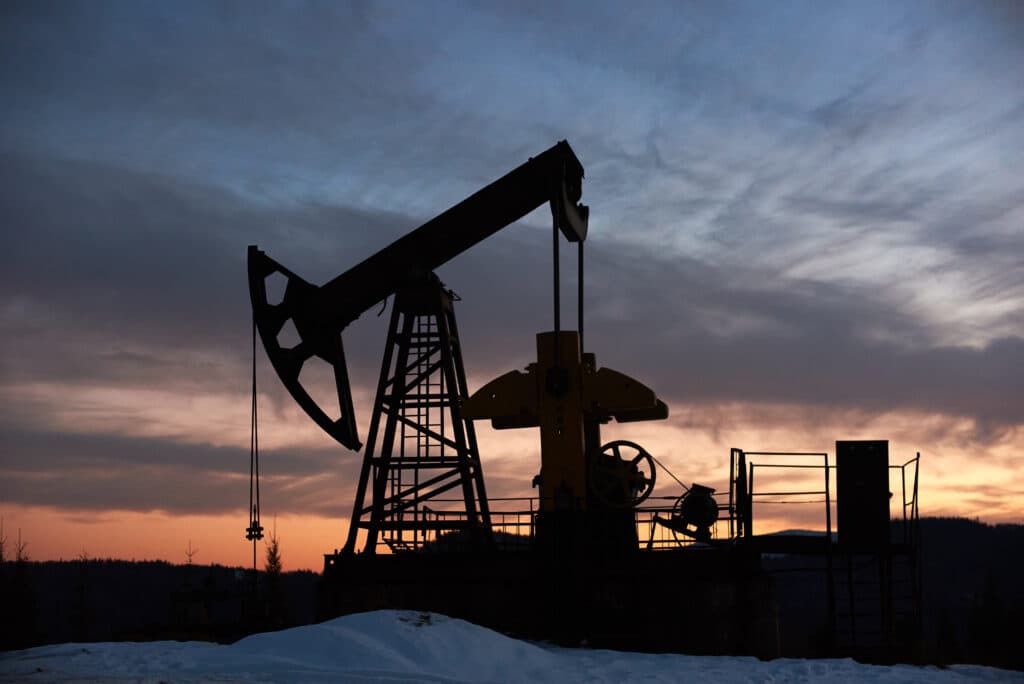
The oil market crisis triggered by the impact of the US-Israeli war with Iran has by no means fully unfolded yet; it is only just beginning. Bloomberg reported this, citing interviews with more than 30 industry experts. The main problem is that oil from the Middle East, a key source of the commodity, cannot reach the global market. Asia is already facing fuel shortages, and experts say the worst is yet to come for Europe.
In interviews with oil and gas traders, executives, brokers, shippers and consultants over the past week, one message kept coming up: the world still does not fully grasp the severity of the situation. Many are comparing it to the oil shock of the 1970s and warning that the closure of the Strait of Hormuz threatens an even greater crisis. Under normal circumstances, around a fifth of the oil and liquefied natural gas (LNG) traded worldwide passes through the strait.
"It is clear to me that if this crisis lasts longer than three or four months, it will become a systemic problem for the whole world," TotalEnergies Chief Executive Patrick Pouyanné said at the CERAWeek conference in Houston. "We cannot have 20 percent of the oil exported globally trapped in the Persian Gulf and 20 percent of LNG capacity blocked without consequences," he added.
The International Energy Agency (IEA) has called the current situation the biggest oil supply shock in history. The problems have persisted for a month, and during that time the price of Brent crude has risen by about 60 percent. This morning, it climbed above $115 a barrel.
The current crisis in the Middle East began on February 28, when the United States and Israel attacked Iran. Among other things, they said they aimed to prevent Tehran from acquiring a nuclear weapon. In retaliation, Iran began attacking neighbouring Arab countries where the United States has bases. Iran's Revolutionary Guard also began attacking tankers passing through the Strait of Hormuz, effectively blocking the narrow waterway. Tankers are mostly anchored nearby and are not continuing their voyages, while insurers are unwilling to cover their war risks. Iran is seeking greater control over the strait and has started charging fees, but still allows mostly ships from countries it considers friendly to pass through. With nowhere left to store the oil they extract, companies are being forced to cut production.
If the Strait of Hormuz remains closed, the world will have to significantly reduce its consumption of oil and gas. Experts believe this is likely to happen only once fuel prices rise enough to force consumers and businesses to make much less use of air travel, drive less and spend less. Demand is already beginning to fall, and some Asian countries are building up fuel stocks and introducing rationing.
High oil prices are forcing analysts to downgrade their forecasts for economic growth around the world. US government officials and Wall Street analysts are beginning to consider the possibility that oil prices could soar to an unprecedented $200 a barrel. Europe is likely to face a sharp rise in the cost of securing supplies and could face diesel shortages in the coming weeks.
Oil supplies are estimated to be down by around 11 million barrels a day. After accounting for measures already taken to ease the shortage, this means a deficit of around nine million barrels, exceeding the combined consumption of the major European economies. The situation is being eased for now by the release of strategic reserves and the temporary easing of sanctions on Russia and Iran, but these measures are time-limited.
The situation is particularly critical for LNG, for which there are no alternative transport routes or sufficient stocks. The impacts are already being felt in the real economy: inflation in the US is estimated to have accelerated, while in the eurozone it could rise by around one percentage point. Economic growth would then also slow, and further increases in oil prices could bring stagflation — economic stagnation accompanied by high inflation.
Fuel consumption is already falling in Asia, where stockpiling and rationing are also taking place. Shortages have been reported in countries such as Thailand and Australia, airlines are cutting flights, and some countries are reducing exports of oil products. The problems are expected to spread to Europe and Latin America in the coming weeks.
Analysts and companies are also warning that the impacts extend beyond the energy sector. Oil and gas are essential for producing plastics, chemicals and fertilisers. Shortages could therefore drive up the cost of a wide range of goods, from food to industrial products.
Experts say that in the event of a prolonged disruption, global energy consumption would have to be cut significantly. This would require further price increases, which would curb economic activity and could accelerate structural changes in the energy sector.
Translation disclaimer
This article is a machine translation of the Czech original and has not yet been fully reviewed. In case of any doubt, please refer to the Czech version.
Sdílejte článek prostřednictvím:
You might also like

3 October 2026, 13:01
3 October 2026, 07:43
2 October 2026, 21:55