4 October 2026, 21:07
Loading...
From “Britain’s Dallas” only a legal precedent remains. How did Horse Hill oilfield change the rules for the whole UK?

Libor Láník
22 September 2026, 10:17
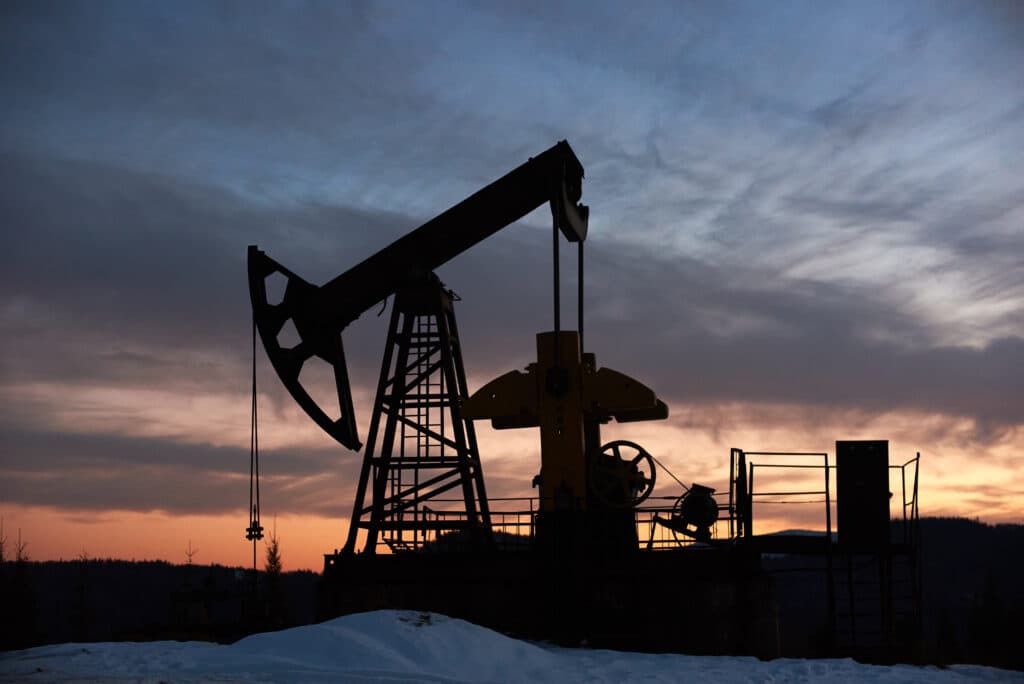
One hundred billion barrels of oil beneath the fields of southern England, the nickname “Britain’s Dallas” and the promise of energy independence. Those were the claims that sparked investor fever and nationwide attention around the Horse Hill discovery. Ten years and one landmark court ruling later, the company is selling its stake for a sum that did not cover even a fraction of its investment. What exactly happened to the field that was supposed to meet a third of the UK’s oil consumption, and why does its fate now determine the future of fossil fuel extraction across the UK?
“Based on what we have found here, we estimate that there are 50 to 100 billion barrels of oil underground,” UKOG chief executive Stephen Sanderson told the BBC in 2015. “We believe we can extract 5 to 15% of the oil underground, which could mean that by 2030 we meet 10 to 30% of UK oil demand from the Weald.”
A decade later, and after an investment of £25 million, the company is selling its majority stake and licence to a new owner. The sale price? One million pounds.
“Britain’s Dallas”, also known as the “Gatwick Gusher” after the nearby airport, is a good example of how a generously promoted “game-changing” oil discovery became a field with negligible actual production and, ultimately, the subject of a legal precedent that changed the rules for assessing the climate impacts of fossil fuel projects across the UK.
A brief history
Horse Hill is an oilfield in Surrey, southern England, about three kilometres north of Gatwick Airport in the so-called Weald Basin. It is 2014, and UKOG is drilling for oil there. Its subsequent analysis suggests that the area could contain up to 61 million barrels of oil per square kilometre. Following the success of the first exploration well (HH-1), a second appraisal well, Horse Hill-2 (HH-2), is planned and approved in 2018. At the time, the licence area is valued at up to £46 million.
In September 2019, Surrey County Council grants Horse Hill Developments Ltd (HHDL), a subsidiary, a 20-year permit for full oil production. It includes the construction of four new production wells and one well for reinjecting wastewater. But this is where the project’s swan song begins.
The project faces opposition from local residents, led by Sarah Finch, an environmental activist and resident of nearby Redhill. That same year, she applies for a judicial review of the council’s decision, arguing that the environmental impact assessment (EIA) failed to account for the indirect greenhouse gas emissions generated by the subsequent burning of the extracted oil—so-called Scope 3 emissions, which make up the vast majority of the project’s total emissions. The High Court (2020) and the Court of Appeal (2021) both dismiss her claim.
After several years, the contentious case reaches the Supreme Court, which rules in Finch’s favour by a 3–2 majority in June 2024 and overturns the 2019 permit as unlawful because the council failed to assess these downstream emissions when considering the environmental impacts.
The closely watched case, “R (Finch) v Surrey County Council”, thus becomes a landmark victory that will make future fossil fuel projects more difficult. The ruling establishes a major precedent, and the so-called “Finch ruling” becomes synonymous with the requirement to account for indirect Scope 3 emissions when assessing any new fossil fuel extraction project in the country—from coal mines and oilfields to gas fields in the North Sea.
“In climate science, people often talk about tipping points—Amazon deforestation, melting permafrost—phenomena that accelerate global warming in unpredictable and frightening ways,” Finch said after the ruling. “Today we have witnessed a tipping point in the opposite direction. No planning authority will be able to approve fossil fuel extraction without thoroughly considering its impact on the climate.”
What happened, and what comes next?
Although it took some time after the ruling for oil to stop flowing from Horse Hill, plans for other new domestic fossil fuel projects soon began to fall like dominoes. But let’s not get ahead of ourselves.
As a result of the court ruling, production at Horse Hill was voluntarily halted in October 2024, and key equipment was removed from the site. In the last six full months of operation before it shut down, the field averaged just 30 barrels of oil a day. By comparison, the UK’s largest field, Wytch Farm in Dorset, produced an average of 9,802 barrels a day over the same period.
The new owner, Energy B, has applied for a new permit through HHDL. In May 2026, a renewed planning application was submitted to Surrey County Council for four new production wells, a new processing area, tanker-loading facilities and an injection well for reinjecting fluids. The proposal envisages extracting almost 700,000 tonnes of oil over 20 years, with estimated lifetime emissions of around 2.3 million tonnes of CO₂, which the application itself describes as “insignificant” (0.05% of the UK’s carbon budget).
The plan to extract 700,000 tonnes over 20 years is equivalent to roughly five million barrels of oil. That is more than 24 times the field’s total production over its entire operating history to date, or approximately 212,000 barrels.
Finch and her Weald Action Group have not ruled out another judicial review if the council approves the application. The council’s public consultation closed on 13 July 2026, but as of the time of writing, the council had not yet issued a decision. The planning committee meeting on 23 September 2026 will not consider the application, and the council has not confirmed a new date because its assessment of the application is still under way.
The new owner argues that the project will bolster the UK’s energy security, while opponents point out, in addition to the emissions, that domestic oil is traded on international markets and may not directly serve UK consumers.
The legal precedent set off a domino effect
The first domino to fall in the metaphorical line was the Whitehaven coal mine in Cumbria—a plan for the UK’s first new underground coal mine in decades, intended to produce coking coal for the steel industry. The High Court quashed its permit as a direct consequence of the Finch ruling because, here too, emissions from the subsequent burning of the extracted coal had not been assessed.
Just three weeks after the ruling came Biscathorpe in the Lincolnshire Wolds, where an expansion of oil exploration in a protected landscape had been approved in 2023. On 11 July 2024, the government department itself acknowledged that the decision could not stand in light of the new legal interpretation, and the permit was quashed without the need for further court proceedings.
The ruling’s most significant impact was on two flagship projects in the UK’s offshore North Sea sector: the Rosebank field, the UK’s largest undeveloped oilfield, operated by Equinor and Ithaca Energy, and the Jackdaw gas field, backed by Shell and Equinor. Both were approved by the previous Conservative government in 2022–2023, with combined investment exceeding £3.3 billion.
In August 2024, the new Labour government acknowledged that their approval was unlawful in light of the Finch ruling and withdrew its legal defence against lawsuits brought by the environmental organisations Greenpeace and Uplift. Edinburgh’s Court of Session then formally quashed the permits for both fields on 30 January 2025.
The operators can continue preparatory work, but production itself remains blocked until the North Sea Transition Authority assesses new applications that will this time also account for emissions from burning the extracted oil and gas. A decision on Jackdaw, originally expected in autumn 2026, has also been delayed further, partly because of political circumstances in the UK. Shell chief executive Wael Sawan has said the company is prepared to defend the project “all the way to the Supreme Court” if necessary.
Horse Hill remains a symbol of a turning point: the once-promised “Britain’s Dallas”, with its megalomaniacal estimate, has become a byword for how a single court ruling rewrote the rules for the entire UK fossil fuel sector. The question remains whether oil will ever flow again from the “Gatwick Gusher”.
Translation disclaimer
This article is a machine translation of the Czech original and has not yet been fully reviewed. In case of any doubt, please refer to the Czech version.
Sdílejte článek prostřednictvím:
You might also like
3 October 2026, 13:01
3 October 2026, 07:43
2 October 2026, 21:55