
23 October 2026, 14:38
Loading...
Germany to release some of its oil reserves due to war in the Middle East

oEnergetice.cz, ČTK
11 March 2026, 22:20
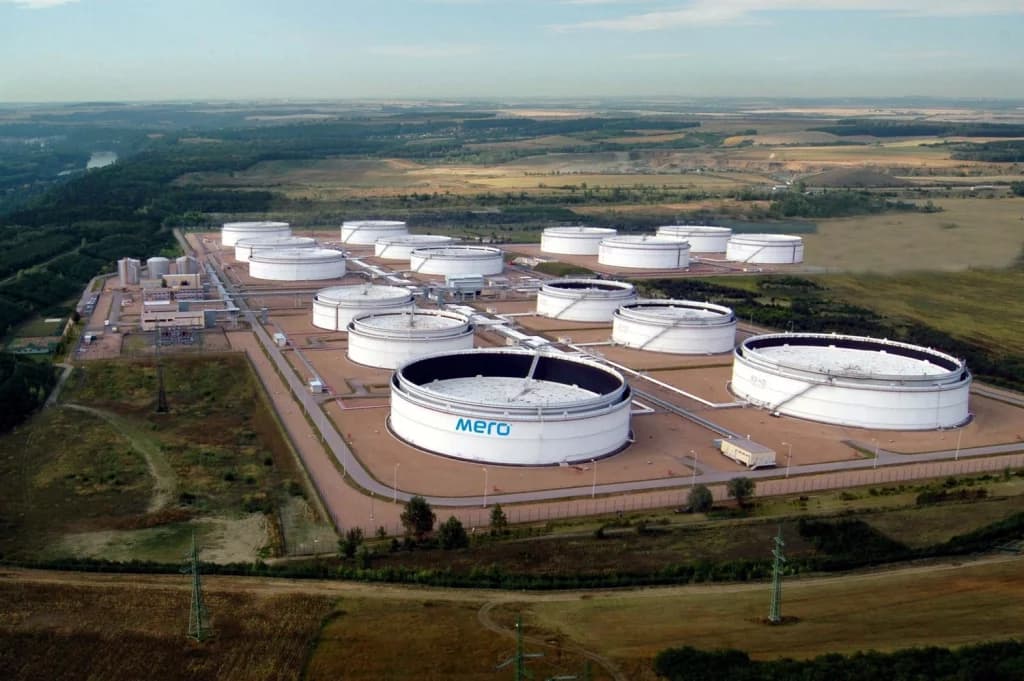
Berlin, March 11 (CTK) - Germany will release some of its oil reserves due to the impact of the war in the Middle East on fuel prices. Economy Minister Katherina Reiche announced the move at a press conference today, confirming earlier information from DPA. The minister also confirmed that Germany plans to ban petrol stations from raising fuel prices more than once a day.
On Monday, finance ministers from the G7 group of advanced economies discussed the possibility of a coordinated release of oil from strategic reserves. However, no decision was made at the time, according to French Finance Minister Roland Lescure. The ministers nevertheless asked the International Energy Agency (IEA) to assess the situation.
The American newspaper The Wall Street Journal (WSJ), citing its sources, reported today that the IEA has proposed the largest release of reserves to date to curb the sharp rise in oil prices linked to the conflict in the Middle East. The current war in the Middle East was started by the United States and Israel, which attacked Iran on the last day of February.
According to Reiche, the IEA proposed that member states release 400 million barrels of oil from their reserves. This is significantly more than at the start of Russia's invasion of Ukraine in 2022, when IEA members released 182 million barrels. According to Handelsblatt, the proposed volume of oil is equivalent to the amount that passed through the Strait of Hormuz on tankers in the 20 days before the war.
The economy minister said she would comply with the IEA's request. "If we ease market fears of a shortage, we will bring prices down, and we definitely expect a dampening effect," Reiche said. Germany will release 2.64 million tonnes of oil, she said, equivalent to 19.51 million barrels. Germany's total oil reserves currently stand at 19.5 million tonnes, or around 144 million barrels, according to a spokesperson for the economy ministry. Germany is therefore preparing to release around 14 percent of its reserves.
Reiche said it would take several days to release oil from the reserves because IEA member states must approve the move. "But we expect them to do so," she added. She also announced that the government plans to ban petrol stations from raising prices more than once a day. "By contrast, prices can be lowered at any time," she added.
Shipping through the Strait of Hormuz, a key route for transporting oil from the Persian Gulf, has been crippled by the war triggered by the US-Israeli attack on Iran. Around a fifth of the world's oil supplies normally pass through the strait. Fears of a longer-term disruption to shipping through the strait have led to a significant rise in oil prices.
On Monday night, the price of North Sea Brent crude climbed to nearly 120 dollars a barrel. It later fell below 90 dollars a barrel after US President Donald Trump suggested that the war with Iran could be nearing its end. Shortly before 15:00 CET today, Brent was up 4.1 percent at more than 91.40 dollars a barrel. At the beginning of February, Brent was trading below 70 dollars.
Translation disclaimer
This article is a machine translation of the Czech original and has not yet been fully reviewed. In case of any doubt, please refer to the Czech version.
Sdílejte článek prostřednictvím:
You might also like


23 October 2026, 11:01


23 October 2026, 06:34