New British government plan likely to allow further North Sea drilling

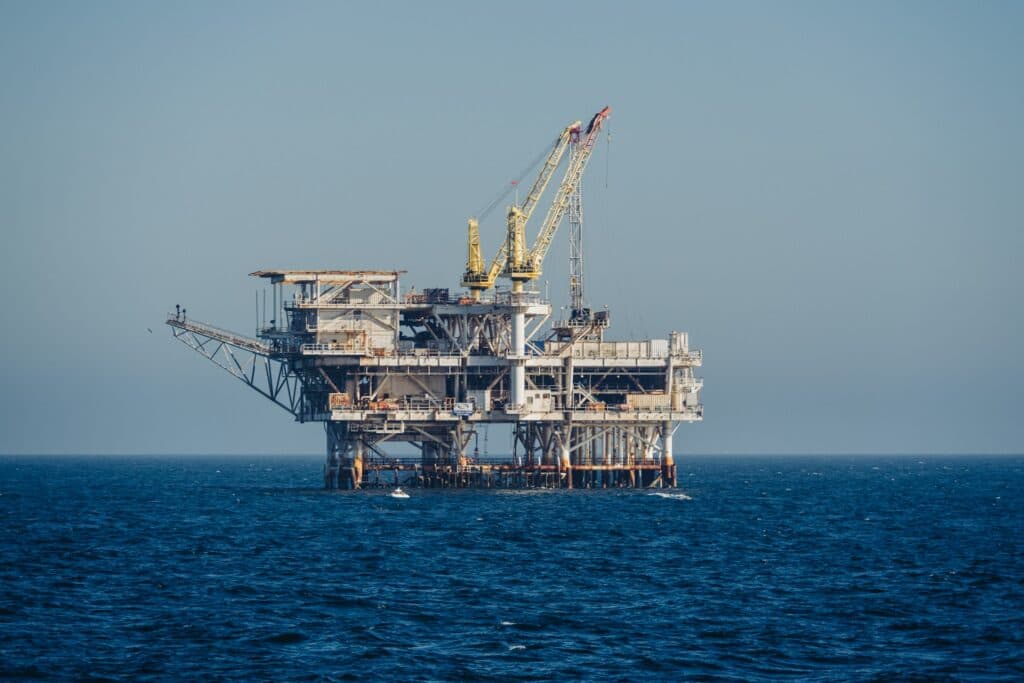
Recent developments suggest that the British government is preparing to make a major change to the rules governing oil and gas production in the North Sea. For the first time, the new strategy is expected to allow production to be expanded through so-called “tiebacks”, opening the way to new wells despite previous promises to limit fossil fuel exploration. The move comes amid a sharp decline in investment, record-high taxes on energy companies and massive job losses.
Prime Minister Keir Starmer’s government faces one of the biggest energy dilemmas of recent years: how to sustain oil and gas production in the North Sea, which still supplies a significant share of domestic consumption and supports tens of thousands of jobs in Scotland and northern England, while also meeting ambitious climate commitments. The tension between these two goals is reflected in debates over continued production, the design of the windfall tax and the new North Sea strategy being drawn up by the government.
The plans to ease restrictions on new oil and gas production in the North Sea, which are due to be published as part of the government’s North Sea strategy, offer an indication of what lies ahead. According to the BBC, Chancellor Rachel Reeves is expected to announce the publication of the strategy as part of the Budget announcement.
Strategy includes new exploration and offers hope for existing plans
The strategy is expected to adopt a more liberal interpretation of the manifesto pledge to ban new oil and gas exploration, allowing more generous extensions of existing fields. The idea could enable new wells in a way that can be “tied back” to existing fields, and was first put forward at the Labour Party conference in September.
Although the outcome of the government’s review of North Sea production rules does not directly determine the fate of the controversial Rosebank field, it has a significant bearing on the context in which the decision will be made. Rosebank is one of the UK’s largest undeveloped oil projects.
The project is still subject to a separate regulatory and legal process, so approval is not guaranteed. However, the prevailing view in the industry is that if the government relaxes the rules on further production, Rosebank will also have a greater chance of eventually getting the green light.
The changes also include the proposed approval of so-called tiebacks, which connect a smaller or newly discovered field to existing production infrastructure, such as a platform or pipeline. This is a way to extract additional oil and gas without building new large-scale facilities.
Tiebacks are traditionally used for smaller fields that are geologically close to existing infrastructure and would otherwise be uneconomic to develop. Rosebank, however, is in a completely different category: it is a massive field that requires its own production infrastructure and cannot be compared to a tieback. This also explains why its approval is significantly more controversial.
Oil industry uses the situation to mount broader criticism
Alongside the technical debate over tiebacks, tax policy also plays a crucial role. British oil and gas companies are currently subject to an extraordinary windfall tax that pushes their overall tax rate as high as 78%. The so-called Energy Profits Levy is due to remain in place until 2030, but the industry is lobbying hard for it to be scrapped earlier. It argues that the exceptionally high tax is stifling investment, deterring new projects and pushing operators to move their money to regions with more favourable conditions.
According to estimates from Robert Gordon University in Aberdeen, the sector is already losing around 1 000 jobs a month, and the situation could worsen further if taxation does not change.
That is why many industry representatives warn that approving tiebacks alone would be an empty gesture without a change to the tax regime. A compromise mechanism involving “ceilings and floors” is therefore under consideration, which would be activated only when oil prices are high—similar to the period following Russia’s invasion of Ukraine. If prices fell, the windfall tax would apply only to a limited extent. Companies say, however, that current developments show the period of “windfall profits” is over, and the tax should reflect that.
One of the strongest critics of the government’s approach is Russell Borthwick, chief executive of the Aberdeen & Grampian Chamber of Commerce. He says the government is “very wrong” in its North Sea policy. In his view, the current changes are not enough to stop the loss of jobs and capital. If the EPL remains unchanged, “thousands more jobs will disappear” and more companies will leave the region. Borthwick has therefore urged the government to announce the phased abolition of the tax now—by 2026 at the latest, “before it is too late”.
Translation disclaimer
This article is a machine translation of the Czech original and has not yet been fully reviewed. In case of any doubt, please refer to the Czech version.