3 October 2026, 13:01
Loading...
Saudi oil heads to Asia via Sohar detour, Europe braces for cuts

oEnergetice.cz, ČTK
16 September 2026, 13:30
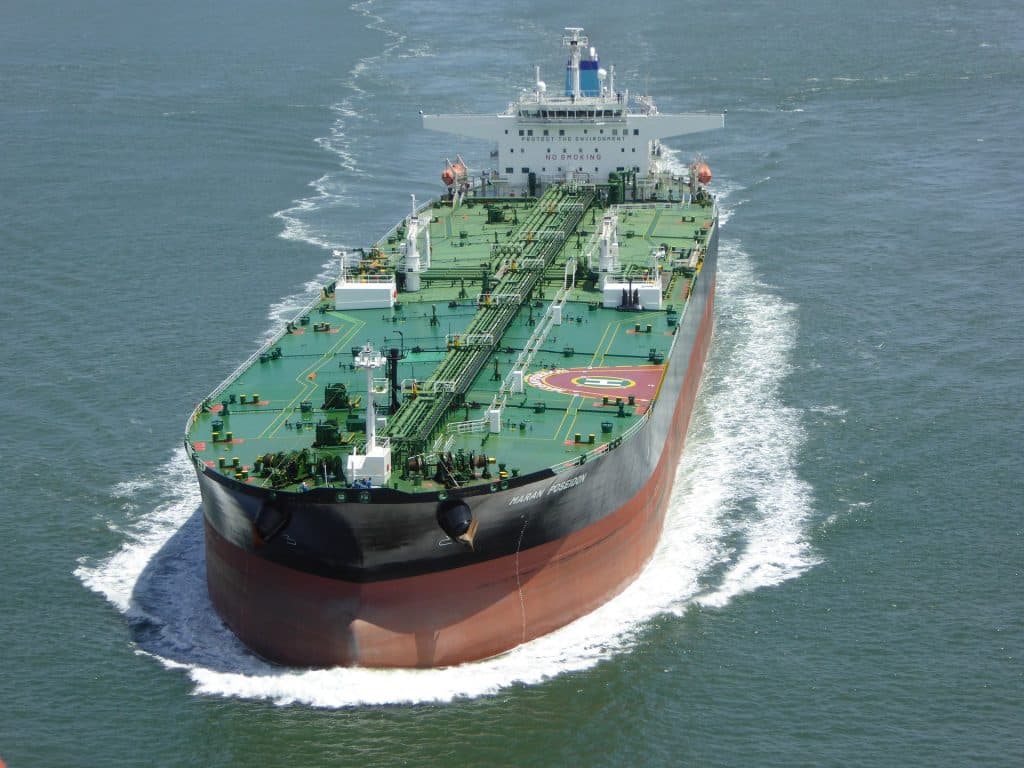
Saudi Arabia is offering Asian buyers more oil for loading via ship-to-ship transfers off the Omani port of Sohar. Reuters reported this today, citing industry sources. Saudi Arabia is responding to drone attacks that damaged its key oil pipeline running to the Red Sea. It has already informed European customers that some crude oil cargoes scheduled for loading in September will be cancelled. Poland’s Orlen, which operates refineries in countries including the Czech Republic, is also a major buyer of Saudi oil.
State oil company Saudi Aramco has offered its long-term Asian contract customers its main crude grade, Arab Light, as well as Arab Medium and Arab Heavy, for loading at Sohar, the sources said. Sohar is now of crucial importance because it lies outside the Strait of Hormuz, which remains partially blocked following the US-Israeli attack on Iran in late February.
The offers to Asian buyers suggest Aramco is moving larger volumes of oil from the Persian Gulf region for onward transport outside the strait. In recent weeks, the company has made at least two similar offers of Arab Medium and Arab Heavy to Asian buyers, the sources said. The company declined to comment. Last Friday, just after the drone attacks, it announced that it had temporarily shut down its key East-West pipeline, also known as Petroline. It did not say whether the facility had been damaged.
Over the past week, Saudi Arabia doubled the daily volume of oil loaded at its Ras Tanura and Juaymah terminals in the Persian Gulf to approximately two VLCC tankers, equivalent to four million barrels. This is according to satellite tracking by consultancy Energy Aspects.
Separate ship-tracking data from Kpler showed today that four VLCC tankers, with a combined capacity of eight million barrels of oil, loaded at the Ras Tanura terminal. VLCC stands for Very Large Crude Carrier and refers to the largest oil tankers.
The increase in Aramco’s loading volumes and the amount of oil on offer come as other producers in the Persian Gulf region are also offering more oil for loading outside the Strait of Hormuz. To do so, they are securing ships that carry crude through the strait, often switching off their transponders to make their location harder to track.
Saudi Arabia is the world’s largest oil exporter and has relied on its East-West pipeline since the US-Israeli war against Iran began. The pipeline allows oil to be transported to the export terminal at the port of Yanbu on the Red Sea.
The kingdom halted pipeline operations last Friday because it had reportedly been damaged in drone attacks. Riyadh blamed the attacks on Iraqi militias, but in the wider context of the Middle East conflict, Yemen’s Houthi rebels, who are allies of Iran, have also targeted Saudi infrastructure. Saudi Aramco has provided no details about the pipeline shutdown.
Global benchmark oil prices climbed to multi-month highs this week in response to the disruption to Saudi oil supplies. They are now well above $100 a barrel.
The East-West pipeline is currently an exceptionally important alternative route precisely because it bypasses the Strait of Hormuz. For Saudi Arabia, it was one of the main ways to get Saudi oil to the global market without tankers having to pass through the Strait of Hormuz. This is why it is also important for Poland’s Orlen. Reuters reported on Tuesday that around 40 percent of the oil processed by Orlen comes from Saudi Aramco.
The East-West pipeline is about 1200 kilometres long and runs from oil fields in eastern Saudi Arabia across the interior to the port of Yanbu on the Red Sea. From there, Saudi oil can travel via the Red Sea, the Suez Canal and the Mediterranean to Europe and its refineries. For example, oil destined for Poland passes through Egypt’s Sidi Kerir terminal. Reuters reported on Monday that shipments to Poland would total around 2.1 million barrels in September, compared with 6.6 million barrels in August.
It is not yet clear how long the East-West pipeline outage will last. US Energy Secretary Chris Wright said on Tuesday that, according to his information, the pipeline could be back in operation within a few days. The Wall Street Journal (WSJ), however, reported estimates on the same day that repairs could take around six to eight weeks, although partial operations could resume sooner.
Orlen owns, among other companies, Orlen Unipetrol, the largest refining and petrochemical company in the Czech Republic. Orlen said on Monday that it did not see an immediate problem due to the disruption to supplies from Saudi Arabia, but Reuters reported on Tuesday that the company was urgently seeking new oil supplies from the North Sea and other regions to make up for the shortfall in Saudi crude imports. According to sources, the company is already buying or seeking North Sea crude, as well as oil from the US, Kazakhstan, Algeria and Guyana.
Translation disclaimer
This article is a machine translation of the Czech original and has not yet been fully reviewed. In case of any doubt, please refer to the Czech version.
Sdílejte článek prostřednictvím:
You might also like
3 October 2026, 07:43
2 October 2026, 21:55
2 October 2026, 15:14