3 October 2026, 13:01
Loading...
Tehran says US deal includes fees for passage through the Strait of Hormuz

oEnergetice.cz, ČTK
15 June 2026, 16:58
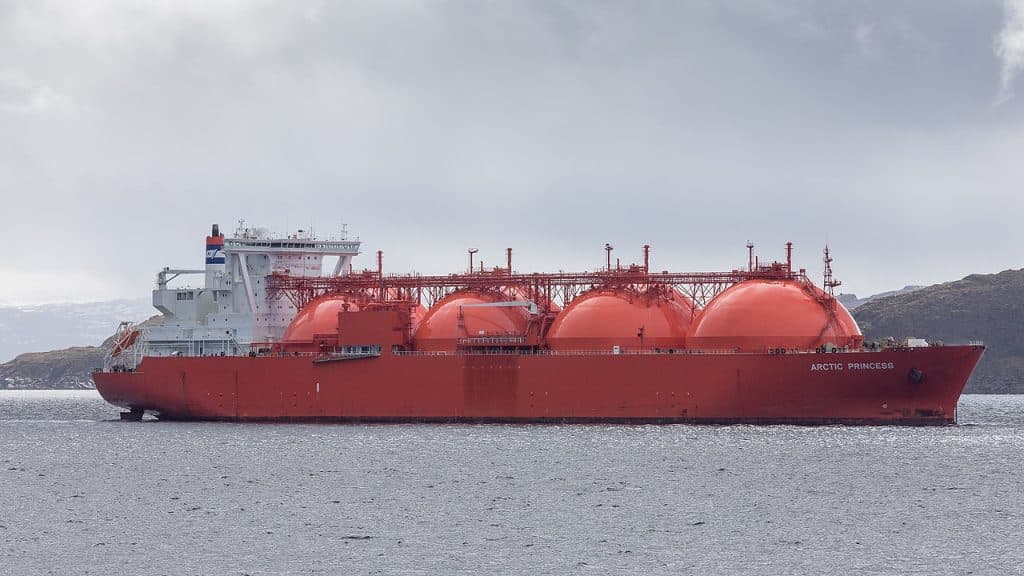
The framework agreement between Iran and the US, announced overnight by US President Donald Trump and expected to be signed on Friday in Geneva, includes Tehran charging fees for maritime services for ships transiting the Strait of Hormuz. Iran’s foreign ministry said today, according to AFP, that these would not be tolls but fees for services. US Vice President J. D. Vance said today, however, that the US expects the Strait of Hormuz to be open without tolls in the long term. Trump also promised overnight that ships would be able to pass through the strait free of charge.
“We have always said that we are not seeking to charge transit tolls, but that fees will be charged for navigation services, environmental protection, ship insurance and other necessary services,” Iranian Foreign Ministry spokesperson Esmaeil Baghaei said today, according to AFP.
“Our goal is to pave the way for safe passage along this waterway... Comprehensive services will be offered to protect and preserve the environment. Iran and Oman will offer many other services that will cost money. So fees will be charged, that is clear,” Baghaei also said, according to Al Jazeera.
Vance told CNBC today that the United States expects the strait to be open “without tolls in the long term”. “And that’s exactly what we’re going to discuss in these technical negotiations, which are due to start on Friday and last two months,” Vance told CNBC.
However, when announcing the agreement overnight, Trump wrote in a post on his social media platform: “I hereby fully authorize the opening of the Strait of Hormuz, without fees, and at the same time authorize the immediate lifting of the blockade by the United States Navy. Ships of the world, start your engines. Let the oil flow!”
Iran’s Tasnim news agency reported today, citing an unnamed source, that several points were added to the text immediately before the agreement between the US and Iran was announced. “Vessels transiting the Strait of Hormuz will be exempt from paying fees for 60 days; (Iran intends to start charging ships fees for services after this period),” Tasnim reported. It said the text was also amended shortly before the announcement to guarantee Lebanon’s sovereignty and respect for its territorial integrity, and to place the management of maritime navigation services in the Strait of Hormuz under Iran and Oman.
The preliminary agreement, which is intended to lead to an end to the war, is primarily meant to ensure the reopening of the Strait of Hormuz, a key sea route for the global transport of oil and liquefied natural gas (LNG), and to lift the US blockade of Iranian ports. After the agreement, brokered by Pakistan, is signed on Friday, negotiations on a peace deal are expected to continue for 60 days.
Reuters reported today, citing global ship-tracking data, that at least one LNG tanker passed through the strait this morning. Many other vessels are still waiting for clearer security guarantees, however. Experts warn that even if the situation stabilizes permanently, it could take a long time for shipping to return to normal, because of the backlog of vessels and the need to verify the safety of shipping routes.
The Strait of Hormuz is one of the world’s most important maritime arteries, with about a fifth of global oil and LNG trade normally passing through it. Any disruption to shipping in the area therefore has a significant impact on global energy markets and supply chains. Oil prices fell today to their lowest level since March in response to the announcement of the agreement between Iran and the US, while stock markets in Europe and Asia rose sharply, with the pan-European STOXX Europe 600 index reaching a record high.
Translation disclaimer
This article is a machine translation of the Czech original and has not yet been fully reviewed. In case of any doubt, please refer to the Czech version.
Sdílejte článek prostřednictvím:
You might also like
3 October 2026, 07:43
2 October 2026, 21:55
2 October 2026, 15:14