3 October 2026, 13:01
Loading...
Tensions in the Persian Gulf drive oil prices higher, with Brent and WTI rising

oEnergetice.cz, ČTK
15 July 2026, 16:42
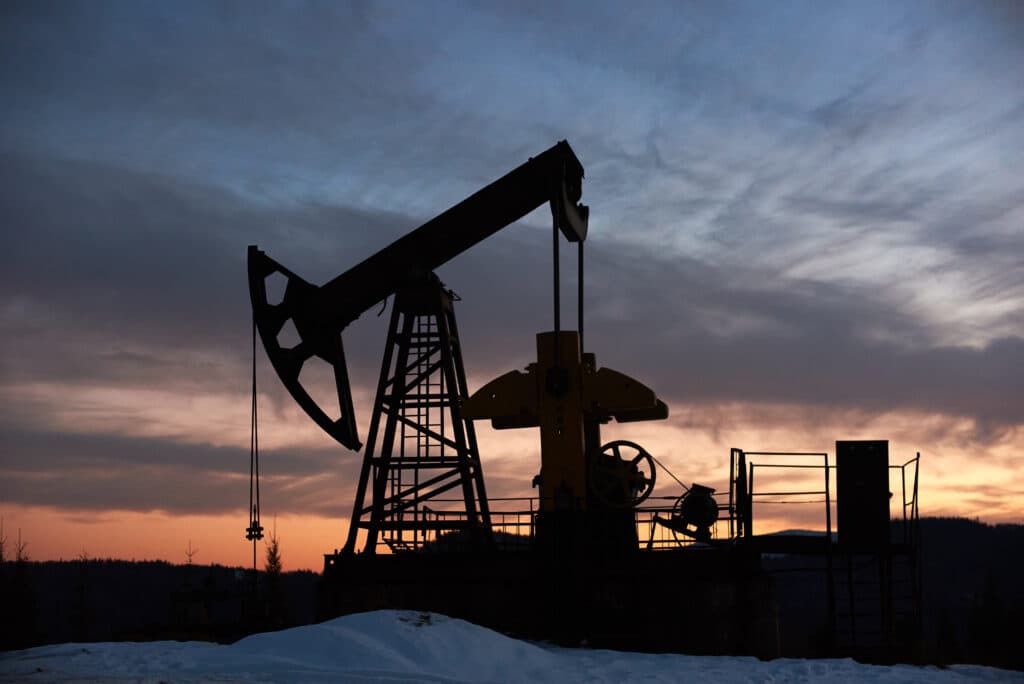
Oil prices are rising after a further escalation of fighting in the Middle East, with both major benchmarks up more than one percent after noon. Among other things, the market is reacting to news that US President Donald Trump has again imposed a naval blockade on all Iranian ports, while Iran’s Revolutionary Guards have threatened to close all other export corridors that benefit the United States and its allies.
Shortly after 12:30 CEST, the nearest-month futures contract for North Sea Brent crude was trading at USD 85.70 a barrel, up 1.1 percent from Tuesday. US light crude West Texas Intermediate (WTI) was up 1.2 percent at USD 80.30 a barrel. Prices had already reached their highest levels in a month on Tuesday.
The US military announced early this morning that it was launching a new wave of strikes aimed at further weakening Iran’s capabilities used to attack commercial vessels in the Strait of Hormuz. “I’m saving the energy targets for last, but eventually we’ll hit those energy targets too,” Trump said in an interview broadcast by Fox News on Tuesday evening.
“The naval blockade of ships heading to and from Iranian ports is tightening the oil market, because Iran’s exports have amounted to roughly 1.5 to two million barrels a day over the past two weeks,” said UBS bank analyst Giovanni Staunovo.
US bank Goldman Sachs estimates that oil exports from the Persian Gulf recovered to more than 80 percent of pre-war levels after the June US-Iran memorandum of understanding. Over the past week, however, they fell back below 50 percent, to roughly 11 million barrels a day. The bank forecasts that Brent crude could exceed USD 110 a barrel in the fourth quarter if the recovery in Persian Gulf exports continues to be delayed.
Analysts say Tuesday’s sharp rise in oil prices was driven mainly by attacks that further disrupted supplies through the Strait of Hormuz. Before the start of the war with Iran, around a fifth of the world’s oil and liquefied natural gas (LNG) supplies passed through this shipping route. “Energy exports from the region will either be shared by all, or allowed for no one,” Iran’s Revolutionary Guards said in a statement today, cited by the state news agency IRNA.
According to analysts, Iran is signaling the possibility of using its allied Houthi rebels in Yemen to close the Bab el-Mandeb Strait, which provides access to the Red Sea. This would open another front against Washington and threaten two of the world’s most important routes for transporting energy commodities.
Investors are cautious, however, and given the unpredictable course of events, they are not yet pricing in a substantial risk premium for oil. “This is all part of the war game,” said Ole Hansen, head of commodity market strategy at Saxo Bank. “The market has grown accustomed to treating similar announcements with a degree of skepticism, because they often don’t come to pass in the end,” Reuters quoted him as saying.
The Iranian military said this morning that it had carried out drone strikes on US positions at the Azraq base in Jordan. The Pentagon did not immediately comment. Iran’s Revolutionary Guards also said they had hit weapons depots and other military facilities in Bahrain and Kuwait. Reuters noted that it was unable to independently verify the claim.
Fighting between Iran and the United States resumed last week, disrupting an already fragile ceasefire reached in June after several months of fighting. The conflict escalated on February 28, when the United States and Israel attacked Iran. One of the main reasons given to justify the attack was the aim of preventing Iran from acquiring a nuclear weapon.
Oil prices in dollars per barrel (about 159 liters)
| EXCHANGE | TYPE | CONTRACT | CURRENT PRICE | PREVIOUS CLOSE |
| London - ICE | Brent | September | 85.69 | 84.73 |
| New York - NYMEX | WTI | August | 80.28 | 79.34 |
Translation disclaimer
This article is a machine translation of the Czech original and has not yet been fully reviewed. In case of any doubt, please refer to the Czech version.
Sdílejte článek prostřednictvím:
You might also like
3 October 2026, 07:43
2 October 2026, 21:55

2 October 2026, 15:14