Trump is shooting US oil companies in the foot, industry says


According to sources close to US President-elect Donald Trump, the incoming administration does not intend to exempt oil from Canada and Mexico from its planned 25% import tariffs. The oil industry warns, however, that such a move would first put consumers at risk, followed by domestic industry and national security. Reuters reported.
According to the US Department of Energy, Canada and Mexico are the main suppliers of imported oil to the US, together accounting for approximately a quarter of the oil processed by US refineries into fuels such as gasoline and heating oil.
In 2024, the United States imported about 5.2 million barrels of oil and petroleum products per day from Canada and Mexico, more than 4 million of them from Canada.
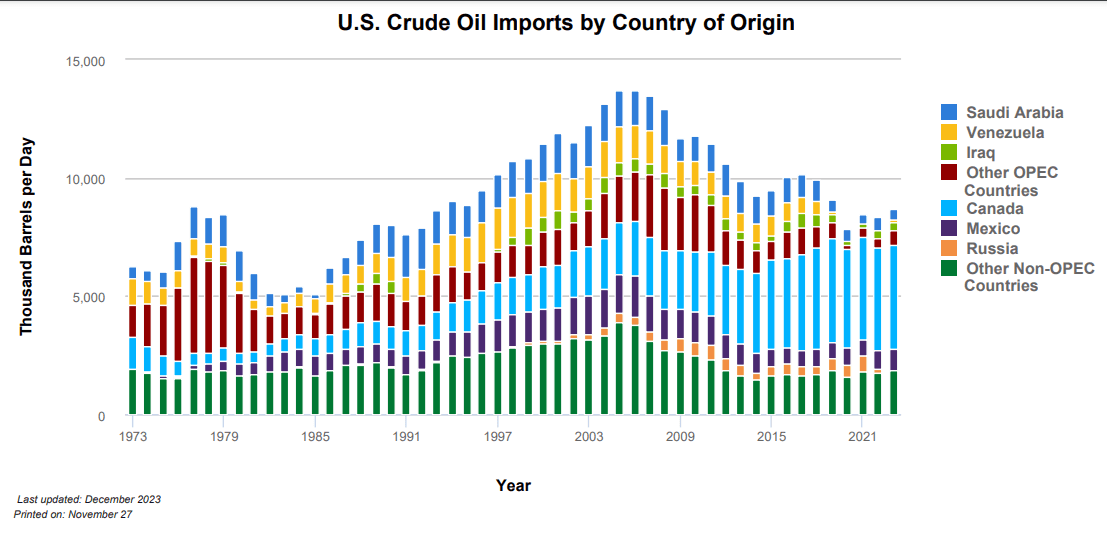
According to published reports, US and Canadian oil industry representatives had been convinced that the plans announced by the US president-elect would not apply to oil imports. This was primarily because US refineries are equipped to process oil products from these countries, while switching to processing other types of oil would require substantial additional investment.
However, two sources close to the Trump administration confirmed that oil, like other products, would not receive an exemption.
Industry will fight to have tariffs scrapped
Representatives of the US oil processing industry say that imposing tariffs would be a mistake. This is a rare moment when the industry and the incoming administration are at odds.
“A broad trade policy that could increase import costs, reduce available supplies of oil feedstocks and products, or trigger retaliatory tariffs has the potential to affect consumers and undermine our advantage as the world's leading producer of liquid fuels,” said a spokesperson for the American Fuel and Petrochemical Manufacturers (AFPM), which represents oil refineries.
AFPM also says it will continue to press officials to avoid any policy that could undermine the United States' energy advantage.
Meanwhile, American Petroleum Institute (API) spokesperson Scott Lauermann said, in response to a question about tariffs, that it would be important to maintain current levels of cross-border energy trade.
“Canada and Mexico are our top trading partners, and maintaining the free flow of energy products across our borders is essential to North American energy security and to consumers in the US,” Lauermann said.
Oil industry analysts and traders also warn that US refineries will face higher oil prices later this year, which will translate into higher fuel prices for end users.
The Midwest would be particularly at risk
The greatest impact would be from tariffs on Canadian oil, an important source of supply for refineries located in the US Midwest. The region would most likely have to contend with higher fuel prices, as it would be difficult to replace the Canadian oil processed there.
“Imposing tariffs on more than 4 million barrels of oil per day from your leading supplier seems self-defeating,” said Matt Smith, a ship-tracking analyst at Kpler.
Although the US is the world's largest oil producer, producing 13.5 million barrels per day, much of its output is light and unsuitable for processing at domestic refineries. These are configured to refine heavy oil, such as Canadian and Mexican crude.
Asked about tariffs on oil imports, Trump's transition team noted that tariffs on China had created jobs, spurred investment and caused no inflation.
“President Trump will quickly work to fix and rebuild an economy that puts American workers first by bringing American jobs back, lowering inflation, raising real wages, cutting taxes, reducing regulation and unleashing American energy,” Trump spokesperson Karoline Leavitt told Reuters.
Translation disclaimer
This article is a machine translation of the Czech original and has not yet been fully reviewed. In case of any doubt, please refer to the Czech version.