Will China continue to have access to discounted Venezuelan oil?

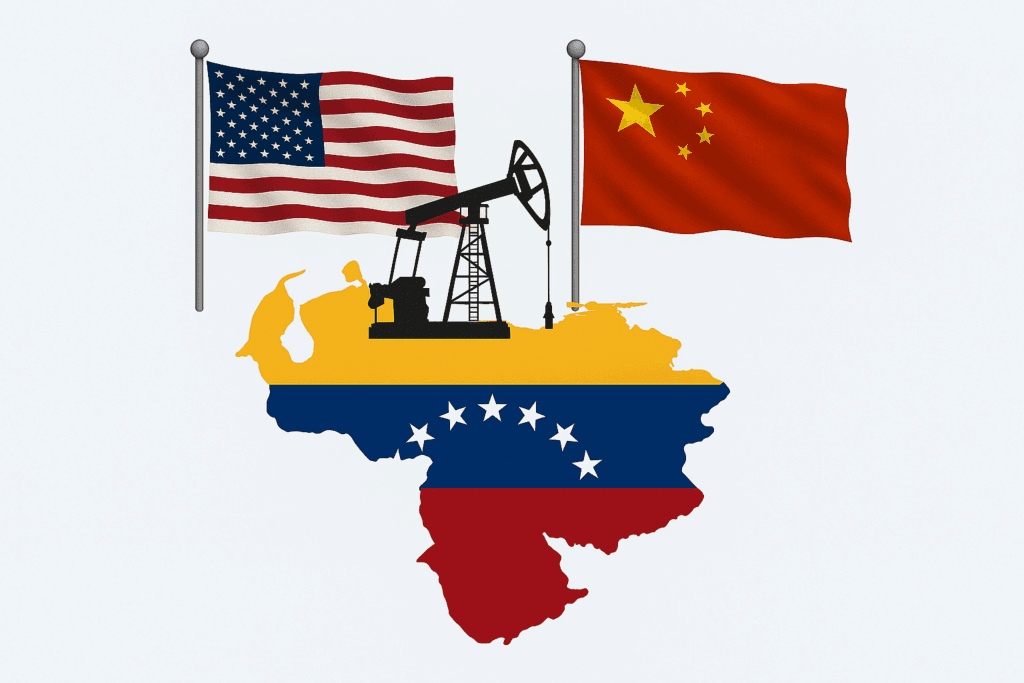
When Hugo Chávez came to power in Venezuela in 1999, the country set out to push US oil companies out of the oil sector as part of a nationalisation campaign. This created an opening for new players, which China made very good use of. But following the recent forcible detention of Nicolás Maduro, the position of Chinese companies in Venezuela is now uncertain. The question remains whether the United States, which is asserting control over Venezuela’s oil fields, will now try to put obstacles in the way of Chinese companies.
At the start of the millennium, Venezuela became the first Spanish-speaking country to sign a “strategic development partnership” with China. Less than fifteen years later, this form of cooperation was upgraded to a “comprehensive strategic partnership” and came to include nearly 800 investment projects in Venezuela, financed exclusively by China. These projects focused mainly on infrastructure, oil, mining, light industry and assembly.
Venezuela is still repaying a substantial amount to China, and America’s takeover of Venezuelan oil exports has led to the rerouting of oil shipments intended to repay the debt to China. Estimates of exactly how much Venezuela owes China are purely speculative. Overall, however, the debt is thought to currently stand at between 10 and 15 billion dollars.
According to reports, Chinese state-owned oil companies claim more than 4 billion barrels of Venezuelan oil—almost five times as much as Chevron, the only US oil company operating in Venezuela. Through agreements to extract oil, financial assistance and other forms of cooperation, Beijing has secured enormous influence in Venezuela over the long term. Now, however, the Trump administration could change the picture and try to weaken China’s position.
Chinese producers expanded their claims as a result of Venezuela’s nationalisation campaign, which drove out Exxon Mobil and ConocoPhillips. China quickly became a financier, equipment supplier and political partner in what Caracas called an “iron brotherhood”, which has protected it from US pressure until now.
What does Trump think?
Since the ousting of Venezuelan President Nicolás Maduro, President Trump has been advancing a narrative that encourages China to continue buying Venezuelan oil. There is a catch, however: America wants to make Beijing start paying market prices for Venezuelan oil.
Given that in recent years almost all of Venezuela’s oil output has gone to China, mostly on the black market and at a substantial discount to global prices, Trump’s narrative appears incompatible with reality.
It is not yet known how the United States will respond to China’s presence in Venezuela’s oil industry. The White House and the Department of Energy declined to comment on Chinese oil production in Venezuela.
A statement from the Chinese embassy, however, suggests that the Asian hegemon has no intention of giving up its position in Venezuela. According to a spokesperson, Chinese assets in Venezuela are governed by international law and benefit both countries.
“China will take all necessary measures to protect its legitimate rights and interests in Venezuela,” the spokesperson said.
Earlier this month, US Secretary of State Marco Rubio spoke about China’s presence in Venezuela, saying that it poses “an enormous strategic risk to America—not on the other side of the world or on another continent, but in the same hemisphere”.
A strategy of pushing Beijing out of the region could, however, face several obstacles. If President Trump wants to revive Venezuela’s oil-dependent economy, he will undoubtedly have to cooperate with China to some extent. Trump is also seeking to maintain relatively stable relations with Chinese leader Xi Jinping, which could temper or complicate US aggressive rhetoric towards Chinese oil companies in Venezuela.
It should be added that US oil companies are not exactly eager to produce oil in Venezuela. The companies’ top executives recently met with President Trump to discuss investments of 100 billion dollars to rebuild Venezuela’s oil industry. Exxon CEO Darren Woods, however, has since described Venezuela as “uninvestable”.
How did China gain access to Venezuelan oil?
It was 2007, and China was urgently looking for a way to secure its oil supply. The Chinese economy was booming at the time and was on course to become the world’s largest energy consumer. That same year, Venezuela was nationalising its oil sector. But when US companies ConocoPhillips and Exxon refused to hand over control of the fields they had developed, Beijing seized the opportunity and bought them.
After Exxon left its operations in the Orinoco Belt near the Amazon, the state-owned China National Petroleum partnered with Venezuela’s state-owned Petróleos de Venezuela (PdVSA) as a minority partner in a venture known as Sinovensa, now China’s largest production base in Venezuela. Another major Chinese company, Sinopec, acquired coastal acreage in the Gulf of Paria, near where ConocoPhillips operated.
Despite its claims to Venezuelan oil, China remains a small producer in Venezuela compared with Chevron. The latter produces around 15% of Venezuela’s oil output, which is less than 1 million barrels per day. Some key Chinese stakes are even inactive, illustrating the dysfunction of PdVSA, the controlling shareholder, under Maduro’s leadership. This has led to daily production falling from more than 3 million barrels per day in the 1990s.
Before Maduro’s abduction, China was the indirect destination for more than 80% of Venezuela’s oil exports and benefited from exceptionally low prices, as sanctions on Venezuela had sharply curtailed its ability to cooperate with other countries. Now that America has taken control of Venezuela’s oil sector, the question remains whether Chinese companies will regroup and be willing to accept Trump’s terms.
Translation disclaimer
This article is a machine translation of the Czech original and has not yet been fully reviewed. In case of any doubt, please refer to the Czech version.