23 October 2026, 14:38
Loading...
Construction begins on BREST-OD-300 lead-cooled fast reactor
Vladimír Wagner
11 June 2021, 11:42
Generation IV fast nuclear reactors are expected to help use fuel more efficiently and reduce the volume of nuclear waste. One of them is a lead-cooled fast reactor. Concreting of the nuclear island began on 8 June 2021 at the BREST-OD-300 pilot project. Completion of the reactor, with an electrical output of 300 MWe, is expected in 2026, and it should serve as a model for commercial units of this type.
We have written several times about preparations for this pilot reactor in our annual reviews of developments in nuclear energy, the latest of which was published at the beginning of this year. Construction of the BREST-OD-300 reactor is part of Rosatom's Proryv programme, aimed at paving the way for advanced new-generation nuclear technologies. Fast reactors in particular are expected to provide a means of using uranium ore more efficiently, closing the fuel cycle and thereby reducing the volume of nuclear waste per unit of electricity generated.
Fast reactors use the unmoderated neutron spectrum produced during fission. These neutrons have an order-of-magnitude lower probability of being captured by uranium-235 and splitting it than thermal neutrons, which are produced by moderation in conventional reactors used, for example, at Czech nuclear power plants. On the other hand, if they have sufficient energy, they can also split uranium-238. At the same time, a fast reactor core can be configured to enable the efficient conversion of uranium-238 into plutonium-239, or the efficient burning of plutonium isotopes and other transuranic elements.
Such reactors are generally more compact and release more heat per unit volume of the core than conventional reactors. They therefore require more efficient cooling, which can be provided by liquid metals. One option is fast sodium reactors, which are currently closest to commercial deployment. The BN600 and BN800 reactors at the Beloyarsk nuclear power plant are in operation. Another option is to use liquid lead for cooling. The advantage of liquid metals over water is that they have a high boiling point at normal pressure. The reactor can therefore operate at normal pressure while maintaining a relatively high operating temperature. The average temperature in a lead cooling circuit, for example, is around 500°C. These properties enhance the passive safety of such reactors.
The BREST-OD-300 reactor has a thermal output of 700 MWt and the aforementioned electrical output of 300 MWe. The core is 1.1 m high and contains 18.7 t of fuel. The total fuel campaign lasts five years. It uses specially developed new fuel assemblies with mixed nitride fuel containing plutonium as well as uranium. This fast reactor is designed to operate both as a producer of plutonium and as a burner of material recovered from spent fuel.
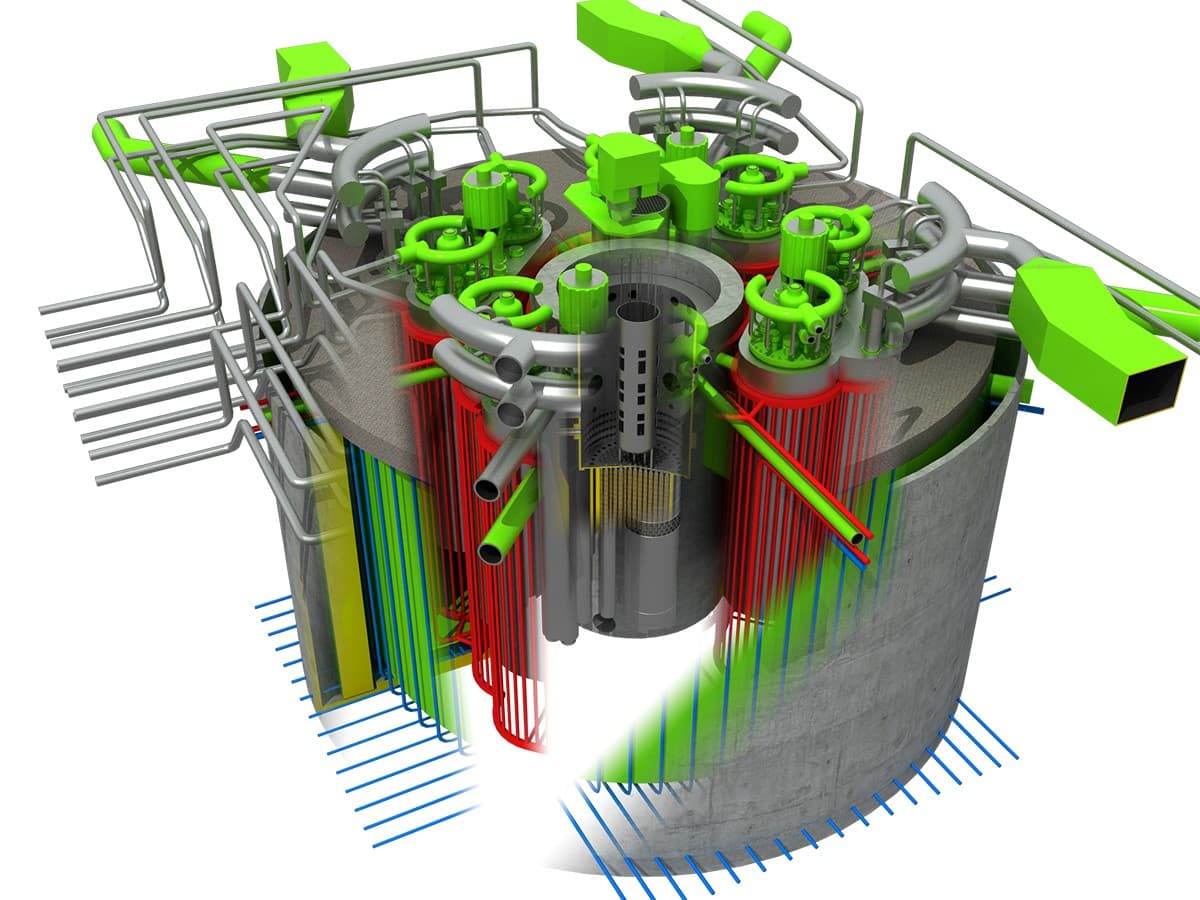
Diagram of the BREST-OD-300 reactor (source: Rosatom).
Construction is taking place in Seversk, Russia, at the site of the SCHK plant, which is part of TVEL. The company belongs to Rosatom and develops nuclear fuel assemblies. It should be stressed that the BREST-OD-300 project is not limited to the reactor itself: the site will comprise three complexes in total. The first is a plant for producing special fuel for this type of reactor. It has already been completed and equipment is now being installed. The second complex comprises the reactor itself and the turbine hall. The turbine hall's foundation slab has already been completed, while concreting of the reactor foundations has now begun. The third building will house facilities for recycling fuel assemblies from this reactor and separating material that can be used to prepare recycled fuel. The entire site will thus become largely self-sufficient, using a circular process.
This comprehensiveness is an important feature of the entire Proryv programme. It is not only about reactors; the entire closed fuel-cycle chain is implemented, from fuel preparation and the reactor itself that uses it through to spent-fuel recycling. Implementing and assessing the economics of the entire industrial cycle is crucial to ensuring viable and optimised economics that could lead to the commercial use of these reactors.
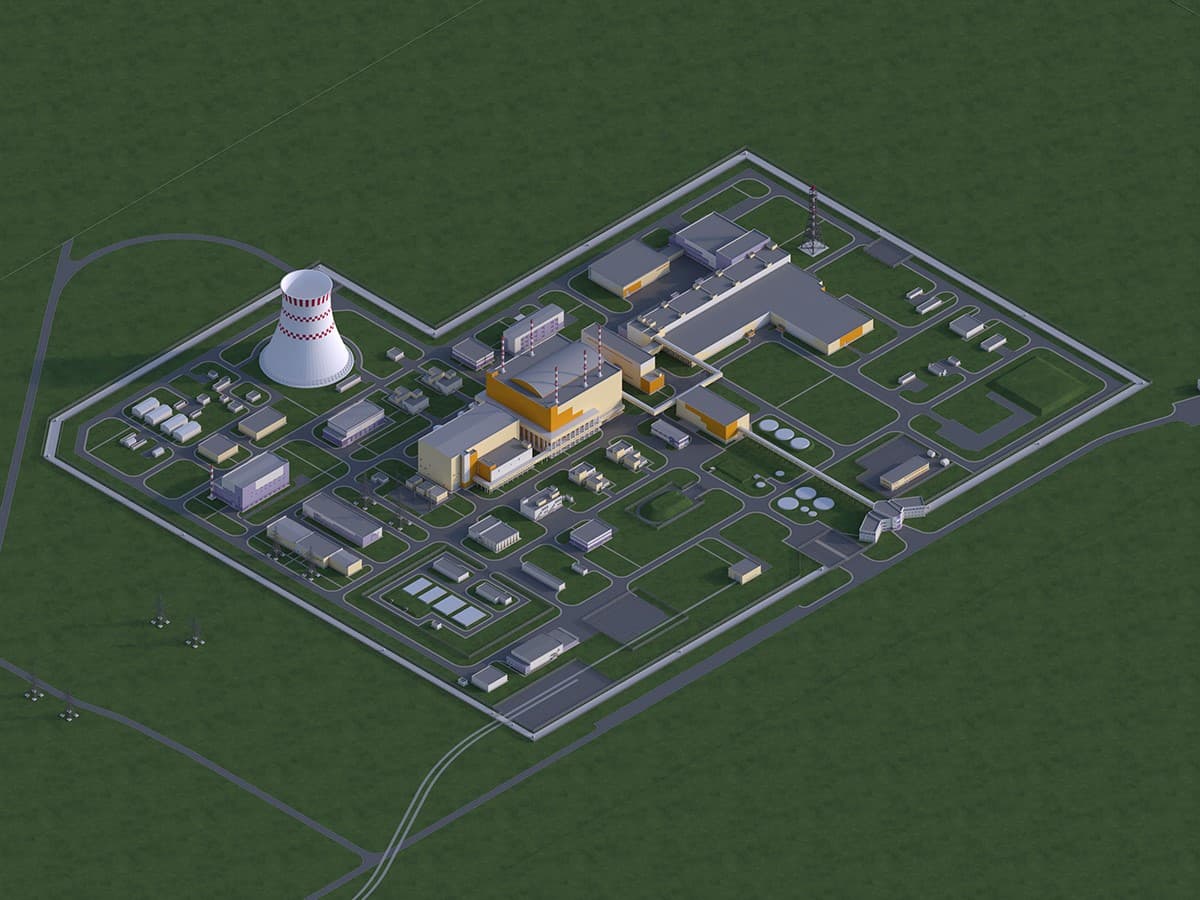
Diagram of the BREST-OD-300 reactor site (source: Rosatom).
Completion of the fuel-assembly production and fuel-recycling complexes is expected in 2023 and 2024, respectively, with the reactor itself due to be completed in 2026. Experience from the pilot project will be used to develop a prototype of the larger commercial BREST-1200 reactor.
For conventional reactors, Rosatom provides services covering their entire lifetime and fuel cycle. It can build Generation III conventional reactors, supply their fuel, manage spent fuel and produce REMIX fuel for these reactors. It is also optimising its floating nuclear power plants and small modular reactors based on successful icebreaker reactors.
The company is also completing work on the commercialisation of fast sodium reactors. It also supplies fuel assemblies for Chinese reactors of this type. With the BREST-OD-300 project, Rosatom has also embarked on the path towards commercialising lead-cooled fast reactors. It is thus moving closer to being able to offer the world, with full service, not only Generation III reactors and, gradually, specialised small modular reactors, but also Generation IV fast reactors with a closed fuel cycle in the relatively near future. Nuclear energy could therefore become, alongside energy commodities, a key large-scale Russian export. In this case, it would involve cutting-edge technologies with enormous potential.
Translation disclaimer
This article is a machine translation of the Czech original and has not yet been fully reviewed. In case of any doubt, please refer to the Czech version.
Sdílejte článek prostřednictvím:
You might also like
23 October 2026, 11:01

23 October 2026, 06:34