23 October 2026, 14:38
Loading...
Czech coal commission – why was it established and what is its aim?
Beáta Packová
26 November 2020, 19:30
Recently, we have been inundated with headlines such as: Environmentalists demand an immediate end to lignite from the Coal Commission! Some see only the environmental movement behind the Coal Commission, while others do not understand what the body is actually for. So what exactly is the Coal Commission, why was it established and what is its primary aim? Let us take a closer look.
Establishment of the Coal Commission
Czechs adopted the concept from the Federal Republic of Germany. Our German neighbours set up a commission in 2018. It consisted of various experts from environmental organisations as well as the coal business itself. Its main aim was to present a plan for gradually reducing coal emissions while also proposing solutions for the regions that would be most affected by the coal phase-out.
Of the total 28 members, politicians were represented by only five people. The Commission on Growth, Employment and Transformation, as it was officially called, then presented a plan envisaging an end to the use of coal energy by 2038 at the latest. The affected regions will then receive around EUR 40 billion in structural assistance. The commission's final recommendations still had to be approved by the government and parliament, but its proposals were considered crucial.
In Germany, negotiations on ending coal mining took around half a year. The Czech Republic drew inspiration from its neighbours and established its own commission in September 2019. It has a total of 19 members, including two chairs. The first is Minister of Industry and Trade Karel Havlíček, while the second is Environment Minister Richard Brabec.
The composition of the Czech commission is more political, with two representatives from the ministries of finance and social affairs, as well as representatives of parliament's Environment Committee. Three seats are held by representatives of the regions most affected by the end of mining. Delegates from the business sector hold three seats. One seat is held by trade unions, specifically the Confederation of Employer and Business Associations of the Czech Republic. The penultimate representative is from the Czech Mining Authority itself. The final four seats are held by experts representing the public (representatives of the Czech Technical University and UJEP) and environmental organisations (Jiří Koželouh – Hnutí Duha, Jan Rovenský – Greenpeace).
However, the commission has also set up three working groups. The first group is for setting the timetable for phasing down coal use (headed by the deputy minister of industry and trade) , the second group for setting parameters for a possible phase-down of generating sources and legislative issues (headed by Daniel Beneš, CEO of ČEZ), while the final group deals with identifying social and economic impacts (headed by the deputy minister for regional development).
Aims of the commission
All of the bodies mentioned have a single aim: to address the end of coal. To present a specific plan for how the phase-out will proceed, how much it will cost, how long the process will take and when it will be definitively completed. What sources will replace coal energy? And how will the regions where coal plays an important role in terms of jobs be transformed?
The Coal Commission must find a unified answer to all these questions (and many others), while also coming up with a solution that will be clear and comprehensible to all involved groups. A solution that is understandable to us, the taxpayers, too. The commission's meetings are confidential, but their proceedings and conclusions are public. Individual commission members are not entitled to remuneration.
Fulfilment?
The Coal Commission has gained the most media attention in connection with pressure from activists demanding that the ministry set a clear end date. They also claim that the commission's negotiations are becoming non-transparent and politically motivated.
The ministry currently plans to end coal use in 2029. It mainly wants to replace coal energy with nuclear power and gas. However, the definitive end date may still change. The commission's planned meeting was moved from 26 November to early December after updated information was considered.
While experts in Germany reached an agreement quickly, the debate in Czechia has already been going on for a year and a half, with no end in sight so far. Overall, ending the use of lignite is certain, but the government must also deal with another coal-related problem. Only recently, it presented a plan to end mining at OKD mines. Although this will be gradual, it represents a major challenge for both the region and the state. How the Czech Republic will cope with the overall end of coal remains a question for the future.
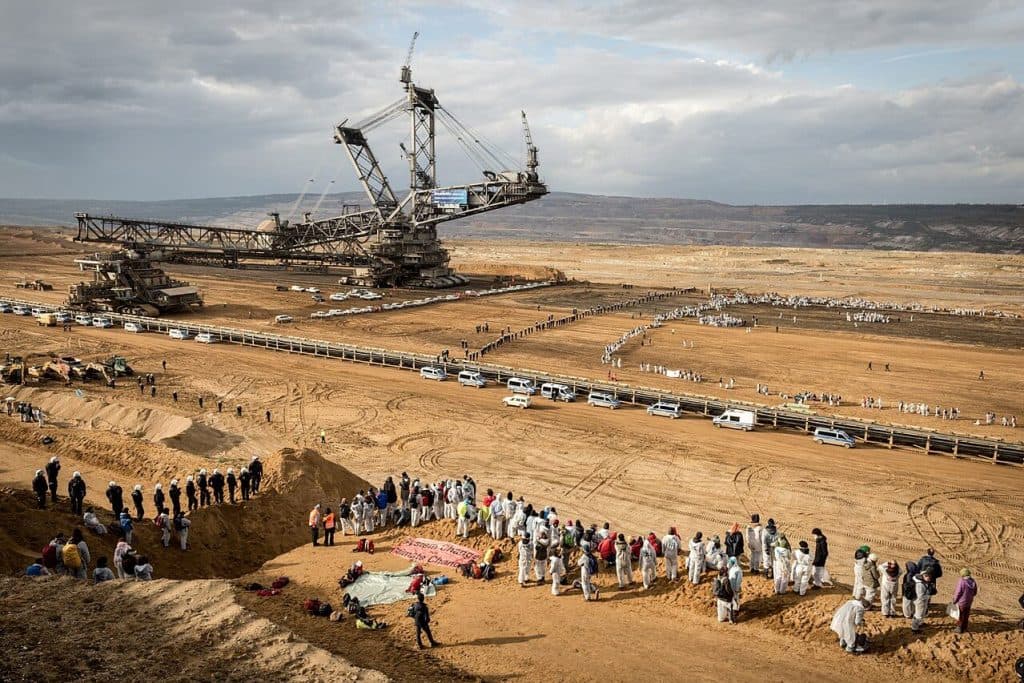
Source of cover image: Ende Gelände, Wikimedia Commons
Translation disclaimer
This article is a machine translation of the Czech original and has not yet been fully reviewed. In case of any doubt, please refer to the Czech version.
Sdílejte článek prostřednictvím:
You might also like
23 October 2026, 11:01
23 October 2026, 06:34