23 October 2026, 14:38
Loading...
Czech lithium hangover: Have we missed the train?
Beáta Packová
27 August 2019, 13:21
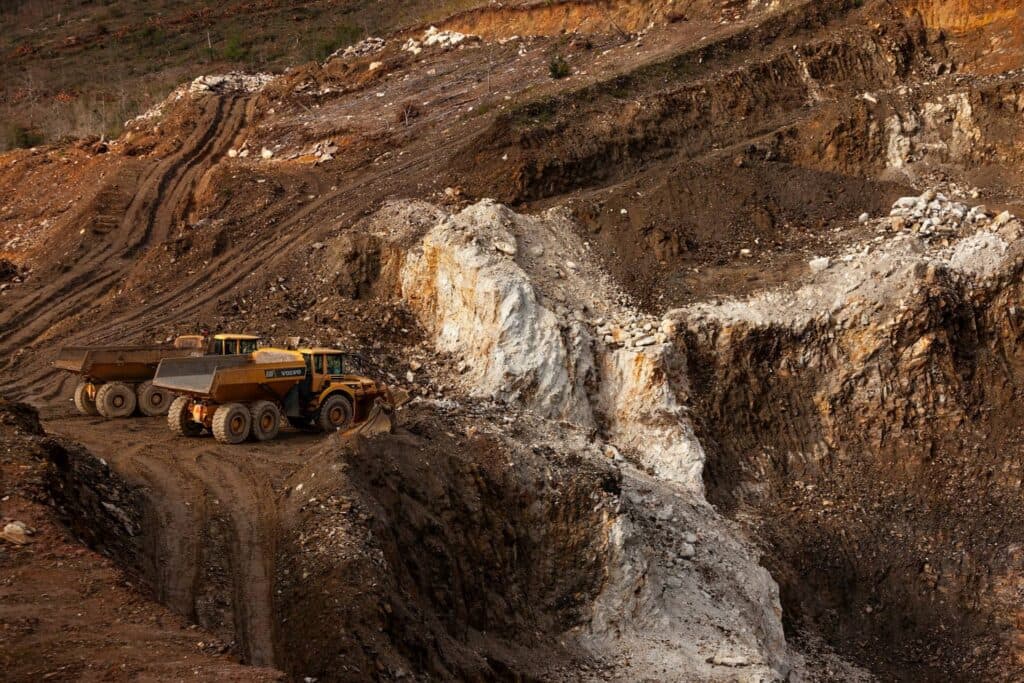
“Lithium for every family!” shouted fictional lobbyist Tonda Blaník during his presidential campaign. This perfectly captured the absurd atmosphere in which the public debate on lithium took place – a vague feeling prevailed that someone was trying to rob us, without us truly understanding the potential of this metal.
Before the 2017 parliamentary elections, a lithium scandal erupted in Czechia, with talk in parliament of theft of national assets. Czechs are particularly receptive to the notion of national wealth, and little wonder – it evokes images of oil havens where skyscrapers and artificial ski slopes are funded by petrodollars. Could lithium become Czechia’s white oil?
Lithium in our pockets
At the beginning of the 21st century, we all carry this silvery metal in our pockets in the form of lithium-ion (Li-Ion) batteries in smartphones, tablets and other electronics. In the future, demand for lithium is expected to rise mainly due to the electric vehicle boom and the growing share of renewable sources in electricity generation. All relevant players in Europe – national governments, the European Union and carmakers – are counting on the gradual replacement of combustion engines with electric ones. Škoda Auto announced that it will invest Kč 51.2 billion (!) in developing electric mobility in the coming years.
European plans for carbon neutrality by 2050 also largely rest on the assumption that fossil fuels will be phased out of passenger transport. These plans support the notion that lithium is the “oil of the future” – a raw material essential for energy and transport. However, there are two catches: the price of lithium will depend on technological developments, with lithium potentially being replaced in batteries by an entirely different metal (such as sodium), and on the balance between demand and supply. In addition to lithium, leading global mining companies are already interested in other metals needed for battery production – cobalt, nickel and platinum. Putting a value on the Cínovec deposit in advance is therefore currently nothing more than a populist game played by some politicians.
German cooperation…
Germany is the driving force among EU countries in green technologies, having announced an ambitious plan to achieve carbon neutrality by 2050 even without a European agreement. A major part of this plan is the transition to electric mobility and the ability to store energy from renewable sources, for which Germany is preparing systematically – lithium mining is due to begin on the German side of the Ore Mountains in the foreseeable future, while ACI Systems, with the support of the Federal Republic of Germany, has signed a cooperation agreement with Bolivia’s state-owned Bolivian Lithium Deposits (YLB). Bolivia’s reserves are so attractive because surveys identify them as the world’s second-largest lithium deposit, and the metal is present there in saline surface waters. This makes its processing cheaper and simpler than in the case of underground mining.
The two countries agreed that up to 80% of the extracted lithium hydroxide would be exported to Germany. Mining is due to begin in 2022, with an ideal production volume of 40,000 tonnes of lithium every year for 70 years. The agreement represents a win-win situation for all involved, as impoverished Bolivia gains stable income from white oil, while Germany secures the raw material base needed to fulfil its energy strategy. German company ACI Systems succeeded against competition from seven companies from China, Russia and Canada, partly thanks to the support of the German government, which gave the offer the greatest credibility. Last year, the federal government also decided to support companies producing next-generation batteries with a state subsidy of EUR 1 billion. Experts warn, however, that even so it will be difficult to catch up with South Korea, Japan and China, which already have a head start in this field over Germany.
… and Czech coercion
How does the Czech debate on lithium look in light of developments in Germany? To put it mildly, very lacking in strategy. Over the past few years, it has undergone several turbulent twists. Newspapers first wrote about a “treasure beneath the Ore Mountains worth hundreds of billions”, and the public came to believe that these hundreds of billions merely had to be picked up off the ground. This was followed by the now notorious “lithium affair”, on which apparently every political party commented before the 2017 parliamentary elections. It was triggered by a memorandum of understanding, which stated that if Australian company European Metals Holdings (EMH) mined lithium in Czechia, the metal should also be processed here into final products in the form of batteries. Then-finance minister Andrej Babiš, however, declared that lithium should be mined by state-owned company Diamo and that the memorandum with the Australians was disadvantageous for the Czech side. There was even talk of possibly filing a criminal complaint against the then-minister of industry and trade, Jiří Havlíček of the Social Democrats.
The latest developments, however, point in a different direction than towards state-owned Diamo. ČEZ Group has become interested in mining through its subsidiary Severočeské doly. The energy giant decided to provide EMH with a loan of EUR 2 million, which it will either have repaid or convert into an equity stake. According to ČEZ CEO Daniel Beneš, increasing the capital stake to a majority share is even under consideration. For EMH and its subsidiary Geomet, this apparently represents an effort to secure Czech state participation in the project, so that the start of mining will also be in its financial interest. Potential benefits for ČEZ, meanwhile, stem from lithium’s potential in manufacturing large-scale batteries for energy storage. Unlike neighbouring Germany, however, we arrived at the entirely logical objective of state involvement in mining through pressure and populist campaigns, which among other things leads to technological lagging behind the Asian tigers. Moreover, the way negotiations with Australia’s EMH have been conducted pushes us far to the east in terms of investment reputation, where foreign investors are viewed with inherent distrust.
A discarded treasure
How will the story of lithium mining in Czechia end? Because of populists, the message coming from the Czech Republic is that, if you are interested in strategic, long-term investments, you must first build a political bridgehead to avoid being accused of trying to steal national assets. EMH’s only offence was starting a business in the Czech Republic before an election, and lithium mining was useful to some as a stick with which to beat political opponents.
If the lost time can be made up and mining starts around 2022 as originally planned, the price of lithium should already be rising again. But monetising Czech lithium reserves depends on our ability to mine and process lithium. Waving around figures and charts on paper contributes absolutely nothing to the economy. A significant contribution to the state budget and the creation of several thousand jobs will only be possible if the Czech state opts for cooperation and support rather than permanent conflict and coercion. Citizens of the Czech Republic therefore have no choice but to pressure those responsible to demonstrate their genuine diplomatic and business skills instead of cheap populism. And to secure a dignified partnership for the Czech Republic that benefits both sides. Otherwise, the “treasure beneath the Ore Mountains” may lose its value as quickly as it gained it.
What is lithium? (Source: Ministry of Industry and Trade)
Lithium (Li) is a silvery and highly reactive metal occurring in the form of compounds with varying lithium content. Lithium minerals, including cinvaldit found in the Cínovec deposit, contain a relatively low percentage of lithium. Besides the electrical industry, it is also used in glassmaking, polymer production and pharmaceuticals.
Global lithium reserves (Source: U.S. Geological Survey)
- Argentina (14.8 million tonnes)
- Bolivia (9 million tonnes)
- Chile (8.5 million tonnes)
- Australia (7.7 million tonnes)
- China (4.5 million tonnes)
- Canada (2 million tonnes)
- Mexico, (1.7 million tonnes)
- Czechia (1.3 million tonnes)
- Democratic Republic of the Congo (1 million tonnes)
- Russia (1 million tonnes)
- Serbia (1 million tonnes)
Translation disclaimer
This article is a machine translation of the Czech original and has not yet been fully reviewed. In case of any doubt, please refer to the Czech version.
Sdílejte článek prostřednictvím:
You might also like
23 October 2026, 11:01
23 October 2026, 06:34