Czechia 2025 – 1300 km a month for CZK 1750, including household consumption
Many claim that photovoltaics generate virtually nothing in winter and only produce unwanted surpluses in summer. So let us look at what 2025 looked like in terms of consumption and total costs.
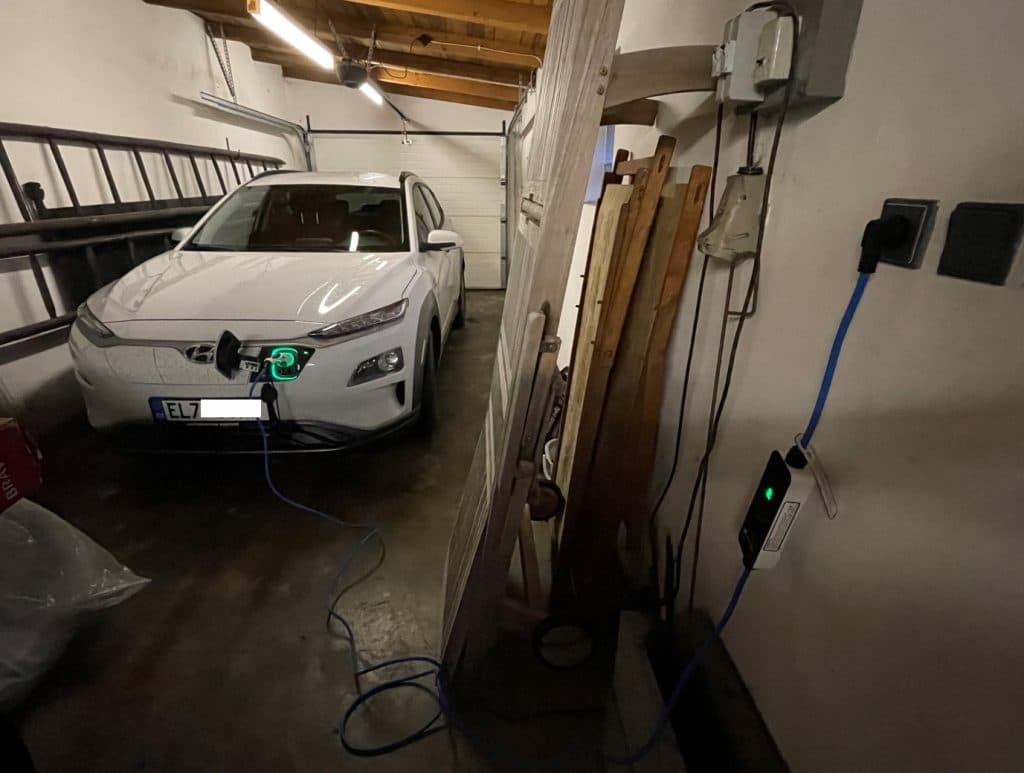
As for the property itself, it is a renovated family house with two above-ground floors and a heated basement. In total, it has 200m2 of living space plus a 100m2 basement. Heating is provided by an air-to-water heat pump feeding underfloor heating. During the summer, the attic is cooled by a conventional air-conditioning unit. The house is occupied by a family of four. The house is equipped with a 12kWp photovoltaic system and a 24kWh battery. The household also has an electric car with a 40kWh battery.
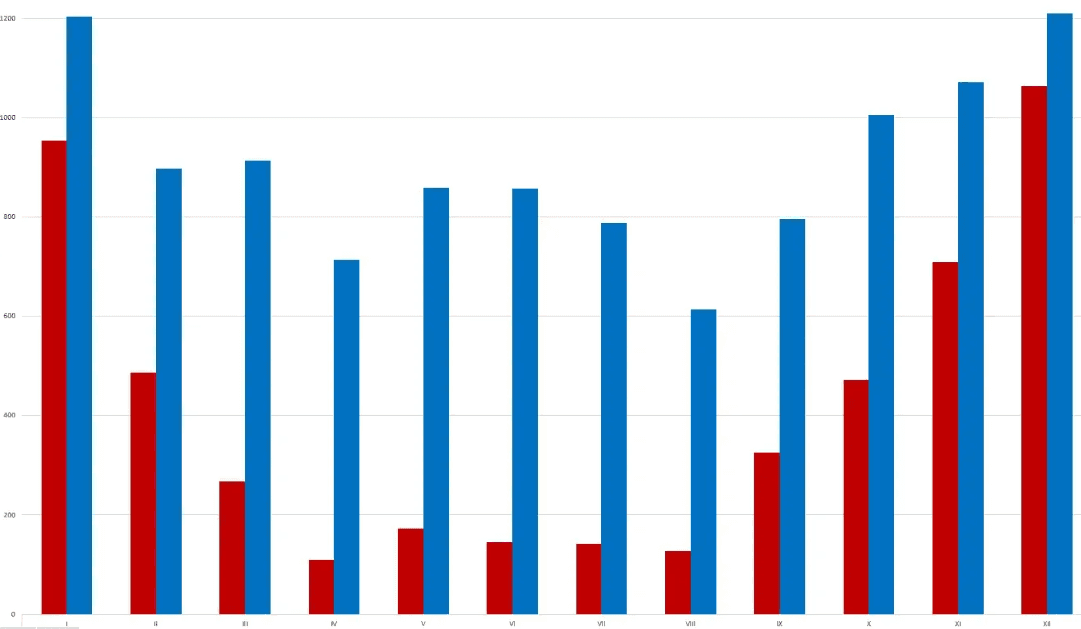
The system's generation ranged between 200-1700kWh per month. An installation of this size can then readily cover total consumption, in aggregate terms, from March to October. To use summer surpluses, a second electric car belonging to another local user was also charged. Total consumption for the year was almost 11MWh, of which charging the two cars accounted for around 3.2MWh. The system generated just under 12 MWh.
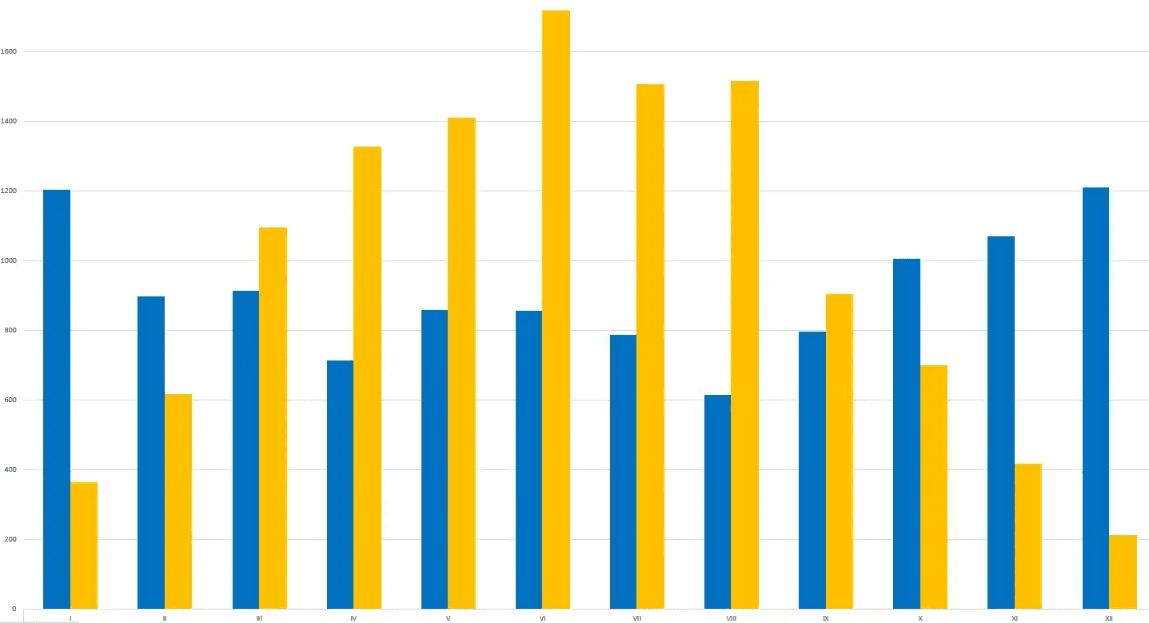
For completeness, it is also necessary to add a chart of grid imports for the whole year. Imports even in the summer months are due to a certain number of overcast days, intensive charging of two vehicles and the inverter's control capabilities. Over the full year, the system generates more than the property itself consumes.
Spot purchasing and selling
As can be seen from the charts, PV generation in summer is around 2× higher than consumption. I sell these surpluses back to the grid under a spot tariff. However, these sales have their own specific features and are described in the article below. Over the full year, the average sale price reached around 2 Kč/kWh.
The whole of 2025 was also spent under a spot electricity purchasing regime. Spot electricity prices fluctuate considerably over the course of the day and year. Peaks exceed 10Kč/kWh, while periods with zero or negative electricity prices are not unusual in summer. What matters, however, is the average for the whole year, which reached around 3.8 Kč/kWh including distribution charges.
How much does running an electric car cost
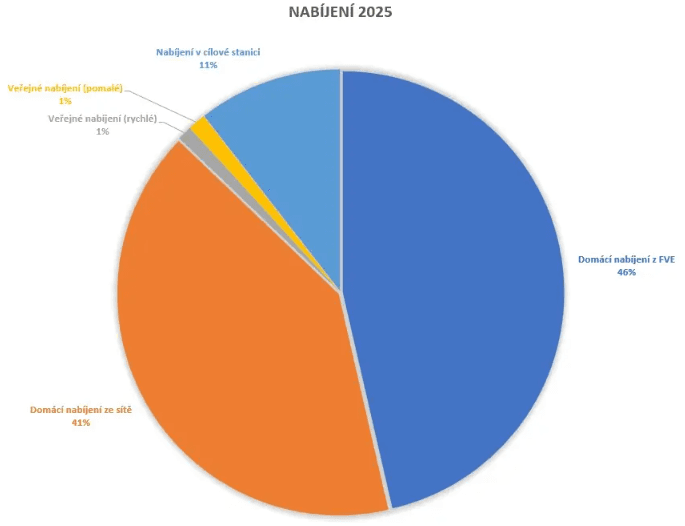
Around 30 % of consumption in 2025 was accounted for by operating two electric cars. For the owner's car, which covered a total of 15 500 km, more than 2400kWh was charged at home and a further 400kWh away from home. Just under 50 % of the mileage was therefore powered by PV charging, 40 % by charging from the grid at home, and the remainder by charging at fast chargers or destination chargers. In cost terms, this breaks down as follows. For PV charging, it is necessary to include the average price for which the electricity could otherwise have been sold to the grid, which can be estimated at 1.5 Kč on an annual average basis. For grid charging, a kWh including distribution cost roughly 3 Kč. At fast chargers, the average charging price was around 13 Kč. On an annual average basis, a kilometre of driving costs around 50 haléřů, representing savings of around 1.6 Kč/km compared with petrol.
Interestingly, the share of public charging was very low, reaching only 2% over the year, while the much-discussed fast charging accounted for just one percent of mileage. This was significantly helped by the expansion of the charging network, with destination charging frequently used at guesthouses, restaurants or at the office. Another factor was the use of the second car for two holidays. As a household, we need two cars. The electric car is therefore used for most short and medium-length trips. The older combustion-engine vehicle serves as the family's second car and is used, for example, for holidays.
Charging during the week
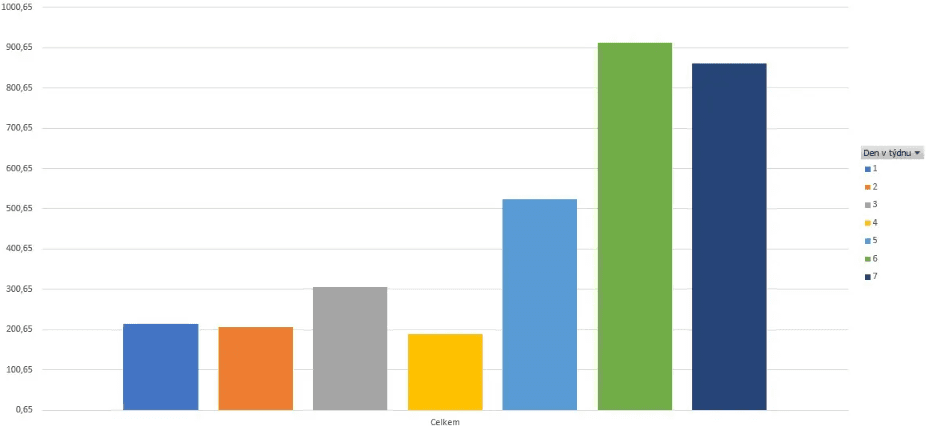
A very common objection concerns whether working hours can be reconciled with PV generation. It is important to realise that weekdays account for around 70 % of the week, while the 30 % represented by weekends provides sufficient time for charging in itself. Postponing charging until the weekend is advantageous for two reasons. Primarily, charging can be supplied from one's own source, but even in overcast weather it is possible to top up very cheaply from the grid at weekends. We often go on trips at weekends, but not always for the entire weekend; in summer, we often cycle locally or spend time in our own garden. Over the year, there is therefore usually enough time to charge the car at weekends even under this regime, and weekend charging accounts for around 55 % of mileage. Together with Friday, when I often work from home, these days account for around 70% of mileage. And this is still a car with a small, 40 kWh battery. In my case, a now-common 60-80 kWh battery would reduce the need for charging outside weekends to an absolute minimum. A larger battery would increase the already high share of home charging. The described charging regime is also beneficial from the perspective of grid load, as charging is naturally shifted to periods of low demand at weekends. In most cases, vehicle charging therefore does not create a need to reinforce grids, because it naturally uses existing spare capacity.
Total costs
As can be seen from the measured data, PV generation will never match consumption under our conditions. If we wanted to cover all consumption at least in monthly totals, the installation would have to be another 3-4× larger, with equivalently greater storage capacity, and even such a large installation would not be able to cover several cold, overcast days in a row. Even so, self-sufficiency for the full year reached a respectable 55 %.
For 2024, I reported self-sufficiency of more than 60 % in previous articles. It would theoretically be possible to achieve such a figure, but several factors reduced it last year: higher consumption in colder months and, in particular, summer charging under the spot tariff. To charge another person's car quickly or take advantage of negative prices, some charging from the grid took place even on sunny days. This regime increased revenues at the expense of the self-sufficiency percentage.
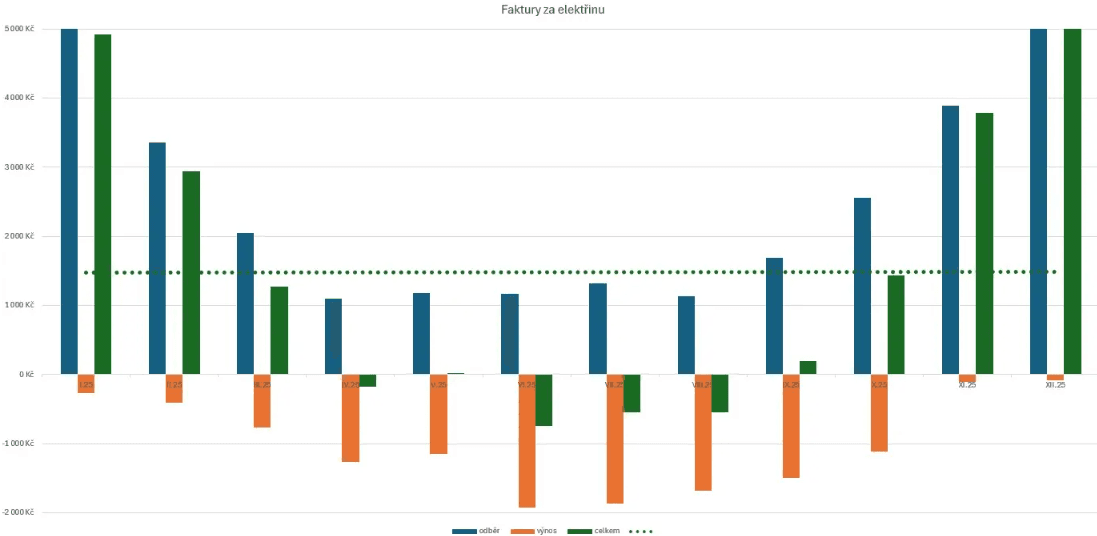
In terms of costs, payments for the circuit breaker capacity (3×25A) and other fixed monthly charges must also be added to the price of electricity supply and distribution. In summer, the PV system also supplies larger volumes to the grid, generating revenues which in the strongest months cover both imports and fixed payments. Over the full year, the average monthly energy bill comes to around 1500 Kč. Including the cost of charging away from home, monthly costs for operating the house and driving 1300 km amount to around 1750 Kč.
Of course, one could argue that the technologies described need to be purchased somehow. But there is a simple answer to that. If someone needs two cars in the household, they generally do not need to worry as much about range for the second car. If a family can manage with a range of 200-300 km for the second car, used cars are already available at prices very similar to their combustion-engine equivalents. The same applies to purchasing photovoltaics. Installation prices have fallen significantly in recent years, and energy savings can readily cover loan repayments for the installation.
A final note. This article was written partly in response to an article by Petr Dušek. He works in marketing at Seven Energy. In the linked article from December 2024, he vividly described so-called dunkelflaute, when electricity prices are higher, especially during cold and overcast periods of the year. Such periods do occur and will continue to occur, but the whole situation needs to be put in the context of the entire year. Although these periods make interesting headlines, they account for only a small part of the year. By contrast, periods with low or even negative electricity prices are much more frequent. For the cited December 2024, despite the described dunkelflaute, the average electricity price reached 4.7 Kč/kWh, which was above the annual average, but the overall price for the year was influenced much more by low summer prices. With a year's hindsight, his conclusions can rather be linked to an attempt to discredit modern technologies in order to extend, at all costs, the operation of outdated coal-fired sources for which he works.
Translation disclaimer
This article is a machine translation of the Czech original and has not yet been fully reviewed. In case of any doubt, please refer to the Czech version.