
23 October 2026, 14:38
Loading...
Do we need baseload electricity?
Milan Smrž
31 May 2025, 07:53
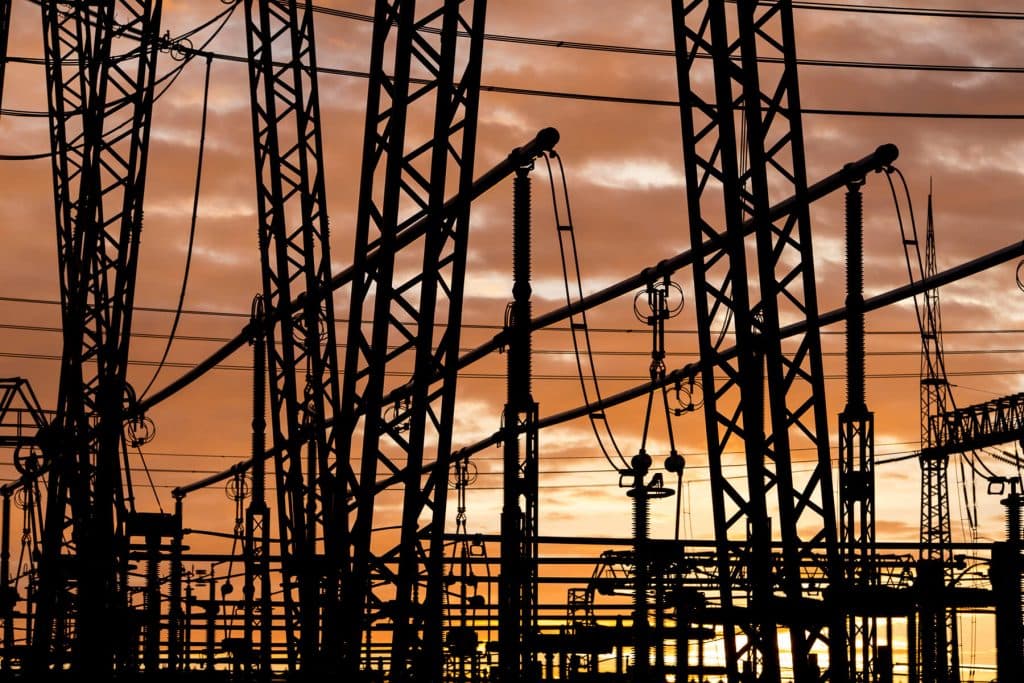
The need for a baseload electricity supply is cited as justification for operating nuclear plants or natural gas-fired power plants equipped with carbon dioxide capture.
For many years, there has been debate over whether we will need a baseload electricity supply in the future energy system. Evidence of this can be found in a discussion from almost 10 years ago here, in which even then only a small number of experts supported the necessity of the baseload concept. Most participants instead agreed even then that a future mix based on intermittent renewable sources would require a different energy-system architecture and leave less room for the traditional baseload concept.
For the most part, dissenting contributions focused on the outdated concept of large power plants operating 24 hours a day, 7 days a week, and favoured a dynamic energy system with simultaneous balancing of demand and supply.
This could be achieved through a combination of battery technology and other storage, as well as new technologies and economic incentives to manage demand and supply in a way that minimises total system costs. Defining baseload energy at the individual “power plant” level reflects the mindset of the old energy system.
The electricity grid of the future is not about a single power plant, but about an aggregate of demand and supply. Traditionally, plants running most of the time supplied baseload electricity (such as coal and nuclear power), but this reductionist approach will not work in the future because the energy system evolves over time.
A similar debate continues today, for example here and here. As a replacement for baseload supply, there needs to be capacity available with a fast response time and activation mechanism: a system that would immediately respond to discrepancies between planned and actual generation and consumption. If a component of the electricity system fails (a power plant, transmission line or major consumer), balancing capacity steps in to keep supply and demand in balance. An important characteristic of a resource used to restart the system after a subsequent blackout is black-start capability, or the ability to begin generation without an existing electricity grid.
A baseload power plant can theoretically supply electricity continuously, but because of its high investment costs, it needs to operate almost continuously to be profitable. This is a constraint. If they prove more economical than alternatives in the future, such plants could become part of the energy system.
Nuclear power plants, geothermal energy, natural gas-fired power plants with CO2 capture and potentially nuclear fusion power plants can be used as low-emission plants capable of supplying electricity continuously. The academic project “Energy Systems of the Future” (ESYS) concludes that a secure energy supply is possible even without baseload power plants. Baseload power plants may form part of the future energy system, but they are unlikely to be necessary.
Short-term flexibility within hours can be provided by battery storage, which can shift surplus solar electricity from midday to evening, and by flexible loads such as controlled charging of electric vehicles and heat pumps with thermal storage systems. The role of dispatchable power plants is therefore increasingly shifting towards compensating for longer-term shortfalls, including extreme situations such as a Dunkelflaute, or dark doldrums. Energy scenarios primarily use gas-fired power plants for this purpose, initially operating on natural gas and later on hydrogen or hydrogen derivatives.
Industry can help achieve a fully renewable energy supply
Demand-side management options can be demonstrated using the example of Germany, where industry consumes 44 percent of electricity and one-third of energy used for heating. This means industry has major potential to offset fluctuations in the electricity grid caused by renewable energy. If wind and solar supply too little energy, industry can adjust its demand for electricity and heat and reduce consumption until more electricity becomes available again. The reverse is also possible: if more electricity is generated than is actually needed for a short period, companies can deliberately increase their consumption to offset fluctuations.
SynErgie has determined how much more or less energy German industry could consume in the event of grid fluctuations. If more electricity is available on the grid than is actually needed, German industry could increase its demand by up to 9 gigawatts (GW) for 15 minutes. If less electricity were available than is currently needed, industry could reduce its demand by 10.7 GW for 15 minutes.
Flexible industrial adaptation to electricity-grid fluctuations is mainly applied by companies consuming large amounts of electricity. Germany’s largest private-sector electricity consumer is Essen-based aluminium producer TRIMET, accounting for 1.6 % of total electricity demand in Germany. When power input fluctuates, so does the magnetic field, causing the entire furnace to become unbalanced. SynErgie and TRIMET have found a way to keep the magnetic field constant even when the current fluctuates. The Essen company can thus increase or reduce its electricity load by 22.5 megawatts for up to two days.
A similar consumer is LINDE, which uses electricity to separate rare gases. Until now, the process has consumed a constant high current. SynErgie developed equipment for flexible air separation, which was successfully commissioned in Denmark. Similar opportunities are also being sought in the paper industry.
Further project options are being tested in practice around Augsburg. Companies are provided with incentives to switch to flexible electricity consumption. The project shows that the technologies developed also work effectively on a broad scale.
Solutions for energy-intensive industries
The SynErgie project is examining how industry can implement these adjustments. The foundation was laid in the project’s first two phases. The third phase focuses on implementation and demonstration. Project partners also want to harness new, particularly significant potential for energy flexibility. One objective of the project’s third phase is to unlock industrial flexibility potential in Germany of up to 20 gigawatts (GW). This would also reduce the need for other sources of flexibility, such as costly battery storage.
The core principle of the energy transition, “efficiency first”, must not lead to a situation in which the flexibility potential resulting from energy-efficiency requirements is left unused. From a system perspective, both parameters are equally necessary in designing the future energy system. From the consumer perspective, however, the priority should be to reduce electricity consumption and then make the remaining consumption as flexible as possible.
Providing demand flexibility does, however, involve conflicting technical and economic objectives. Flexible operation of equipment can shorten its lifetime and reduce efficiency, leading to higher operating costs. On the other hand, there are numerous market opportunities, some with complex access conditions and uncertain revenues. This results in high transaction costs and significant risks. These are among the main reasons why smaller companies are not in a position to offer flexibility.
Translation disclaimer
This article is a machine translation of the Czech original and has not yet been fully reviewed. In case of any doubt, please refer to the Czech version.
Sdílejte článek prostřednictvím:
Topics:Opinion
You might also like
23 October 2026, 11:01

23 October 2026, 06:34