Do we really need to drive from Czechia to Croatia in one go?
Range is passionately debated in discussions about electric mobility. Is so-called range anxiety justified, or is it simply an unnecessary fear of the unknown?
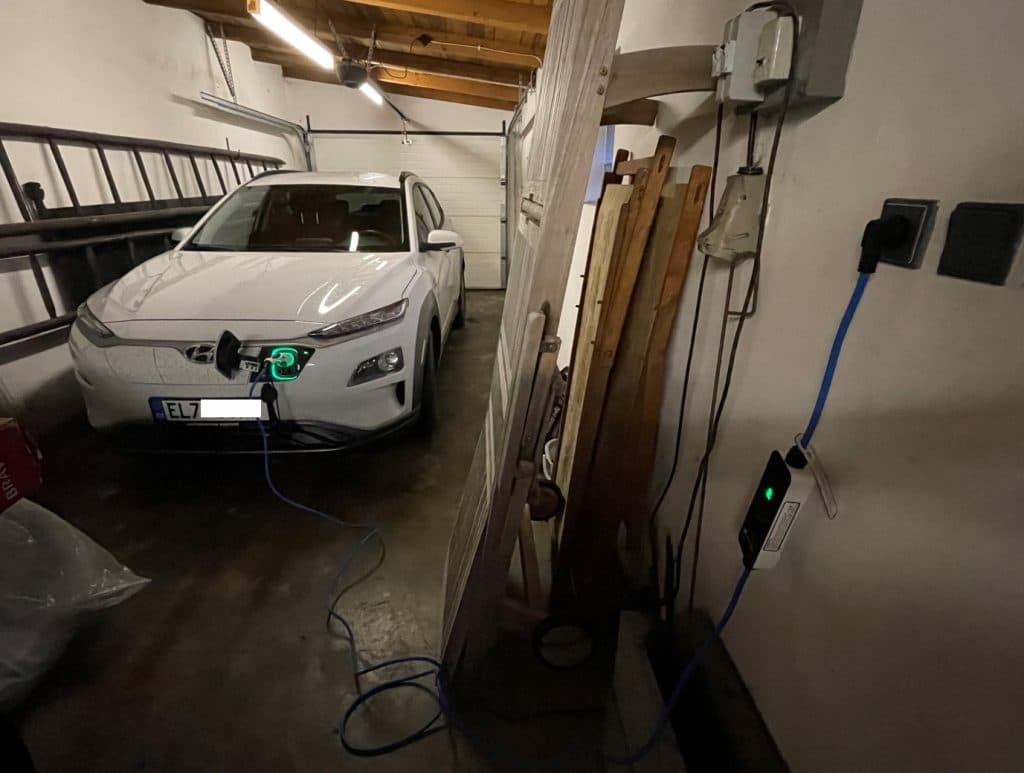
I have driven around 30,000 km in an electric car over two years, so my experience is beginning to have some explanatory value. I own the car privately and use it mainly for commuting and family trips within an hour’s drive. I occasionally use the car for business trips or longer weekend outings. Over two years of operation, the car has travelled from Ostrava many times to various parts of the region, including Prague and Vienna. Like most private cars, it is not exactly a motorway-mileage hunter, but neither is it a typical “shopping runabout”.
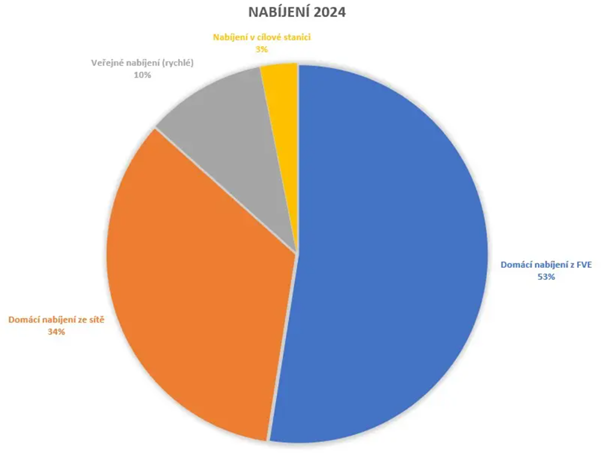
Internal combustion vehicles have the undeniable advantage over electric cars of greater range and the ability to refuel quickly. This advantage is reinforced by a dense network of filling stations built up over decades. There are around 6,000 of them in Czechia, although the number of charging points has also been growing rapidly in recent years and will soon exceed the number of filling stations. Unlike filling stations, electric vehicles also have the advantage of being able to charge from a standard 230/400V socket. It is slow at low power, but if an electric-car owner spends an entire weekend at a cottage, they can fully charge the car for the return journey. The need for en-route charging therefore often disappears altogether. In my case, charging at the destination using the onboard charger accounts for around 4% of mileage. This was mainly charging at various cottages and campsites, where I would generally charge overnight for the entire return journey.
The largest share is made up of charging at home, either from the grid or from my own photovoltaic power plant. I described this topic in detail here, so I will not discuss it further.
Let us turn to the much-discussed issue of charging at public chargers. In my case, this accounts for around 10% of mileage. In terms of the amount of energy charged, it is about 500kWh. If we are interested in the total time spent at chargers, average charging power must be taken into account. By today’s standards, the car has a negligible charging capacity of 45kW. However, the vehicle charges at this power only when the battery is empty, and charging speed falls as the state of charge rises. If I use a fairly conservative charging power of 30kW for the calculation, total charging time comes to 16–17 hours. At first glance, this number appears high, but it represents only around 3% of the total time spent travelling. Moreover, part of this time was used for ordinary breaks during the journey, which in many cases I would also have taken in an internal combustion vehicle. Some charging took place at chargers at shopping centres, so the time was used for shopping.
Today’s vehicles generally have larger batteries and charging capacities above 100kW. With such a car, the total time spent at chargers over the whole period would have been 5–10 hours, which is truly negligible relative to total driving time. This is particularly so when compared with the equivalent number of refuelling stops, which, at around 40 refuellings and a very optimistic five minutes each, would total around 3.5h. And if we consider cars with a range of 500 km or more and charging capacities above 200kW, there is generally no question of any significant delay at all. Here is a description of a journey from Prague to Croatia that no longer shows a fundamental difference in total travel time.
How to choose the right battery size
Pub discussions revolve mainly around whether an electric car can get to Dubrovnik and back, ideally in one go. Given the current state of battery-electric technology, this is unrealistic, but let us look at whether such a requirement is even necessary. I am not considering the needs of the narrow group of sales representatives who criss-cross Europe intensively every week. For them, an economical diesel is of course still more suitable. I am considering the needs of an ordinary person who regularly drives to work, shops and goes on outings, and several times a year travels a longer route, either privately or for business.
In my view, a necessary condition for using an electric car is access to slow, affordable charging while parked. This can be provided primarily at home, but also at work or in streets equipped with slow AC chargers. In that case, the need to use fast and relatively expensive DC stations is substantially reduced.
When it comes to range, while efficient internal combustion vehicles can easily achieve more than 1,000km by using a larger tank, an electric vehicle would require the installation of a large, heavy and expensive battery. For an electric car, it is therefore essential to carefully consider how much range the user actually needs.
As for families living in rural areas, a large proportion own two cars, one of which they use as the main vehicle and the other as a so-called “shopping runabout”. Our family also has two cars. I often travel on business, so we need a second car at home for local transport. In addition to a relatively economical diesel, we therefore bought a smaller electric car mainly for commuting and local trips. We then use the diesel mainly for longer journeys, and it also serves as a backup vehicle. In this case, I did not worry too much about the electric car’s range. Being able to drive to Prague or Vienna in one go would be nice, but it would require a larger battery, which proved unnecessary given the frequency of such trips. I therefore chose a smaller, cheaper vehicle with a 40kWh battery, which can at least reach the Pardubice Region, where we travel several times a year. There is no problem charging for the return journey over the weekend, so apart from exceptions, even these trips can be made without en-route fast charging.
It is possible to drive to Prague without any major complications, but as motorway kilometres increase, time spent at fast chargers would extend the journey disproportionately, so such a vehicle cannot really be recommended for longer trips. For longer trips to the sea or mountains, we therefore use the internal combustion car instead. Over the full year, however, we currently drive just under 15,000km annually in the electric car, which accounts for around 80% of total mileage. This clearly shows that short journeys often account for a far greater share of mileage than the much-discussed long trips.
Outlook for the future
For regular long journeys across Europe of 1,000km or more, a car with an efficient diesel engine currently appears to be the best option. This will remain the case for some time, but let us look at the broader future context. From the perspective of a vehicle developer, I see the situation as follows. Carmakers are investing enormous resources in battery development, and as a result progress is advancing very rapidly. Every year, battery energy density increases by several percent in both weight and volume terms. At the same time, the price per stored kWh falls by several percent each year.
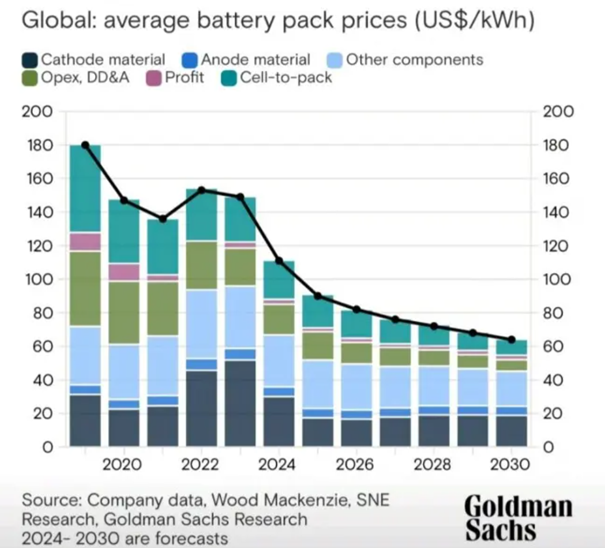
The result is a reduction in battery weight and size relative to capacity. Together with optimised vehicle aerodynamics and more efficient drivetrains, this makes it possible to produce a vehicle with longer range using the same battery capacity, while offering it at a lower price. At the same time, charging options are rapidly increasing in places such as company garages, accommodation and public spaces. This expands the ability to charge a car at the destination while parked, whether during a meeting, shopping or an overnight stay.
Models with ranges approaching 700km are already available, but thanks to improving technology, models with a range of around 800km and very fast charging, capable of adding energy for hundreds of further kilometres during a short break, will be available within a few years. Such models will meet the requirements for long-distance travel across Europe. However, they will be more specialised models intended primarily for executive use, and I personally do not believe their share of the vehicle fleet will be particularly significant because of their high price.
Alongside them, a large number of smaller, affordable models with a lower range of around 300km will emerge, intended mainly as second family cars or for the service sector, such as various urban delivery vehicles.
In my opinion, however, for the reasons outlined above, the most widespread cars will be those with a medium-sized battery and a range of around 400km (around 60kWh in an optimised vehicle). In addition to local journeys, such vehicles can also cover occasional longer trips, for example for a summer holiday, with an acceptable delay, and at prices comparable to or lower than comparable internal combustion cars.
As experience and infrastructure grow, fear of range will fade away, and we will remember the proverbial range anxiety as an amusing chapter in automotive history, much as we now remember landlines, phone booths or developing slides.
The article was originally published here.Translation disclaimer
This article is a machine translation of the Czech original and has not yet been fully reviewed. In case of any doubt, please refer to the Czech version.