23 October 2026, 14:38
Loading...
Energy security or self-sufficiency in Czechia?
Pavel Řežábek
25 August 2024, 07:42
In energy debates, the terminology used is often a real muddle, and the terms “security” and “self-sufficiency” are sometimes even confused. Yet the difference between them amounts to hundreds of billions of Czech crowns. Let us explain in more detail.
Self-sufficiency means covering consumption from sources located in the Czech Republic. But electricity is not generated and sold by states. It is not the case that the output of all Czech power plants is first exhausted for Czech households and businesses, with imports from abroad only coming afterwards. Traders buy electricity based on price, not country of origin. So if imported electricity is cheaper at a given time, why would they procure more expensive domestic power?
As renewable sources in Germany and elsewhere offer electricity to the market at lower prices than any other sources, traders will always choose it. As wind power and photovoltaic capacity grows in neighbouring countries, electricity from abroad will flow into the country ever more frequently.
If we insisted on self-sufficiency, we would have to build enough renewable sources here for their cheap output to displace foreign electricity. Fully achieving this would be a rather expensive solution. There is nothing wrong with buying foreign electricity when it is cheaper than building the sources and paying their full costs. It is a market decision.
Security comes at a cost
However, security of supply is an entirely different matter: the ability to generate enough electricity domestically to cover peak demand. This is no longer a matter for the market, but of additional requirements. And these always have to be paid for.
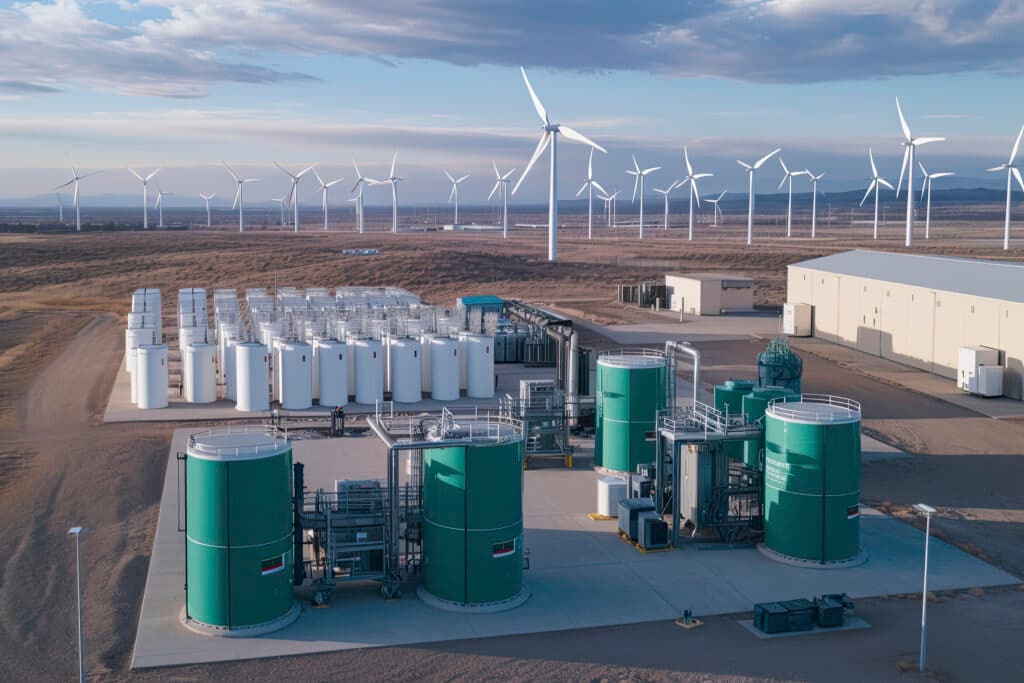
At present, virtually the only new capacity being built in the Czech Republic consists of renewable sources financed through the Modernisation Fund and the New Green Savings Programme. They will improve our energy balance, but they do not address the availability of sufficient capacity for times when neither the sun is shining nor the wind blowing while consumption is high. Put simply, reserve generating capacity from weather-independent sources is needed to cover even the highest possible demand.
Such situations will arise only occasionally, so it is rational to secure capacity from sources with the lowest possible investment costs. Gas-fired sources, and hydrogen-fired sources further in the future, meet this requirement. Because they will generate only intermittently, they will need some form of government financial support to make it worthwhile for their owners to build and operate them. However, this represents an intervention in the free market, so it is necessary to obtain European Commission approval. If we want energy security, it is high time to begin accelerated preparations and the approval process.
For the long term, new nuclear capacity also needs to be developed and built – both large units and small modular reactors – which will help secure a significant share of Czech electricity consumption.
Pavel Řežábek, chief economist at ČEZ
Translation disclaimer
This article is a machine translation of the Czech original and has not yet been fully reviewed. In case of any doubt, please refer to the Czech version.
Sdílejte článek prostřednictvím:
You might also like
23 October 2026, 11:01
23 October 2026, 06:34