23 October 2026, 14:38
Loading...
European energy at a German crossroads
Michal Šnobr
4 October 2016, 18:00
It has been just over eight years since the then President of the European Commission, Barroso, presented the European Parliament with a package of legislative measures to combat climate change, known for short as 20-20-20 by 2020, the so-called opportunity for a green Europe. Its main objective was to reduce CO2 emissions by 20 % by 2020 compared with 1990.
Alongside the development of renewable energy sources and greater energy efficiency, the main instrument for achieving these goals was to be the EU ETS emissions market. Based on market principles, it was meant to motivate European industry and the power sector to adopt low-carbon technologies and investments.
The EU has placed all its bets on developing renewable sources and decentralising the energy sector, which is undoubtedly the right direction. However, in recent months and years, increasingly serious doubts have emerged over whether Europe is managing this process at an acceptable, reasonable and long-term sustainable level.
For example, the UN Special Representative for Climate Change recently sharply criticised Germany and the UK, in connection with efforts to ratify the global Paris climate agreement, for supporting, or subsidising, fossil fuel sources. According to the UN, both countries are taking actual steps against meeting the targets and ratifying this global agreement. Another example is the EU ETS emissions market mentioned above. These days, after three years and despite repeated attempts at resuscitation by the European Commission and the European Parliament, it is once again teetering on the brink of viability and is effectively non-functional.
The greatest doubts in this regard were openly expressed by the head of the respected Munich-based German Ifo Institute think tank, who said the following about what has so far been the model for Europe’s fight against climate change – the German Energiewende: “The Energiewende has three goals: to keep electricity supplies reliable and secure, make them more affordable, and reduce emissions by 95 % between 1990 and 2050. And Germany will achieve none of these goals. The Energiewende is fundamentally flawed. We have created a centrally planned energy system built on subsidies. Wind and solar lobbies are now fighting to maintain them, and it is very difficult for politicians to stand up to them.” Naturally, neither Brussels officials nor, still less, German politicians want to admit these frank observations, but they aptly describe the reality of the current state of the German energy sector, visibly favoured by Brussels.

The original goals are falling apart
This development is very dangerous for Europe as a whole, but particularly for the economically weaker parts of the EU: the countries of Central, Eastern and South-Eastern Europe. Market ideals are gradually disappearing, while the importance of subsidies, guarantees, regulation and a host of exemptions is growing rapidly. The original goals, such as liberalisation, a single Europe-wide market and climate protection, are falling apart. The concept of a common European energy sector is disintegrating before our eyes, yet Brussels and European political leaders act as though nothing is happening. Meanwhile, the chaos, disorientation and disillusionment of the former major European energy giants is alarming. These formerly pampered companies, operating in a long-term stable sector with an emphasis on supply security and national security, are now forced to throw productive assets worth billions “into the bin” like banana peels.
In practice, it is no longer possible to build almost any energy source under market conditions. The gap between profitability and the market is widening to ever more negative levels. The reckless, driverless ride of European ideologues, who have turned energy into a political issue, was accompanied by commodity volatility and changes brought by rapid technological progress, completing the picture. Politicians have taken control of the energy sector, which was evidently Brussels’ original intention. The problem is that they are slowly but surely heading into a blind alley. In the subsidised and favoured renewable energy business, they have created their own monster, and now they can scarcely resist it.
Fertile ground for growth
However, there are also players on the market for whom this development has provided ideal fertile ground for rapid and “cheap” expansion. The acquisition drive of Energetický a průmyslový holding in the region can be regarded as an outright phenomenon of this era. Until recently, it was a relatively small energy company even by Czech standards, without its own fuel extraction operations. Now, after just a few years, it is within reach of a deal that would have been hard to imagine not long ago: the purchase of lignite mines and associated power plants in Germany from Swedish company Vattenfall at zero or negative value. The completed purchase of a stake in Slovenské elektrárne from Italian energy giant Enel is also noteworthy. And it is precisely this succession of deals that perhaps better than anything else describes how far Germany, or rather the EU and its ideals, have pushed European energy.
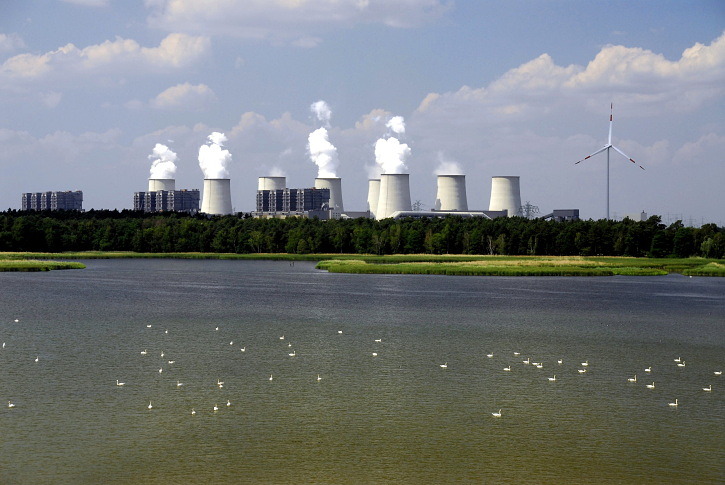
Perhaps only now are people in Germany beginning to wonder how it could have happened that a key part of their energy sector – lignite assets – can be bought by a relatively insignificant and young company from the Czech Republic. It is a striking paradox, and I am convinced that there will be more bets like EPH’s against the mainstream in Europe. Germany has literally destroyed the value of its largest energy companies. At the same time, electricity prices for household consumers, who bear the main burden of renewable energy subsidies in Germany, are at record levels and continue to rise rapidly – and will keep rising.
Support for renewable energy development paid by household consumers will soon exceed 2 Kč/kWh, while in 2010 it was less than a third of that amount. At the same time, natural price formation in the electricity market has been disrupted and the EU ETS emissions market destroyed. Investment in low-carbon technologies on market principles does not work. The market does not work, assigning negative or zero value to energy sources that are utterly indispensable to the market from the perspective of electricity supply stability. Meanwhile, Germany insists on shutting down its nuclear power plants, a course it embraced after the nuclear disaster in Fukushima, Japan. The paradox of this situation is that the Japanese themselves are slowly but surely returning to nuclear power generation after Fukushima. Previously shut-down nuclear units are gradually returning to full output. Conversely, Germany is closing viable, safe and, above all, zero-emission nuclear power plants, shutting down modern gas-fired power plants, while substantially extending the life of coal mining and coal burning – the worst alternative for the environment.
Energy at a crossroads
All of this clearly demonstrates the chaotic state of German energy and also defines future risks. German, and therefore European, energy is on the verge of another turning point, another crossroads. One possible course is that subsidies and regulation in the energy sector will lead us perhaps as far as some forms of nationalisation. The other is a return to the market, which is still possible. The results of Germany’s parliamentary elections in September next year can therefore be awaited with anticipation. Germans, and Chancellor Merkel in particular, have convinced us several times in recent history that radical U-turns are not alien to them, and there is little time left to return to common sense and redirect energy development back towards a market environment.
The article was originally published on: www.jtbank.cz
Translation disclaimer
This article is a machine translation of the Czech original and has not yet been fully reviewed. In case of any doubt, please refer to the Czech version.
Sdílejte článek prostřednictvím:
Topics:Opinion
You might also like
23 October 2026, 11:01
23 October 2026, 06:34