Experience to date with Generation III reactors in Czechia
The Czech Republic is approaching the start of construction of its Generation III reactors at Dukovany. A number of such reactors have already been in operation for several years, and more are being built. They now account for more than 10% of the global nuclear fleet. It is therefore worth examining their current status, future outlook and operating experience.
The first Generation III reactors entered operation in Japan in the 1990s; these were ABWR boiling water reactors. Their key feature is improved safety parameters. Active principles are replaced by passive ones based on gravity, natural convection and compressed-gas expansion. The containment has greater resilience and also protects against the impact of a large aircraft. The reactor includes a core catcher or a similar solution for retaining a molten core in the event of a severe accident. It is equipped with a hydrogen mitigation system.
An important development is the increase in reactor design life from 30 to 40 years for Generation II reactors to 60 to 80 years. Today, however, we know that with appropriate care, a number of Generation II reactors can be operated for 60 and perhaps even 80 years. Such operating lifetimes are targeted for both Temelín and Dukovany in Czechia. There is therefore a high probability that Generation III nuclear reactors will operate for more than a hundred years.
Increasing operational efficiency is also very important. Generation III reactors should be able to make extensive use of recycled MOX and REMIX fuel. They also offer greater flexibility and grid-balancing capability.
A high degree of standardisation and system simplification, together with modularity, should speed up and make construction more efficient. Operations should also be simplified and operating costs reduced.
Further designs have gradually been deployed. These are predominantly conventional pressurised water reactors. Let us look in more detail at those already in operation.
ABWR boiling water reactors
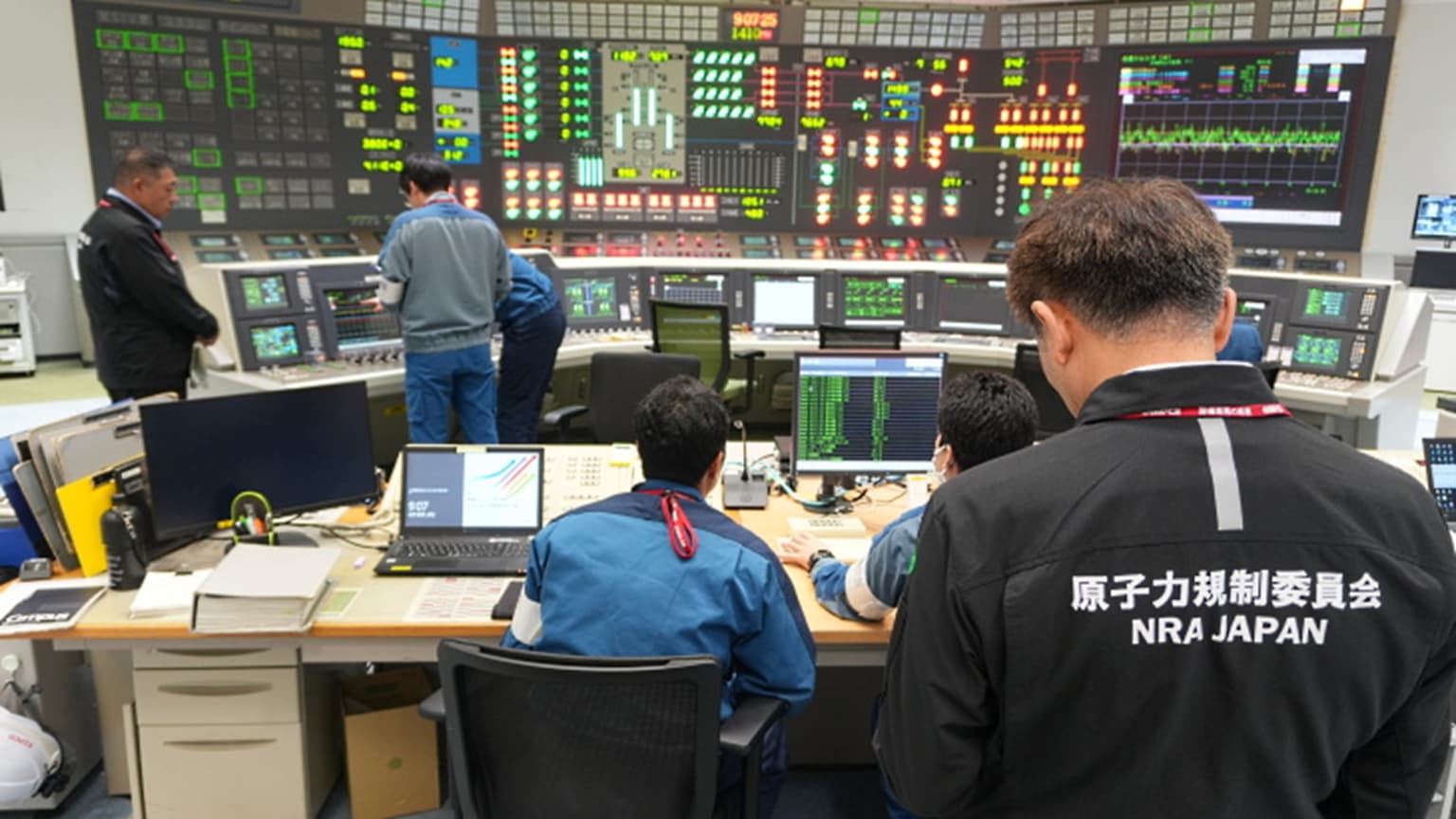
The Japanese ABWR boiling water reactors were the first Generation III reactors to be built. The first, Unit 6 at Kashiwazaki-Kariwa nuclear power plant, entered operation in 1995 and took just under four years to build. Unit 7 took roughly the same time to build and entered operation in 1996. Until their shutdown following the Fukushima I nuclear power plant accident in 2011, their cumulative capacity factors were 72.8% and 68.2%, respectively, reduced by the outage after the 2008 earthquake. TEPCO is working to restart both units. All new safety requirements had to be met. The most challenging task, however, was persuading local communities to approve the reactors’ restart. Unit 6 was the first to enter operation. Its start-up was not straightforward: the first restart in January 2026 had to be interrupted because of an alarm, as described in an article on addressing the consequences of the Fukushima I accident and Japanese nuclear power published early this year, and the unit only entered operation in April 2026. The company is now focusing on operating this reactor, so the restart of Unit 7 has been postponed until 2029.
Japan’s infrastructure also includes two further completed reactors of this type. Unit 2 at Shika nuclear power plant was completed in 2005 and took around four years to build. Its operation could not be fine-tuned and capacity-factor experience gained before the Fukushima I accident. Work to prepare its restart is progressing. It has been confirmed that the unit is not located on an active fault, and a court also dismissed activists’ lawsuit against the restart of the plant’s two units. The operator is therefore targeting commissioning around the turn of 2026 and 2027.
Unit 5 at Hamaoka nuclear power plant, which entered operation in 2004, also took around four years to build, and its annual capacity factor was 71% in years when its operation was not affected by commissioning and the 2008 earthquake. Here, the prospect of a future restart remains highly uncertain. Operator Chubu Electric selectively handled seismic data, dramatically losing the trust of the expert community and the NRA regulator. There is thus consensus that operations will not resume before 2030.
Two further units are under construction at Shimane, Unit 3, and Ohma. Shimane 3 has the advantage that Shimane Unit 2 was successfully restarted in 2025. A range of data and procedures used by the regulator to assess safety characteristics and compliance can also be used in completing and commissioning Unit 3. Local communities also support its commissioning. The unit is currently expected to start up in 2030. The situation at Ohma is more difficult. Its completion and fulfilment of all safety requirements have faced significant delays. It cannot be expected to begin operation before 2031.
Two almost completed ABWR reactors are at Taiwan’s Lungmen plant; both units are currently mothballed. Given the enormous risk of a blockade, Taiwan’s return to nuclear power cannot be ruled out.
Before the Fukushima I accident, Generation III ABWR boiling water reactors had performed very well in both construction and operation. The first unit has been restarted since April this year after a very long period. It will be interesting to see how it performs in operation. Other reactors of this type, potentially up to five, will most likely not enter commercial operation until the 2030s. No further construction is currently planned.
VVER1200 reactors
Russia is building its Generation III VVER1200 and VVER1000 pressurised water reactors domestically and abroad. In Russia, these are various VVER1200 designs. The second phase of Leningrad nuclear power plant uses the St Petersburg VVER1200/491 design. Units 1 and 2 of this phase are in operation, while two more are under construction. The first two units have operated since 2018 and 2020, and took ten years to build. Their cumulative capacity factors are 75.1% and 82.7%. Construction of Units 3 and 4 began in 2024 and 2025.
Units of this type were also built at Belarus’s Ostrovets nuclear power plant. They were completed in 2020 and 2023, after construction periods of 7 and 9 years. Their cumulative capacity factors are 71.9% and 72.9%.
The second phase of Novovoronezh nuclear power plant uses the Moscow VVER1200/392M design, with its first and second units in operation. They began supplying electricity in 2016 and 2019, respectively, after construction periods of between eight and ten years. Their cumulative capacity factors are 77.8% and 82.3%.
The upgraded VVER1200-TOI (VVER1200/510) has operated since early 2026 as Unit 1 of the second phase of Kursk nuclear power plant, following an eight-year construction period. Unit 2 is being completed, while construction of Units 3 and 4 has begun. They are replacing RBMK units at the plant’s first phase.
Construction of this reactor type is also planned at Smolensk nuclear power plant, where four units are to be built in the second phase to replace RBMK units. Two units are planned at the second phase of Novovoronezh nuclear power plant. Other sites are also under consideration.
Specific variants adapted to local safety requirements and incorporating Western technologies are being built abroad. Two VVER1200/523 units are under construction at Bangladesh’s Rooppur nuclear power plant, where construction began in 2017 and 2018. They had originally been due to start in 2023, but the COVID-19 pandemic and sanctions related to Russia’s invasion of Ukraine caused significant delays. Unit 1 is currently being prepared for start-up; fuel loading was completed in May 2026. It should enter operation in 2026, followed by Unit 2 around the turn of 2027 and 2028.
At Turkey’s Akkuyu plant, four VVER1200/509 units began construction between 2018 and 2022. Unit 1 was completed in June 2026 and testing began. Its construction took eight years. All four reactors will therefore progressively enter operation in the coming years.
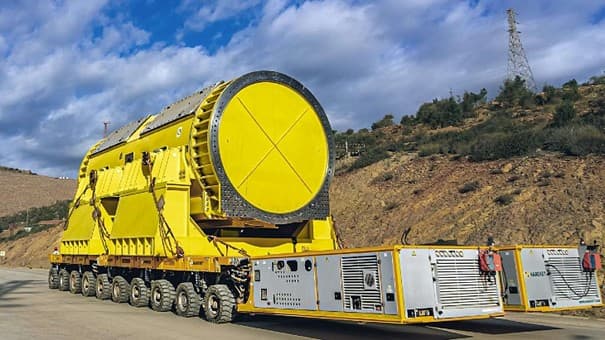
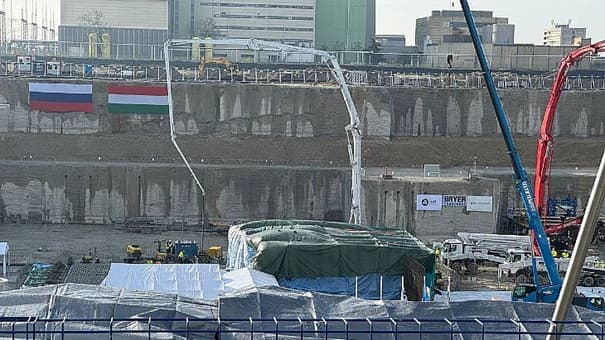
Four VVER1200/529 units began construction at Egypt’s El Dabaa nuclear power plant between 2022 and 2024. At Hungary’s Paks II nuclear power plant, official construction of the first of two planned VVER1200/527 units began in February 2026.
Four further VVER1200 reactors are being built in China. Two VVER1200/491 reactors, Units 7 and 8, are under construction at Tianwan, and two more, Units 3–4, at Xudabao. VVER1000 reactors are already in operation at the former.
Russia is also building Generation III VVER1000 reactors abroad. They operate or are under construction at Kudankulam in India, Bushehr in Iran and Tianwan in China.
Two VVER1000/412 nuclear units operate at Kudankulam, where four more VVER1000/412M reactors are being built. The completed units took more than ten years to build and entered operation in 2013 and 2016, respectively. Their cumulative capacity factors are 66.9% and 67.0%. The weaker performance is mainly attributable to their early operating years. Unit 1 has achieved a capacity factor above 79% in every one of the past five years. Construction of the other four units began between 2017 and 2021. The first of them should enter operation this year.
At Bushehr, a VVER1000/446 reactor is operating, while one VVER1000/528 is under construction and a second is being prepared. Unit 1 was completed in 2011 within a partly built German unit. Its cumulative capacity factor is 67.1%. The lower figure reflects the early years and the geopolitical situation affecting Iran. Whether and when the two additional units will be completed is an open question given the regional conflict.
At Tianwan in China, two VVER1000/428 reactors operate as Units 1 and 2, and two VVER1000/428M reactors as Units 3 and 4. These were the first VVER reactors classified as Generation III. Unit 1 entered operation in 2006, Unit 2 in 2007, Unit 3 in 2017 and Unit 4 in 2018. Construction of the latter two took five years. The reactors have very good operational performance, with cumulative capacity factors of 87.3%, 88.4%, 82.5% and 85.6%, respectively.
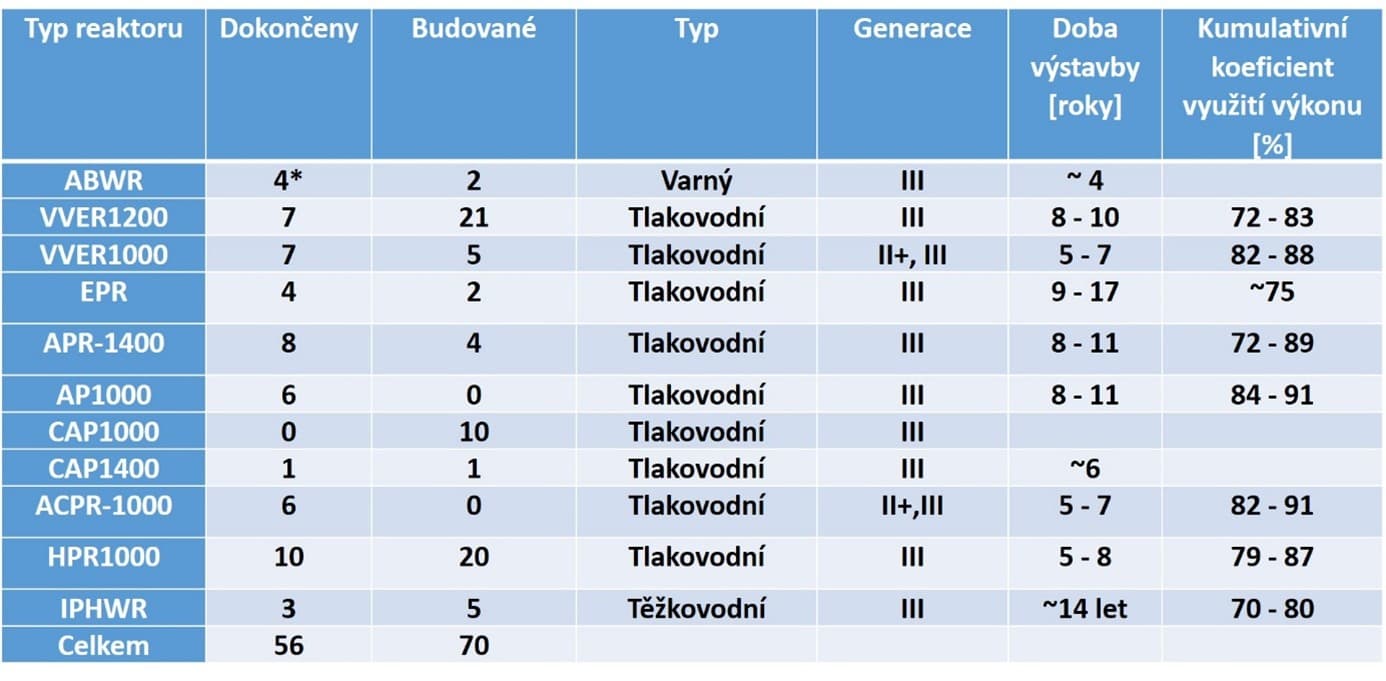
The overview clearly shows that Russia has been highly successful in building Generation III nuclear reactors at home and abroad. A total of seven VVER1200 units and seven VVER1000 reactors are now operating. There are 21 VVER1200 reactors and 5 VVER1000 units under construction. Construction periods have ranged between eight and ten years, with the exception of VVER1000 units in China, which took five years. Delays caused by Russia’s war in Ukraine are now becoming very apparent, especially in overseas projects but also in domestic ones. Abroad, sanctions affecting trade and banking operations are the main factor; domestically, financing, labour and economic difficulties are involved. Kursk nuclear power plant is not far from the Ukrainian border and the front line. Capacity factors exceed 70%, which is a very good outcome for this reactor type given understandable initial difficulties.
EPR reactors
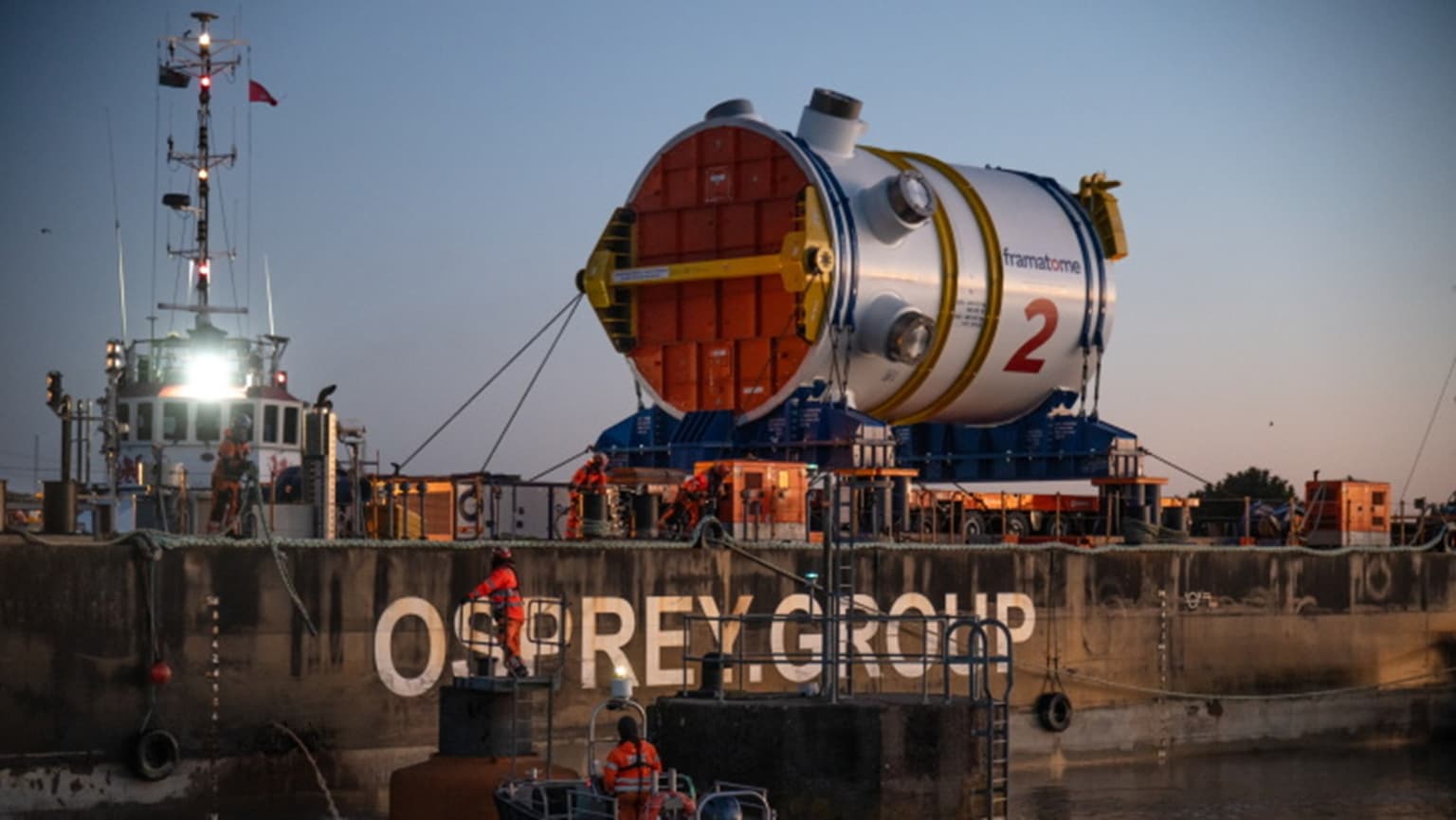
The EPR was originally intended as a joint French-German effort to develop a European pressurised water reactor drawing on the best experience from German and French reactors. After Germany withdrew from the project, the French were left with elements with which they had no experience. The long gap in construction, and thus a shortage of specialists, led to major problems in delivering these units in Finland, China and France.
The first EPR reactor began construction as Unit 3 at Finland’s Olkiluoto plant in 2005. Following a very long delay, it was completed only in 2022. The project was launched in a very incomplete state, while continuity in nuclear construction and professional expertise had been fundamentally disrupted in Europe. Finnish oversight was also justifiably very demanding. Operating performance is gradually improving and the cumulative capacity factor is now 76.7%. The reactor currently supplies around 14% of Finland’s electricity production.
Construction conditions were better for the two Chinese units. The main reason was continuity of nuclear construction in China, an ample workforce experienced in major projects and sufficient technical specialists. The two units at Taishan began construction in 2009 and 2010 and were completed in 2018 and 2019. Unit 1 faced problems at the start of operation. Leaks occurred in fuel assemblies and releases of radioactive noble-gas isotopes increased. Other projects benefited from resolving this defect and modifying the fuel assemblies. Another major problem was a main coolant pump failure and issues with some protection systems in 2023, which reduced its annual capacity factor to just 14.2% that year. Its cumulative capacity factor is therefore only 56.6%. Following repairs, however, the situation is gradually improving. Many problems could be avoided at Unit 2, whose cumulative capacity factor is 77.3%.
The most recent unit currently in operation is France’s first EPR reactor, Unit 3 at Flamanville. Construction began in 2007 and it started supplying electricity to the grid at the end of 2024. The power-ramp-up and testing period was quite long. Full power was reached at the end of 2025, and testing was completed in May 2026 as the reactor moves into normal operation. For France, this is a turning point: a new nuclear unit has been completed after a quarter-century hiatus.
Two EPR units are under construction at Hinkley Point C. Construction began in 2018 and 2019. Delays are occurring here too, although work is progressing steadily and much more efficiently than at earlier projects. The effect of experience gained from constructing Unit 1 is also evident at Unit 2. Completion is currently planned for 2030. The completion of these units will show whether the design has overcome its teething problems and can deliver a standard, predictable construction process. This should be conclusively demonstrated in the construction of the two units at Sizewell C. The site is being prepared and the project is getting under way. The required infrastructure is being built and earthworks are under way, enabling concrete pouring for key foundations to start. Official construction, including the start of nuclear-island concrete pouring, should begin soon, no later than 2028. Completion is expected between 2034 and 2037.
The EPR project is very complex. A simplified EPR2 design is being developed for large-scale construction in France. Three pairs of these units are to be built first at Penly, Gravelines and Bugey. Approval of the financing model is expected shortly, followed by the start of site preparation. The units are expected to enter operation around the turn of the 2030s and 2040s. Further units should follow, progressively replacing the ageing existing fleet.
The EPR has the highest output among Generation III reactors. Four such units are currently in operation and two are under construction. It still has to demonstrate progressively that it can overcome not only construction but also other teething problems. This will become apparent in the completion of Hinkley Point C, construction at Sizewell C and progress on EPR2 units. Construction performance and operating experience from working reactors will also affect interest among foreign prospective buyers in this reactor design.
APR1400 reactors
Alongside China and Russia, South Korea is the only country that has maintained continuity in building nuclear reactors for domestic use while also exporting them. The APR1400 was developed from the domestic OPR1000 pressurised water reactor design. Generation III features were added and output was increased.
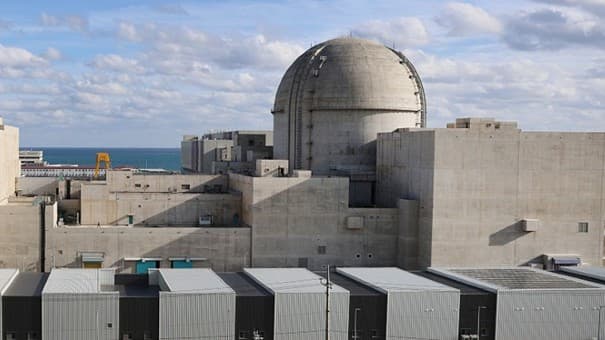
Four APR1400 units are currently in operation in South Korea. The first two were commissioned at Saeul. Saeul Unit 1, originally Shin Kori 3, began construction in 2008 and entered operation in 2016; its cumulative capacity factor is 81.8%. Saeul Unit 2, originally Shin Kori 4, began construction in 2009 and entered operation in 2019; its cumulative capacity factor is 84.6%. Two more units operate at the new Shin Hanul plant. Unit 1 was built between 2012 and 2022 and has a cumulative capacity factor of 80.4%. Unit 2 was built between 2013 and 2024, with a cumulative capacity factor of 72.0%.
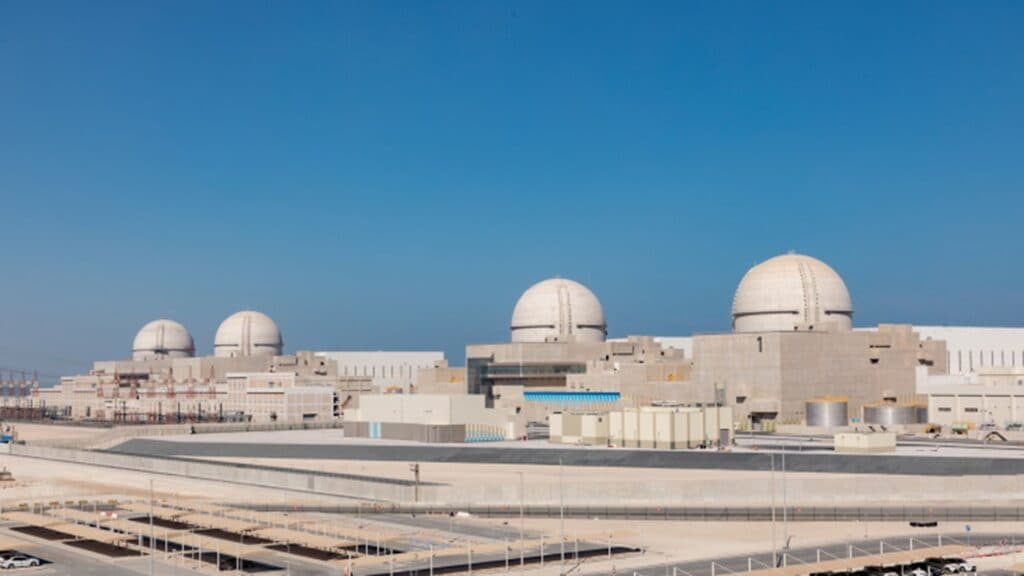
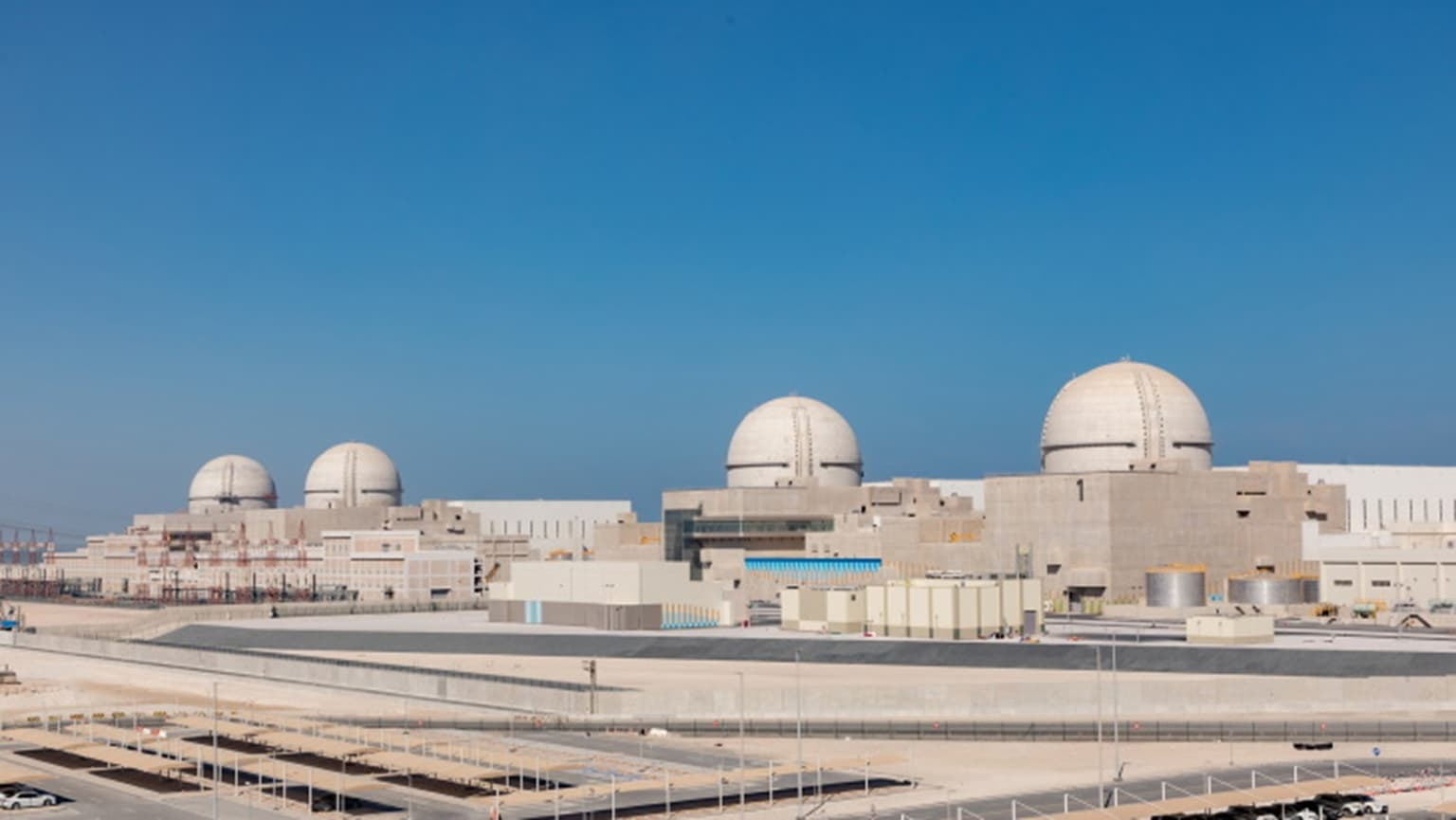
The units from the first overseas project at Barakah in the United Arab Emirates are also operating. Four APR1400 reactors operate there, with construction starting between 2012 and 2015 and commissioning taking place progressively between 2020 and 2024. Their cumulative capacity factors range from 84.8% to 89.0%.
Two more reactors are being built at Saeul. Construction of Saeul Units 3 and 4 began in 2017 and 2018, with completion expected this year and next year. Construction of two units, the third and fourth at Shin Hanul, began in 2024. A new plant with two such units is also being prepared.
The lower-output APR1000 unit is being prepared for construction at Dukovany and potentially Temelín in Czechia. Its references are the Generation II OPR1000 and Generation III APR1400 units. If successfully delivered, this reactor should also be built at Temelín and potentially elsewhere in Europe.
APR1400 units are being delivered continuously; construction is normally completed within ten years and annual capacity factors are very good. Eight units are currently operating and four more are under construction.
AP1000 and CAP1000 reactors
Westinghouse AP1000 reactors operate in the United States and China. Vogtle Units 3 and 4 were built between 2013 and 2024, with Unit 3 entering operation in 2023 and Unit 4 in 2024. Their cumulative capacity factors are 90.2% and 84.5%. Construction of the two units at VC Summer was halted, but resuming construction and completing these reactors is now being considered.
China built two pairs of these reactors: the first at Haiyang and the second at Sanmen. Construction began in 2009 and 2010, and operation began in 2018. Except for Sanmen Unit 2, which operated very little in 2019 due to a main coolant pump failure and its replacement, all other reactors have cumulative capacity factors of around 91%. Excluding 2019, this also applies to Sanmen Unit 2.
China purchased not only the construction of four AP1000 units, but also the option to take over the design and serially build a Chinese variant. Even after experience with constructing the four AP1000 units and completing its domestic Hualong One reactor, the concept was considered promising and China began serial construction of CAP1000 reactors. These feature a complete transition to local supply chains, simplified modularity and faster construction. China has also developed the higher-output CAP1400 model, Guohe One, which is fully indigenised and can potentially be offered internationally.
Pairs of CAP1000 units are currently under construction at plants already operating AP1000 reactors: Haiyang Units 3 and 4 and Sanmen Units 3 and 4, where construction began in 2022 and 2023 and is now nearing completion. Pairs of units are being built at the new Lianjiang plant, where construction began in 2023 and 2024, Lufeng, where it began in 2025, and Bailong, where work began in 2025 and 2026.
Two CAP1400 units are now being built at Shidaowan, a major site for a number of demonstration projects. Alongside the CAP1400 units, the site has built the 210 MWe HTR-PM Generation IV small modular reactor, a helium-cooled high-temperature reactor, and is constructing four Hualong One (HPR1000) reactors. CAP1400 construction began in 2019 and 2020, and the first unit was started in 2024.
Six AP1000 units and one CAP1400 unit are now in operation, while ten CAP1000 units and one CAP1400 unit are under construction. Operating experience, reflected in annual capacity factors, is very good. Construction of these units is becoming serialised in China.
ACPR1000 reactors
As with VVER1000 reactors, the classification of ACPR1000 as Generation III is not unequivocal; it is sometimes classified as Generation II+. It is an improved version of the Generation II CPR1000 pressurised water reactor. Three pairs have been built at Hongyanhe, Tianwan and Yangjiang nuclear power plants, in each case Units 5 and 6. Construction began between 2013 and 2016, and the units were completed between 2018 and 2022. Construction took five to seven years. Their cumulative capacity factors range between 82% and 91%.
Hualong One (HPR1000) reactors
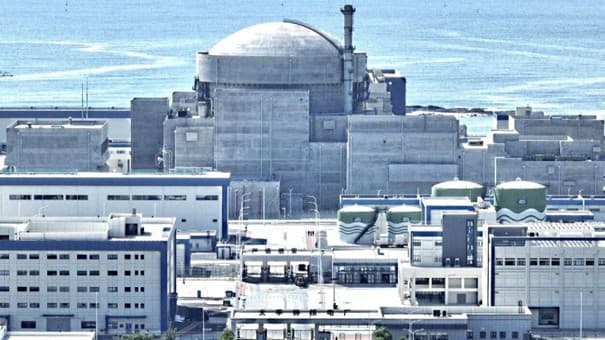
Experience with the earlier CPR1000 and ACPR1000 reactors helped China develop its own Generation III Hualong One (HPR1000), combining the experience of several companies and making it possible to unify and standardise supply-chain use. It is currently China’s flagship design. The first such reactor started up at Fuqing in 2021, and two are now operating there. Construction took place between 2015 and 2022, and their current cumulative capacity factors are 87% and 85%. Further units operate at Fangchenggang, where Unit 3 was built between 2015 and 2023 and Unit 4 between 2016 and 2024, with cumulative capacity factors of 86% and 84%; at Zhangzhou, Unit 1 was built between 2019 and 2024 and Unit 2 between 2020 and 2025; at Changjiang, Unit 3 between 2021 and 2026; at Taipingling, Units 1 between 2019 and 2026 and 2 between 2020 and 2026; and at San’ao, Unit 1 between 2020 and 2026.
Construction of numerous further units is under way: Changjiang Unit 4, begun in 2021; San’ao Units 2, begun in 2021, and 3, begun in 2025; Taipingling Units 3, begun in 2025, and 4, begun in 2026; Zhangzhou Units 3 and 4, both begun in 2024; Lufeng Units 5 and 6, begun in 2022 and 2023; Shidaowan Units 1 and 2, begun in 2024 and 2025; Ningde Units 5 and 6, begun in 2024 and 2025; Jinqimen Units 1 and 2, begun in 2025 and 2026; Zhaoyuan Units 1 and 2, begun in 2025 and 2026; and Xuwei Units 1 and 2, both begun in 2026. Construction of many more Hualong One reactors is being prepared.
China has also deployed Hualong One reactors abroad. Two operate at Pakistan’s Karachi plant as its second and third units. Construction began in 2015 and 2016, they entered operation in 2021 and 2022, and both have cumulative capacity factors of around 79%. Another such reactor has been under construction as Unit 5 at Chashma since 2024.
This key Chinese reactor design already has twelve units in operation and twenty under construction. Construction periods are being reduced to as little as five years. Operating experience even for the oldest units covers only a few years, but cumulative capacity factors of 80% and above are encouraging.
Indian IPHWR700 heavy-water reactors
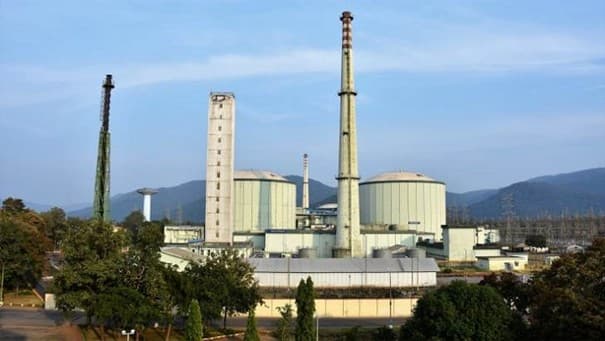
The only Generation III reactor type that is not a light-water design is the Indian IPHWR700 pressurised heavy-water reactor. The reactor is based on the CANDU concept. India has very limited uranium reserves but substantial thorium deposits. It therefore seeks to implement a thorium-uranium cycle and use domestic thorium through a combination of fast breeder reactors and heavy-water-moderated reactors.
Canada’s CANDU reactors inspired India’s heavy-water reactors. On that basis, India developed its domestic heavy-water reactor design with output of around 200 MWe, later upgrading it to around 500 MWe in Tarapur Units 3 and 4.
Based on experience in constructing and operating these reactors, a Generation III heavy-water reactor with output of around 700 MWe was developed. The first two pairs were built as Kakrapar Units 3 and 4 and Rajasthan Units 7 and 8. Construction began in 2010 and 2011, while completion and commissioning were prolonged. The units have entered operation from 2023, with the last expected to do so in 2026. The pair at Rajasthan has cumulative capacity factors of 78% and 71%.
A further series of ten new reactors of this type is being prepared in pairs at several plants. Concrete pouring for the nuclear island began at Kaiga Units 5 and 6 in March 2026. Following the long-delayed start of nuclear-island concrete pouring for the first IPHWR700 pair at Gorakhpur, construction of another pair is being prepared at the same plant. A further pair is being prepared at the new Chutka plant.
Completion of the first four IPHWR700 units can be expected to be a major turning point and lead to large-scale construction of these units in India. The country needs to substantially increase its nuclear capacity to move away from coal. Canada is also preparing a Generation III CANDU heavy-water reactor design.
Conclusion
Construction of new nuclear capacity has accelerated in recent years, as also shown by annual overviews of the state of nuclear power (the latest, from 2025, here, here and here). Generation III designs account for the dominant share of reactors under construction. There are currently 439 units in operation and 79 under construction. Of those operating, 56 are Generation III reactors, or almost 13% of the total, and their share by capacity is even higher. Seventy reactors of this generation are under construction, representing the dominant share. It should be noted that newly built small modular reactors, such as China’s ACP100 and Canada’s BWRX300, are also Generation III reactors.
It is not yet entirely clear how successfully standardisation, modularity and simplification are reducing construction demands and speeding delivery. The Russian VVER1200, Korean APR1400 and Chinese reactors are approaching sufficient project numbers and continuity of construction. Their construction periods have been reduced, although only China’s HPR1000 has achieved five-year construction. Sanctions are now starting to affect Russian projects, and future developments will be strongly shaped by the war’s impact on Russia’s economy and position. EPR reactors in particular are in a far worse position regarding construction; they must still show whether they can meet the expectations placed on them.
In any case, Generation III reactors provide a very good foundation for the emerging nuclear renaissance. In Czechia’s case, selecting the South Korean reactor was a very good choice, as I wrote, for example, in a recent article. A nuclear renaissance in Europe could be a very strong stimulus for Czech industry.
Translation disclaimer
This article is a machine translation of the Czech original and has not yet been fully reviewed. In case of any doubt, please refer to the Czech version.